

US dollar steady as traders consider tariffs; yen surges on BOJ bets
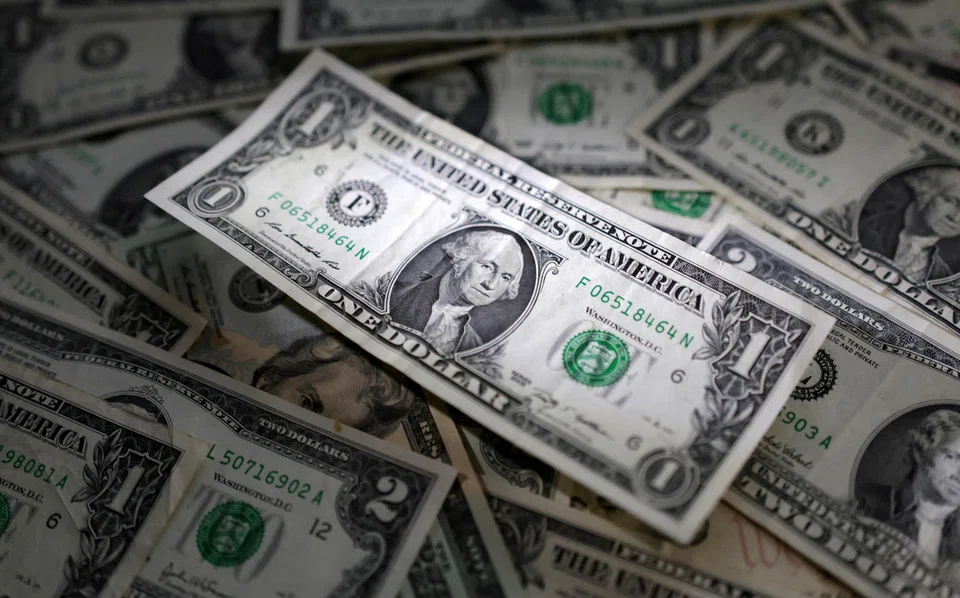
THE US dollar eased against a range of currencies on Thursday (Feb 20), as investors digested US President Donald Trump’s latest tariff plans, while the yen rose to multi-week highs as bets mounted of further Bank of Japan (BOJ) rate hikes.
The US dollar index, last 0.2 per cent lower at 106.92, was still set for a gain of 0.2 per cent this week, following last week’s 1.2 per cent decline.
The yen meanwhile rose to a more than two-month high against the dollar, which was down 0.8 per cent at 150.27, having earlier briefly dropped below the 150 mark. This was driven mostly by worries about Trump’s tariffs, as well as traders increasing bets of more BOJ hikes this year.
Against the euro, the yen rose by as much as 1 per cent, and was earlier on track for its biggest daily drop since Jan 27.
BOJ governor Kazuo Ueda said on Thursday that he met Japanese Prime Minister Shigeru Ishiba for a regular exchange of views on the economy and financial markets.
Bank of Singapore currency strategist Sim Moh Siong said that he did not believe there was a single reason for the yen’s surge, but that news Ueda and the prime minister had not discussed rises in long-term interest rates could have reassured markets.
“Perhaps that got people excited to think that the recent rise in the yields that supported the yen wasn’t a concern, and therefore it’s a green light for more yen strength and perhaps a BOJ hike quite soon,” he said.
US President Trump said on Wednesday that he would announce tariffs over the next month or sooner, adding lumber and forest products to previously announced plans.
Michael Pfister, a currency analyst at Commerzbank, said that Thursday’s decline in the greenback was less marked than moves after Trump initially his tariff plans for Mexico and Canada in January.

“We are seeing a bit of dollar weakness, but it’s not comparable,” he said.
Markets are monitoring geopolitical developments after Trump on Wednesday denounced Ukrainian President Volodymyr Zelenskiy as a dictator, deepening a feud between the two leaders that has alarmed European officials.
Market players are also assessing comments from Trump, who said “it’s possible” for the US and China to have a new trade deal. The US president also said on Wednesday that he expected Chinese President Xi Jinping to visit the United States but did not say when.
“Where we are seeing an impact is with the Australian and New Zealand dollar which have a lot of exposure to Chinese trade,” Pfister said.
The Aussie dollar last traded 0.49 per cent higher at US$0.63765, also reacting to a mixed jobs report that showed employment outpaced forecasts for a second successive month in January, yet the unemployment rate still ticked higher.
The New Zealand dollar was up 0.44 per cent at US$0.57300.
The euro last stood at 156.805 against the yen and was down 0.2 per cent against the dollar at US$1.0426.
Sterling was up 0.21 per cent at US$1.26125. REUTERS
Decoding Asia newsletter: your guide to navigating Asia in a new global order. Sign up here to get Decoding Asia newsletter. Delivered to your inbox. Free.
Share with us your feedback on BT's products and services
TRENDING NOW

World’s largest offshore wind platform by Seatrium consortium on track to be completed by 2028
Is stamp collecting enjoying an analogue revival or are its best days over?

GovTech retrenches another 38 staff in second round of layoffs

MBS adjusted property Ebitda falls 20.6% in Q3 with fewer high-roller visits, weaker hold

