

US equities roiled by geopolitical uncertainties, but China is set to lead Asian equities
China's inclusion in the MSCI, its steady growth and curbs on property are fanning interest in equities
Singapore
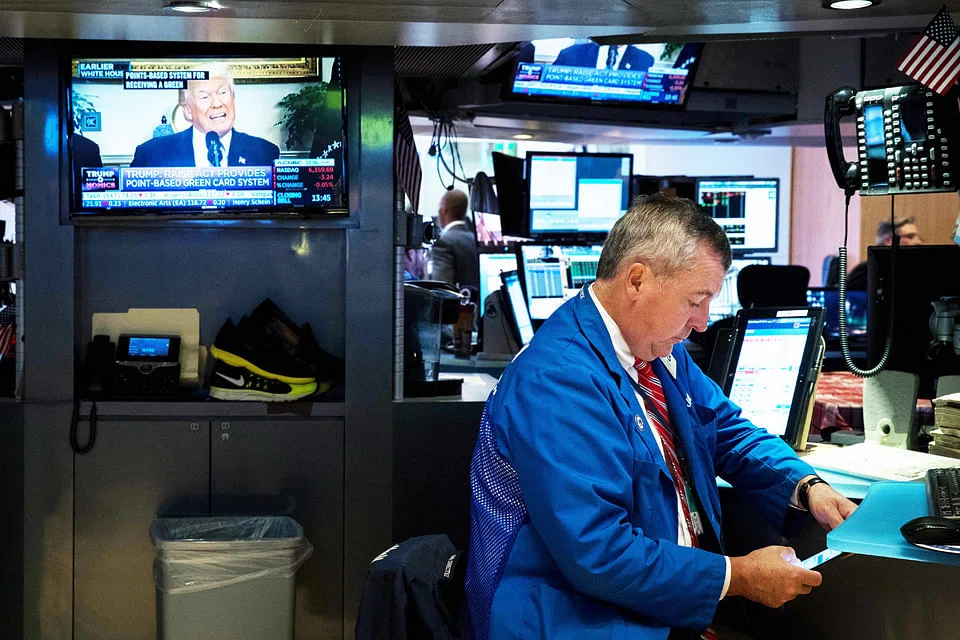
AS US equities continue to face increasing geopolitical uncertainties amid employment growth and a strong earnings outlook, China seems set to become the key driver of growth for Asian equities in the months to come.
The MSCI in Asian countries, excluding Japan, returned over 27 per cent year-to-date (YTD); US equities, the Nasdaq in particular, returned about 18 per cent YTD.
MSCI finally included China in its indices this year, after years of rejecting the idea. The move will result in a stronger integration of China's equity markets with those of the rest of the world.
China's economy grew 6.9 per cent in Q2 2017, unchanged from Q1, but both growth rates were above the government's target, with the growth having been largely driven by firmer production and exports.
The outlook for the equity market versus other asset classes in China has improved, said a note from DBS Group Research on Aug 4. "Real interest rates are currently close to zero, while there are still regulatory tightening measures imposed on property investments, wealth management products and capital outflows. With the improvement in sentiments and momentum, we believe equities as an asset class will continue to draw interest."
Ho Kang Wei, an investment analyst at Phillip Securities Research, told The Business Times that the performance of Asian equities, on a fundamental basis, will not be too heavily influenced by US equities.
"However, that is not to say that Asian equities are completely independent of US equities. At least, on an investor-sentiment level, a correction in US equities might have a negative impact on investor confidence, which may lead to a corresponding correction in Asian equities as investors decide to take profits," he said.
An Investment Insights report by DBS on Monday said the "robust US jobs data and upbeat earnings momentum" pushed the S&P 500 higher. The index was up 0.19 per cent, with more than three-quarters (77 per cent) of the companies reporting positive earnings.
The DBS report said: "The current earnings reporting season has reached an advanced stage, and on the whole, US earnings momentum remains upbeat. However, the sustainability of the US equity rally will also very much hinge on developments in Capitol Hill as investigations into the alleged Russian interference in the US Presidential Election intensify."
In Asia, equities remain near the highest level in 10 years in the current earnings season, a markets overview report by UOB Global Economics & Markets Research said on Tuesday. As at Wednesday, the USD/SGD traded at a higher range of 1.3603-1.3648 and closed at 1.363/USD.
The US Federal Reserve is expected to start shrinking its US$4.5 trillion balance sheet, which is viewed as a "political" move, a Global Economics View report by Citi Research said on Wednesday.
"The size and composition of its balance sheet accentuate and increase the visibility of the quasi-fiscal role it plays and represent a threat to its operational independence. We argue that there is no major monetary policy management and/or monetary policy effectiveness argument for shrinking the balance sheet of the Fed."
With the Fed expected to raise interest rates once more by year-end and three more rate hikes expected next year following the Federal Open Market Committee meeting in September, the three-month USD London Interbank Offered Rate and the Singapore Interbank Offered Rate are forecast at 1.65 per cent and 1.4 per cent respectively by the end of this year, said UOB.
Meanwhile US stocks took a beating as investors fretted over tensions between Washington and Pyongyang over North Korea's missile programme.
At the opening bell, the Dow was down 85.43 points at 21,963.27. The S&P 500 slipped 10.31 points to 2,463.71, while the Nasdaq lost 37.30 points at 6,315.03.
TRENDING NOW
Easy to rent out, hard to sell: Are buyers losing interest in Singapore’s one-bedroom condos?

GovTech retrenches another 38 staff in second round of layoffs

Stocks to watch: Seatrium, CapitaLand Investment, Keppel DC Reit, Suntec Reit, CLCT, TSH Resources

World’s largest offshore wind platform by Seatrium consortium on track to be completed by 2028

