

US student loan-backed bond sales plummet as borrowers skip refinancings
 Add BT as a preferred source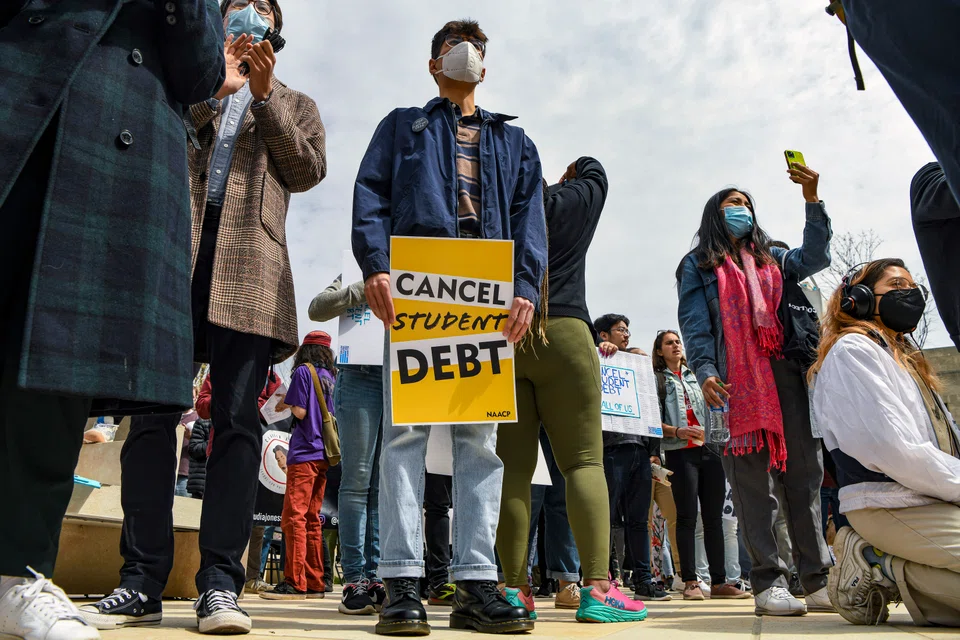
COMPANIES selling bonds backed by student debt have retreated from the market this year, as promises of loan forgiveness and higher rates deter borrowers from refinancing their loans.
The over-2-year freeze on federal student loan payments -- which was extended again in April, relieving many borrowers -- and the Biden Administration’s plan to formalise its long-awaited student-loan relief package has sent ripples across the private loan market this year, effectively diminishing it.
Student loan borrowers are hesitant to refinance their federal debt with private loans as long as the promise of forgiveness is dangling over their heads. They have either held on to their federal loans or even paid down the private debt they owe after becoming flush with cash from Covid-era government stimulus checks.
“It really doesn’t make sense for a federal borrower to refinance into a private student loan now,” said Theresa O’Neill, ABS strategist at BofA Securities.
As a result, the companies that provide that debt and then repackage it and sell it on as bonds in the asset-backed securities market have not had a lot to work with this year.
Sales of student debt-backed bonds have sunk to less than one-third of their levels compared to this time last year, according to Bloomberg data. So far, companies have only sold US$5.2 billion in student loan ABS in 2022, as opposed to US$16.8 billion of issuance at this point in 2021.
“Because of the payment moratorium and the potential forgiveness, it’s affecting the refinancing space because there isn’t a lot of refi volume,” said Amy Sze, head of ABS research at JPMorgan, in a phone interview. “Now that the payment moratorium has been extended, and it could be extended again, borrowers are less likely to refinance their loans.”
Higher interest rates -- 4.99 per cent on undergraduate loans for the 2022-2023 school year, up from 3.73 per cent last year -- plus wider spreads on deals are not helping issuers either, as they have helped push up borrowing costs in the ABS market.
In May, student loan servicer Navient Corp paid a 4.16 per cent coupon on the largest tranche of a US$714.6 million deal, having paid 1.58 per cent on the same tranche of a similar deal just 6 months earlier in November. Only Sallie Mae Bank and Navient have arranged more than one offering each since January, as fewer borrowers see an incentive to consolidate their federal debt in the private market.

The slow pace of bond sales has led some banks to slash their student loan issuance predictions by at least half. Bank of America revised its forecast to US$10 billion from US$20 billion in a note to investors in early June, while JPMorgan did the same in a Jun 24 note.
“Ongoing federal student loan payment moratoriums, streamlined forgiveness and [income-based repayment] programs, in addition to rising rates, are all headwinds for private credit student loan originations,” wrote the JPMorgan analysts.
“We now expect US$10 billion of gross ABS issuance in the private credit student loan ABS space, compared to our prior forecast of US$20 billion (in November 2021).”
With fewer offerings, buyers are either scooping up the notes or looking elsewhere for value. According to BofA Securities, the notes have widened 90 basis points since the start of the year, an appealing pickup compared to other asset classes such as credit card ABS, which has widened by 26 bps.
But that spread is not enough for some structured investors looking for greater returns. “You can get better spreads in other asset classes such as subprime auto ABS,” said Tracy Chen, portfolio manager at Brandywine Global Investment Management, in an interview. “The pandemic didn’t affect those bonds too much, whereas it did impact other products like auto where you get very favourable recovery rates.”
The fact that Covid-related forbearance is weighing on student loans and there aren’t that many being generated is also a drawback, said Chen. “With the forbearance, it takes forever to get the money back,” she said. BLOOMBERG
Decoding Asia newsletter: your guide to navigating Asia in a new global order. Sign up here to get Decoding Asia newsletter. Delivered to your inbox. Free.
Share with us your feedback on BT's products and services
TRENDING NOW

Yeoh Pei Xien: YTL’s third-gen scion with a pastor’s heart

Singapore banks’ battle for wealth talent goes beyond private bankers

Car dealer charged in S$1.1 million tax evasion case involving Porsches, Ferraris, Rolls-Royces

A ‘shadow bank’ hiding in Singapore’s Little India casts light on financial services gap

