US$7 trillion data-centre boom is creating gaps in insurance cover in Apac: report
There are interconnected and concentrated risks in power, construction, operations, cybersecurity and downtime

[SINGAPORE] Insuring the Asia-Pacific’s rapidly expanding data-centre sector is becoming increasingly challenging.
Global insurance broker Howden identifies the wide range of interconnected and concentrated risks in power, construction, operations and cybersecurity, with downtime being a significant business exposure.
The expansion is being driven in part by rising investments in artificial intelligence infrastructure. The world is on track to spend roughly US$7 trillion on the physical infrastructure underpinning AI by 2030, reported global underwriter Advanced Technology Assurance, using 2026 data.
That sum exceeds the GDP of every country except the US and China.
The scale of investment is creating a growing need for insurance capacity. Yet some of the largest data centres are worth more than the insurance market can comfortably absorb under a single policy, Howden said.
Coverage is therefore often spread among dozens of insurers and reinsurers.
Hamish Ravindran, chief client officer at Howden Asia, speaking at a media lunch on Wednesday (Oct 7), said: “Outage is a huge uninsured gap right now. There are only three insurance companies in my 18 months of hunting that have come close to finding a solution for outage.”
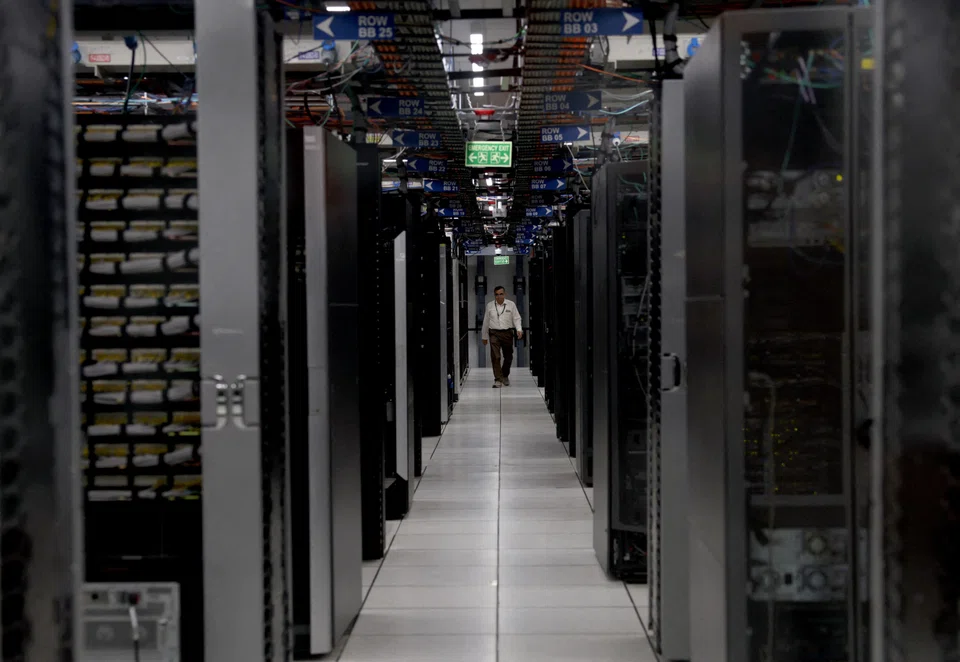
Nearly half (45 per cent) of major outages can be traced to power failures.
In some cases, an outage can result from an operational error, such as someone accidentally switching off the power. The resulting power loss can expose data centre operators to significant contractual liabilities, particularly when they have committed to strict uptime requirements for customers.
SEE ALSO


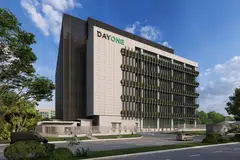
Those risks persist despite extensive redundancy. More than 98 per cent of Asia-Pacific data centres have redundant capacity built into their systems, Howden found in an analysis of data collated by 451 Research, part of S&P Global.
Outages can still arise from system failures that do not involve physical damage – and this presents a challenge for traditional insurance solutions, which typically rely on physical damage as a trigger for coverage.
The market is now developing alternative solutions, including parametric cover, particularly for retail and wholesale providers. These providers account for about three-quarters of Asia-Pacific’s data centres and carry uptime commitments to multiple customers.
Hamish said that such commitments can expose operators to significant contractual liabilities, particularly in the race to attract major hyperscalers and other large technology companies to their facilities.
Liability
With the balance between data-centre supply and demand tightening in some markets, large technology customers have greater leverage in contract negotiations.
This is contributing to “more punitive contractual liability” provisions in data-centre contracts, Hamish said.
Liability exposures may be less significant in parts of Asia because the region has a relatively less litigious business environment, he added.
The risk is more pronounced in markets such as the US and Australia, where data centre operators face growing legal and community opposition.
The concerns range from water and electricity consumption to the impact of large data-centre developments on surrounding property values.
Howden found that, although relatively few cases have resulted in insured liability losses, the number of major lawsuits and arbitrations involving data centres has more than tripled since 2021, coinciding with the acceleration of AI investment.
Beyond outages and liability, Howden identified four other key risk areas shaping the data-centre insurance market:
- Construction;
- Natural catastrophes;
- Power supply; and
- Cyber and geopolitical risks.
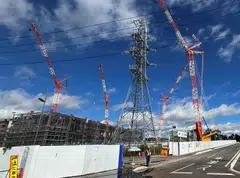
Zoe Zhang, regional director of Howden Asia’s digital infrastructure practice, said at the luncheon: “The reason why these six key risks are so important for us to look at is, if you track the growth of data centres over the last nine to 10 years, new construction alone has a cumulative annual growth rate of 18 per cent.
“In a material sense, that means that we are seeing four and a half times more data centres built in the last 10 years than we did in 2016.”
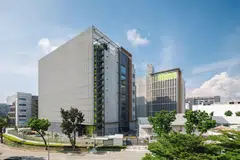
She added that data centres are also growing in size. The average new facility, at 141,000 sq ft in 2016, now spans 236,000 sq ft – about the size of three football fields.
“The size and scale are both increasing at quite a rapid rate,” she said.
The expansion is also increasing exposure to geopolitical risks. In 2025, 60 per cent of the data-centre capacity accumulated between 2020 and 2024 was located within 10 to 15 km of global conflict zones. This was four times the total recorded between 2015 and 2019, Howden noted.
Decoding Asia newsletter: your guide to navigating Asia in a new global order. Sign up here to get Decoding Asia newsletter. Delivered to your inbox. Free.
Copyright SPH Media. All rights reserved.