

Welcome to where negative rates are normal
Denmark is deep into an experiment using a monetary policy tool once viewed by mainstream economists as approaching apostasy, if not a virtual impossibility
Washington
IN Copenhagen, bicycles take undisputed priority over cars and even pedestrians. A sizzling restaurant scene has made foodie fetishes of moss, live ants and sea cucumbers. Despite a minimum wage not far below US$20 an hour and some of the world's steepest taxes, unemployment is almost the lowest in Europe. Parents happily leave infants unattended in strollers on the sidewalk while they step into cafes.
Clearly, the usual rules tend not to apply in Denmark. So it's no surprise that the country in recent years has added a major new entry to its sprawling repertoire of eccentricities: since 2012, it's been a place where you can get paid to borrow money and charged to save it.
Scandinavia's third-largest economy (the population is 5 million, and there are about as many bikes) is deep into an unprecedented experiment with negative interest rates - a monetary policy tool once viewed by mainstream economists as approaching apostasy, if not a virtual impossibility. Companies (though not yet individuals) are paying lenders for the privilege of keeping funds on deposit; homeowners, in some cases, are actually making money on mortgages.
Most private-sector forecasters don't expect Denmark's central bank to go positive again until 2018 at the earliest, making the country a long- term petri dish for what happens when the laws of financial gravity are inverted. Although some dovish economists have advocated negative rates as a salve for deflation and anaemic growth, if Economics 101 is to be believed they should have stomach-churning consequences: asset bubbles, capital flight, and the frenetic manufacture of very heavy vaults to hold money pulled from banks.
Central bankers looking to Denmark for evidence of such trauma aren't likely to see much. If anything, they might find the Danes' approach tempting. A certain amount of financial weirdness aside, their country is mostly free of the distortions economic theory tells us to expect, suggesting negative rates may deserve to move from taboo to the standard monetary policy toolbox.
That might be the wrong lesson to draw. Instead, the takeaway may be that negative rates can work - but only for some purposes and perhaps only if you're Denmark. "It's not the catastrophe that some people would have thought," says Erik Nielsen, a Dane and the global chief economist at UniCredit. "But you're playing with fire."
To understand how Denmark came to be the land below zero, some context is necessary. The country's sole border is with Germany, its biggest trading partner. Yet Danes have historically been ambivalent towards the European Union and in a 2000 referendum rejected joining the euro.
Denmark's currency, the krone, was pegged to the deutsche mark from 1982 to 1999, and to the euro thereafter. Maintaining the peg is the sole mandate of the Danish central bank, so crucial is it to the economy.
As the European debt crisis reached one of its periodic crescendos in 2012, investors seeking a safe haven piled cash into Denmark, threatening to push the krone out of its trading band. The benchmark deposit rate was already at 0.05 per cent, leaving nowhere to go but down to reduce the country's appeal to hot money.
Denmark thus resorted to negative rates not to spur inflation - as Japan is trying to do, unsuccessfully - but to drive away speculators.
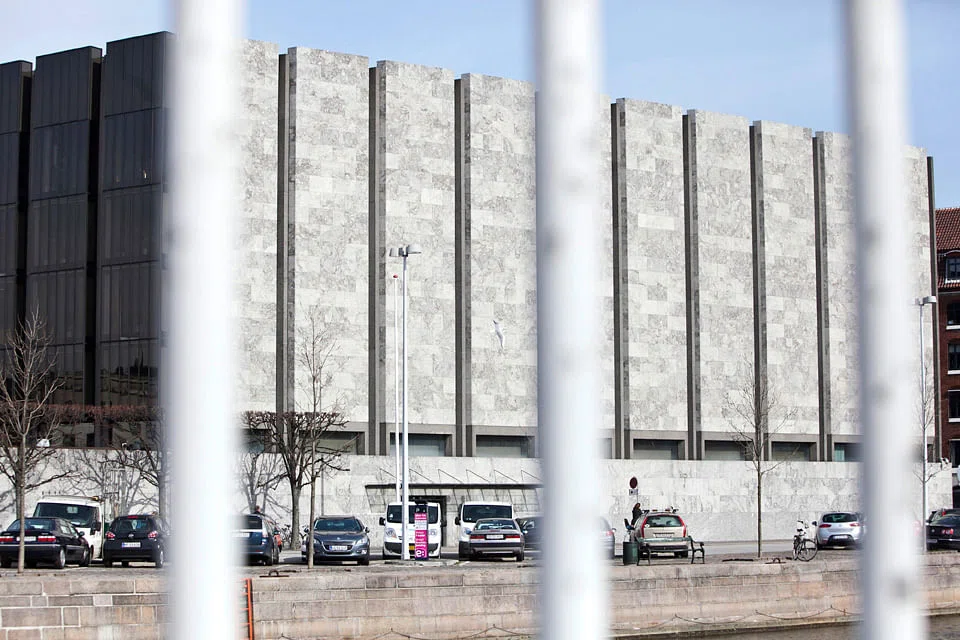
The battle to safeguard the peg is led from an orthogonal hulk of stone and glass in downtown Copenhagen designed by Arne Jacobsen, father of the modernist egg chair. Danmarks Nationalbank governor Lars Rohde, who took office in 2013, has known negative rates for almost his entire tenure. On his first day, the deposit rate was -0.1 per cent; it now stands at -0.65 per cent.
He says Denmark's choice is simple: the peg must be protected, and negative rates are doing that without great disruption. The central bank "will do whatever it takes to defend the peg", he says in an office decorated in Nordic tones of blond wood. "There's no sharp, disruptive movement when you go below zero. It just works like very low interest rates."
In the broad sense, that's proved true. Bank earnings are in line with those of European peers, with new fees making up part of the cost of low rates; the amount of cash in circulation has climbed only modestly. Still, some Danes find themselves contemplating bizarre-world challenges to the normal way of doing business.
In the neo-baroque Parliament building, Benny Engelbrecht relates some of them. The 45-year-old Social Democrat lawmaker was responsible for business and taxation until 2015 - a role in which he was forced to contemplate dilemmas like whether it would be legal to tax negative interest payments to mortgage borrowers as income. (It is.)
Last year, the central bank flagged another alarming possibility. Fearful of angering retail depositors, banks aren't yet taking haircuts from individuals' accounts. Large and medium-size companies, however, are subject to just that. But businesses that prepay their taxes in Denmark receive modest interest on the deposits, which is credited against what they owe or are refunded. With no limits on prepayments, might they start using the taxman as an unofficial bank? Rules had to be hastily struck to limit how much a business could deposit, removing the dodge before anyone took significant advantage of it, Mr Engelbrecht says.
For companies, there aren't a lot of options. "You get penalised these days for having cash in the bank," laments Jens Lund, chief financial officer of logistics group DSV. The firm found itself in a tricky situation last November, when it sold US$750 million (5 billion kroner) of shares to fund a takeover of rival UTi Worldwide. Short of renting a huge vault, that meant sitting on most of the proceeds at negative rates until the deal was finalised in January, at a cost of about 4 million kroner (S$822,000). Apart from shopping around for the bank that would take the smallest cut, Mr Lund says, "there's not much you can do about it".
Conversations in Copenhagen these days turn quickly to real estate. The city is in the midst of a construction boom, its centre of urban gravity shifting inexorably towards a harbour crammed with new apartment buildings. At one end a whimsical, bikes-only bridge, the Bicycle Snake, squiggles between gleaming new construction. The water here is perfectly swimmable, and when office workers hop in for lunchtime dips in fine weather, it's as if a gang of energetic summer camp counsellors had been given control of a midsize metropolis.
There's no question negative rates have driven up the price of owning a piece of this urban vitality. Apartment prices per square metre soared 43 per cent between the start of 2010 and the end of 2015, according to real estate broker Home; in early May, the International Monetary Fund urged the government to rein in Danish house prices.
Keeping the boom from getting out of control is partly the job of Jesper Berg, who runs what's almost certainly the world's hippest banking regulator. The Danish Financial Supervisory Authority occupies a converted warehouse in the gentrified neighbourhood of Osterbro; it feels like a late-stage startup, complete with hardwood floors and an open plan. From a balcony with a sweeping view of downtown's construction cranes, Mr Berg concedes "we have some froth" in the urban housing market, "but not a bubble". Compared with New York, London, and even Stockholm, Copenhagen real estate is still a bargain: US$500,000 buys a decent two-bedroom.
If Mr Berg is correct, that's largely because the country regulates the housing market to a degree unimaginable in the US. It's nearly impossible for a foreigner with no connection to Denmark to buy property, preventing inflows of overseas money. Regulatory guidelines require minimum downpayments of 5 per cent and stress tests of borrowers' finances against run-ups in rates.
Mr Berg puts people's apprehension about staying below zero indefinitely in terms that Danes, who cram the country's white-sand beaches in the brief Nordic summer, can easily understand. "There's a difference between standing on the beach in dry sand and moving into the water," he says. "The further you go out, and the longer you stay there, the more problems you can run into." WP
TRENDING NOW

Peter Kwee’s Ridley Park bungalow on the market with S$100 million asking price

Motoring tycoon Peter Kwee is back in court: Here are his previous legal battles

Demand, tech capabilities position Apac and AI as Skyscanner’s next growth frontiers: CEO Bryan Batista

South-east Asia has lost Nvidia’s best salesman

