

Why a virtual payment solution is crucial as SMEs go digital
Replacing manual payment processes with digital solutions such as UOB Procure-to-Pay is key to seizing opportunities in a fast-expanding Internet economy
 Add BT as a preferred source

Digital transformation and the adoption of digital payments have accelerated in the last couple of years, and Singapore businesses must tap this growth to remain competitive in the market.
Almost four in 10 merchants surveyed in the latest e-Conomy SEA Report by Google, Temasek Holdings, and Bain & Company believe they would not have stayed afloat during the pandemic without selling their wares on digital platforms.
This is fuelled primarily by the influx of users turning to online platforms to consume goods and services amidst a global pandemic, with 20 million in the region doing so for the first time in the first half of 2021 alone.
These findings underscore the urgency for enterprises - big and small - to move online. Those that stick to offline and manual processes will miss out on new opportunities and key business benefits.
Small- and medium-sized enterprises (SMEs), in particular, have much to gain from adopting such digital platforms and solutions.
In Singapore, for instance, 41 per cent of SMEs that rolled out digital transformation initiatives experienced stronger revenue growth than those that did not, according to UOB SME Outlook Study 2021. Six in 10 that did not implement any digital tools saw their 2020 net revenue dip over the previous year.
Clearly, SMEs will not be able to tap growing online opportunities if they lack the necessary tools, particularly in their procurement and payment systems - akin to vital organs of the human body. These are key to keeping a business afloat and ensuring it continues to grow and thrive.
Without a robust business-to-business (B2B) procurement and payment ecosystem in place, companies going online will struggle with major bottlenecks that lead to operational inefficiencies and productivity gaps.
For instance, a surge in sales will result in employees feeling overwhelmed as they are bogged down with tedious paper-based processes that span goods ordering, delivery, and receipt. Human errors tend to happen when employees are overworked, and mistakes can negatively affect the company's reputation.
Without digital tools, employees have to manually compile reports to obtain an overview of daily purchases. There is no way they can track the business's cash flow position in real time.
These inefficiencies can be addressed with a digital solution that streamlines and automates procurement and payment processes.
Such a system provides employees with real-time access and visibility on critical data, with the appropriate user controls in place, so managers and employees have a more accurate overview of the procurement chain. There also is a digital audit trail of users and activities.
The future of payments is digital
In the realm of payments, specifically, the near future will see a more digitally connected environment where there is interoperability between business partners and product delivery systems, according to Mastercard's Business Payments 2022 report on "How Industry 4.0 is defining the future of business payments".
Basic cash cycle functions and transaction information will flow in real-time, and cheque payments will be eradicated. Businesses will adapt to technology advancements and the latest payment modes.
All proponents in the cash cycle, spanning procurement to reconciliation, will be seamlessly connected, the report further noted.
With automation, manpower can be freed up to focus on value-added tasks such as better and faster customer service, and identifying new market opportunities. Companies can also gain operational efficiencies and the agility to respond quickly to market changes.
This is highlighted in the UOB study, where SMEs that digitalised their entire business or across multiple functions recorded better revenue growth than those that only did so in one area.
Some 70 per cent of digital adopters also felt better prepared to tap opportunities in a post-pandemic business environment, compared to just 40 per cent of SMEs that had yet to embark on their digital transformation.
Digital tools to support B2B procurement and payments
UOB Procure-to-Pay (P2P) virtual card solution is one such digital offering that streamlines and automates B2B procurement and payment processes.
By removing the complexity of B2B payments and offering greater visibility and control, the digital solution aims to support SMEs in their digital transformation journey.
UOB Singapore's Head of Cards and Payments Ms Choo Wan Sim, said: "Payments are a key component of any procurement cycle, and it is critical they should not hinder a company's ability to tap market opportunities and remain competitive.
"Removing manual payment processes allows organisations to not only significantly cut processing time, but also redeploy their manpower to higher value activities that improve their bottom line."
Companies can easily use the UOB P2P virtual card solution to make payments to suppliers. It also provides for extended credit terms and better cash flow management, which would not be available on non-credit or existing manual payment options.
UOB P2P not only benefits enterprise buyers, but also suppliers who can collect payments without the need for a card-accepting merchant facility. This saves time and cost.
More importantly, UOB P2P helps build richer business relationships as it offers clear benefits to both sides of the B2B procurement chain.
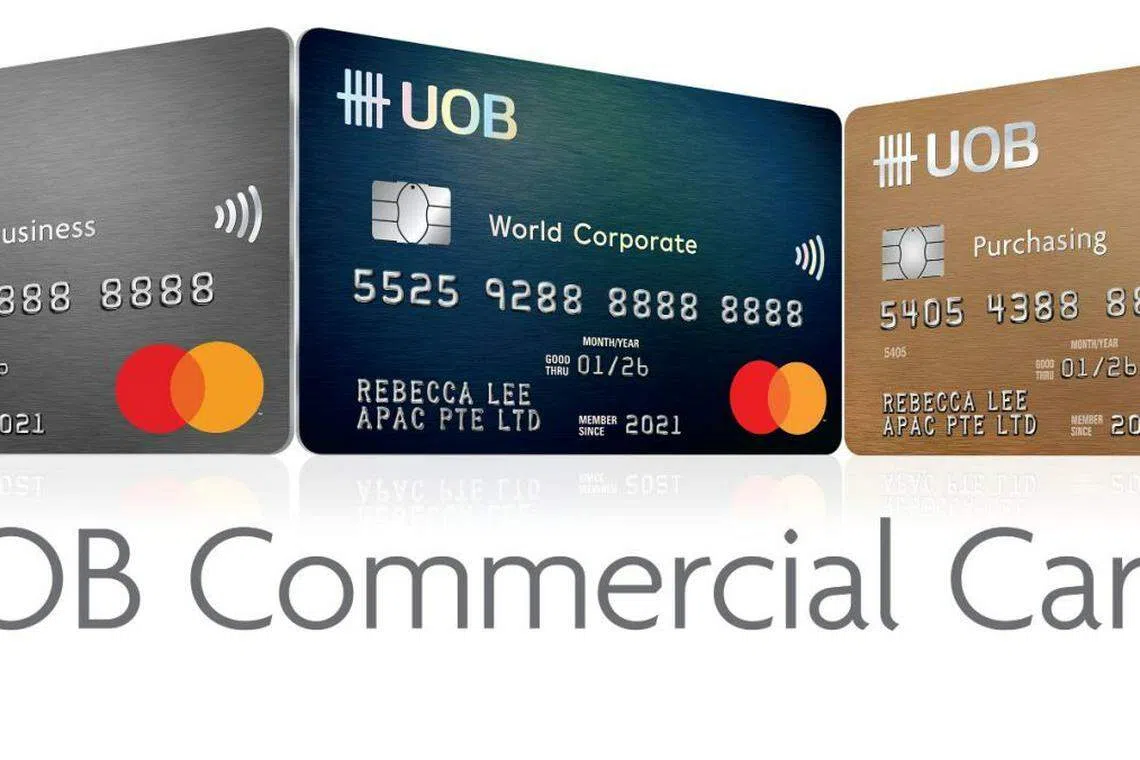
With UOB Procure-to-Pay (P2P) virtual card solution, suppliers receive payments from buyers in a prompt and predictable fashion. This provides for faster collection and enables suppliers to spend less resources on administrative tasks.
Buyers with a UOB P2P virtual card also enjoy ease and convenience even if their suppliers do not accept card payments, since payment is credited directly into the suppliers' designated bank account. Buyers further enjoy up to 60 days credit extension to complete their payment, similar to what they would have if paying with a card.
With UOB P2P, customers can access key business benefits that include: ● Greater operational efficiencies ● Better manpower allocation ● Reduced accounting errors ● Fraud mitigation ● Optimised cash flow
As UOB P2P is compatible with major online procurement and invoicing platforms, this ensures seamless integration across a customer's critical business systems. Besides this, UOB P2P can also help to enhance an ecosystem's value proposition to its users, through the enablement of a payment/ collection module within its platform.
To further provide customers with tools that meet their business needs, UOB works closely with partners such as Mastercard to deliver holistic commercial solutions, including UOB P2P.
With South-east Asia forecast to become a US$1 trillion digital economy by 2030, companies need to catch the digitalisation wave and tool up quickly and effectively.
Decoding Asia newsletter: your guide to navigating Asia in a new global order. Sign up here to get Decoding Asia newsletter. Delivered to your inbox. Free.
Share with us your feedback on BT's products and services
TRENDING NOW

On the board but frozen out: The Taib family feud tearing Sarawak construction giant apart

Thai and Vietnamese farmers may stop planting rice because of the Iran war. Here’s why

Are Keppel’s dividends truly unsustainable – or just misunderstood?
COEs for large cars up 4.3% at S$126,236, mainstream cars near S$125,000

