

World’s worst bond market faces another big supply shock
A major driver in the increase in net supply is the central bank’s slowdown in buying
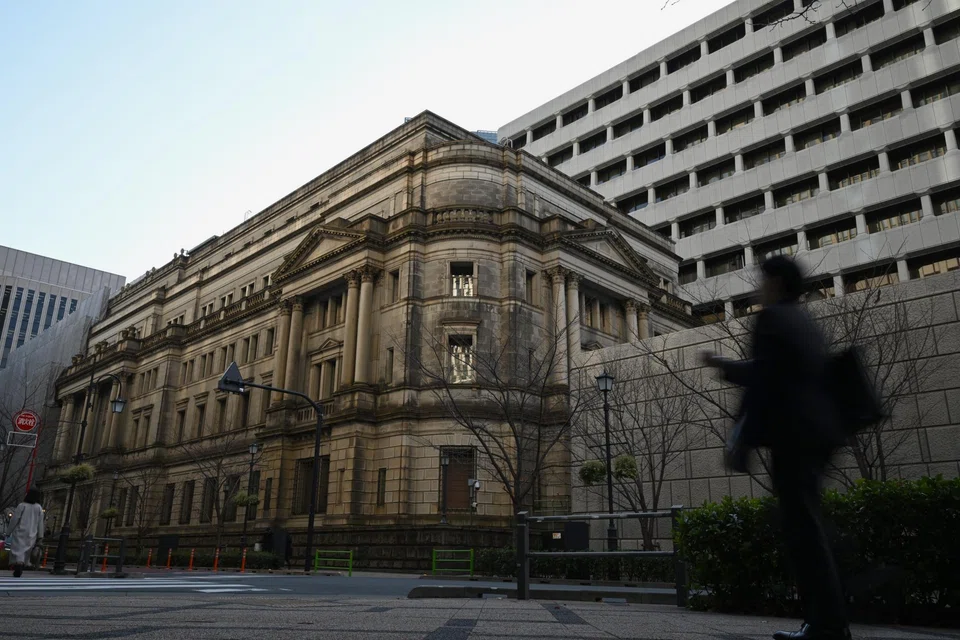
[TORONTO] Japan’s government bond market is set for another tough year as investors contend with the largest net increase in supply in well over a decade.
The nation’s sovereign debt, the worst performer among the world’s biggest markets last year, faces an 8 per cent rise in net supply to about 65 trillion yen (S$532 billion) in the fiscal year starting in April. This is according to Bloomberg analysis that accounts for the Bank of Japan’s (BOJ) reduced purchases and debt that will mature and be redeemed by the government.
This leaves private buyers with more issuance to digest and raises the prospect of increasing interest payments for Prime Minister Sanae Takaichi’s government, which has unveiled a record budget to fund an ambitious stimulus package.
“Supply-demand conditions in Japan’s bond market have deteriorated to the point that the government may eventually need to adjust issuance each quarter,” said Akio Kato, senior manager of the strategic research and investment division at Mitsubishi UFJ Asset Management in Tokyo.
Kato holds bearish positions on Japan’s bonds by keeping the duration of his portfolios shorter than benchmarks, he said.
Japanese bonds lost over 6 per cent last year, excluding currency effects, the worst performance among more than 40 sovereign markets tracked by Bloomberg, as the BOJ’s slow policy tightening failed to arrest sticky inflation. Treasuries gained 6.3 per cent while China’s government bonds inched up 0.1 per cent. German securities fell 1.6 per cent.
A major driver in the increase in net supply is the central bank’s slowdown in buying. The BOJ plans to reduce monthly gross purchases by more than a quarter to roughly 2.1 trillion yen over the coming year. This means its holdings are likely to shrink by 46.5 trillion yen next fiscal year, compared with 41.1 trillion yen in the current period, calculations showed.
Banks and pension funds have led buying since the BOJ started loosening its grip on bond yields. Their net purchases, less redemptions, have each totalled more than 30 trillion yen since April 2023, but with a ballooning of net supply, there are concerns this may be insufficient.
The benchmark 10-year bond yield climbed to 2.13 per cent this week, the highest since 1999.




“Fair value for the 10-year yield is around 2.2-2.3 per cent for now in our view,” said Miki Den, a senior rates strategist at SMBC Nikko Securities. “Yields could reach that level fairly easily.”
Renewed upward pressure in yields comes after governor Kazuo Ueda suggested this week that the BOJ will lift the policy rate further after raising it to a three-decade high last month. Overnight-indexed swaps signal possibly two more rate hikes by the end of 2026.
Rising yields, especially for shorter-maturity debt, point to the possibility of the Ministry of Finance (MOF) further tweaking its issuance plans. Excluding treasury bills, gross bond supply is set to dip slightly to about 133 trillion yen in the 12 months to March 2027. Issuance of two- and five-year notes is slated to rise, while that of bonds with tenors of more than 10 years declines. The MOF will sell 30-year bonds on Thursday (Jan 8).
“The yield curve is likely to flatten as the supply of longer-dated debt decreases and that of shorter notes increases,” said Tadashi Matsukawa, head of bond investments at PineBridge Investments Japan in Tokyo. “With underlying inflation staying firm, the BOJ is expected to raise rates further towards neutral levels.” BLOOMBERG
Decoding Asia newsletter: your guide to navigating Asia in a new global order. Sign up here to get Decoding Asia newsletter. Delivered to your inbox. Free.
Share with us your feedback on BT's products and services
TRENDING NOW

High Court rules against Julius Baer’s Singapore trust arm in US$50 million family trust dispute

MSCI proposes standalone status for Indonesia; Jakarta stocks plunge 8%

Once staunchly pro-China, Malaysian Chinese businesses are now distancing themselves from Beijing

No chicken feed: How Malayan Flour Mills built an empire from flour to fowl

