

Yen is 'deeply undervalued', says Morgan Stanley
The Japanese currency is on course to avoid a record fourth straight annual loss
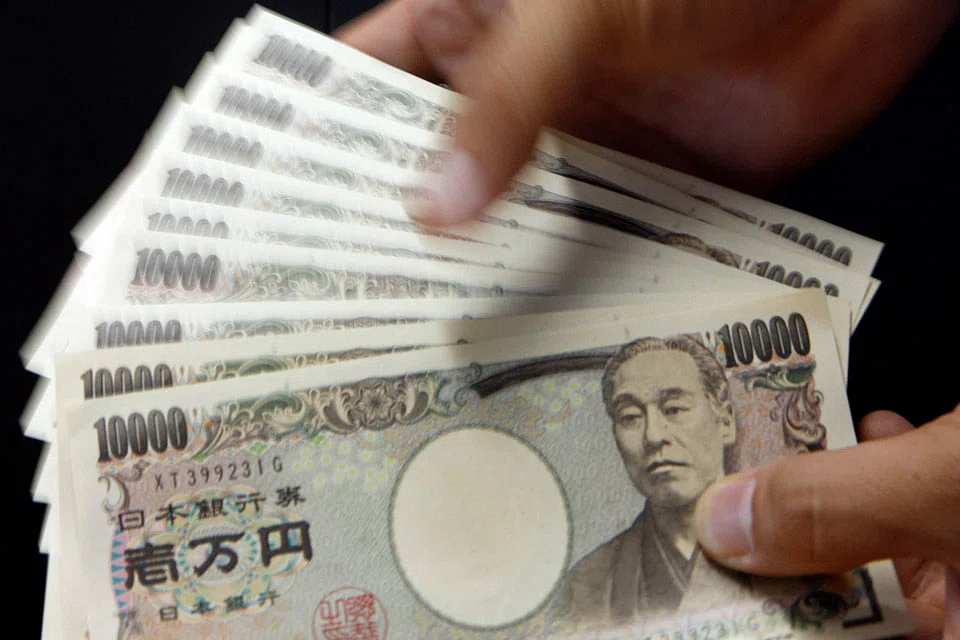
Tokyo
AN unlikely event is developing as the US Federal Reserve moves closer to its first interest-rate increase in almost a decade: Yen bulls have re-emerged.
Japan's currency is on course to avoid a record fourth straight annual loss as a stuttering global economy revives haven demand and weakens the case for the Fed to raise rates more than once in 2015.
The odds that the yen will complete a yearly gain have increased to 55 per cent from 23 per cent a month ago, according to data compiled by Bloomberg based on options.
Meanwhile, risk reversals show yen bulls are the most dominant they have been in 19 months, bears are cutting back their bets on declines and Morgan Stanley says the currency is "deeply undervalued" against its peers once inflation and trade patterns are taken into account.
"The risk of the yen ending the year stronger is growing," said Daisuke Karakama, chief market economist at Mizuho Bank Ltd in Tokyo. "The main scenario is for the Fed to raise rates once this year and stop normalising next year as it feels the pain of the strong dollar, but the probability has risen over the past two months that the Fed may have to forgo a hike this year."
The yen has surged 4.7 per cent since the day before China unexpectedly devalued the yuan on Aug 11, the most among some 150 currencies tracked worldwide by Bloomberg. The currency was at 119.07 per dollar as of 12.30pm Tuesday in Tokyo.
Japan's currency was 4.9 per cent down for the year on June 5, when it reached 125.86 per dollar, the weakest level in 13 years.
It started sliding at the end of 2012, when Shinzo Abe became prime minister with a pledge to expand monetary stimulus to revive the economy.
There was an 11 per cent loss in 2012, an 18 per cent tumble the following year and a further 12 per cent drop in 2014. The cumulative decline reached 31 per cent at the nadir in June.
The yen is now the most attractive of all the currencies covered by Morgan Stanley, when comparing the real effective exchange rate with its long-term average, New York-based foreign exchange strategists Evan Brown and Calvin Tse wrote in a Sept 3 report.
"The yen is the most undervalued on our metrics, not just across the Group of 10 but all currencies we cover," they wrote.
Betting that the yen will strengthen against other Asian currencies such as the Chinese yuan and South Korean won is one of Morgan Stanley's most-favoured long-term ideas, the analysts said.
Market metrics show investors are becoming more bullish. The premium for options to buy the yen in three months versus those to sell it widened to 1.39 percentage points on Tuesday, the most on a closing-market basis since February 2014, risk reversals show.
At the same time, hedge funds and other large speculators have reduced bets on a weaker yen. Net positions that profit from declines in the currency fell to 15,555 contracts in the week ended Sept 1, from 105,226 three weeks earlier, data from the Washington-based Commodity Futures Trading Commission showed.
Bank of Japan figures indicate that yen lending by Tokyo's foreign bank branches to their offices abroad, a gauge of demand for the currency to fund overseas investments including carry trades, dropped in July after recovering to about half of the 23 trillion yen (S$271.9 billion) level set at the peak in 2007.
If those positions were to slide back to where they were before they started rising in 2010, the yen may appreciate to 105 per dollar, according to Tohru Sasaki, head of Japan markets research at JPMorgan Chase & Co in Tokyo.
A review of past trading levels shows that in 12 of the past 25 years the yen reached its strongest level for the year in the fourth quarter, and it often starts to appreciate in August, said Mr Sasaki, who worked at the Bank of Japan until 2003.
"There's a possibility that the dollar will fall from here," he said. "The yen has never weakened four years in a row, and while I've been thinking the yen could end this year marginally lower, I'm not so sure now."
Mr Sasaki also said that the yen may be poised to break out of this year's 8.6 per cent trading range, which is tighter so far than the 10 per cent seen in 2006 that was the narrowest in the past quarter century.
If it does, the 2015 high of 115.86 in January is much closer than the June trough of 125.86.
"For the pair to end the year without exceeding the current high or low of the year would be a very bold prediction, to say it will end in a narrow range not seen in 25 years," Mr Sasaki said.
For Mizuho's Mr Karakama, any waning in the likelihood of Fed rate increases may mean any weakening trend for the yen comes to an end between October and December this year, rather than in the first quarter of 2016.
"You couldn't go wrong saying the dollar would rise on the Fed's normalisation . . . but that scenario faces scrutiny in the coming four months," he said. "One more stock plunge and the Fed strikes out on a rate hike." BLOOMBERG
TRENDING NOW

OCBC mobile, online banking services restored after Friday afternoon disruption

SGX CEO Loh Boon Chye to step down; succession planning under way

Waymo founder predicts ‘landslide’ robotaxi adoption in Singapore, driven by high car costs

Vietnam’s northern provinces, not Hanoi or Ho Chi Minh City, are powering near 10% GDP growth

