

Yen skids past 142 per US dollar, sterling clings onto early gains
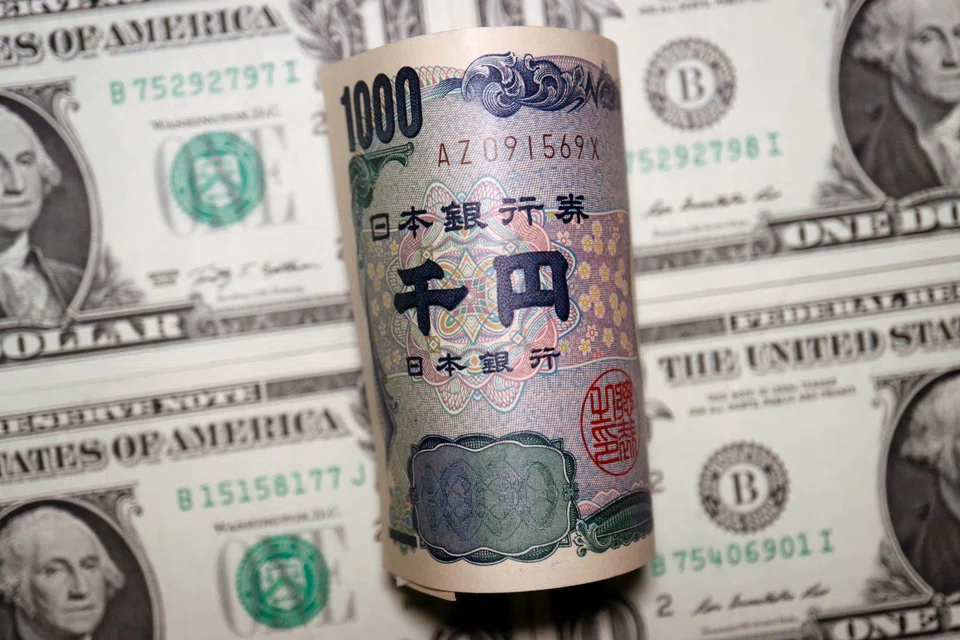
THE rate-sensitive Japanese yen continued tumbling on Tuesday (Sep 6), falling past 142 per US dollar, while sterling and the euro tried, and in the euro’s case failed, to recover from multi-year lows against the US dollar hit the day before.
The US dollar climbed 1.07 per cent on the yen to 142.1, a fresh 24-year high. The US dollar is up 23 per cent against the Japanese currency so far this year.
“The FX market is re-focusing on rate hikes by major central banks and the Bank of Japan (BOJ) stood out at the Jackson Hole symposium as the only 1 that remained resolute about keeping monetary policy accommodative,” said HSBC analysts in a note.
“USD-JPY’s correlation with US yields has thus rebounded to near their strongest year-to-date level,” they wrote in the note, titled, “JPY: staring into the abyss.” The bank changed its forecast for the pair to 144 at the end of the third quarter up from 140 previously.
The US benchmark 10-year yield was last at 3.2557 per cent, up from Friday’s close of 3.191 per cent. US markets were closed on Monday for a holiday.
In contrast, the yield on 10-year Japanese government bonds was 0.24 per cent, due to the BOJ’s yield curve control policy.
Elsewhere, the pound and the euro both gained over 0.6 per cent against the US dollar in morning trading in Europe, though while sterling managed to cling onto some of this, up 0.35 per cent at US$1.1564, the euro retreated to trade flat on the day at US$0.99205, only just above its 20-year intraday low hit the day before.
“That governments are working on price caps, support for the consumer, and really trying to get a grip on the energy crisis helps set a floor under those 2 pairs,” said Samy Chaar, chief economist Lombard Odier.
The pound was also performing well on the crosses, gaining 1.44 per cent against the yen.
Britain’s incoming Prime Minister Liz Truss is considering a freeze on household energy bills to try to avert a winter cost-of-living crisis for millions of households, Reuters reported on Monday.
European Union ministers will meet on Sep 9 to discuss urgent bloc-wide measures to respond to a surge in gas and power prices that is hammering Europe’s industry and hiking household bills, after Russia curbed gas deliveries to the bloc.
The Australian dollar slid to a 7-week low after the Reserve Bank of Australia raised its cash rate by 50 basis points, but signalled it was not on a preset path for future rate hikes.
The Aussie was last 0.43 per cent lower at US$0.6768.
In China, the authorities’ efforts to slow the yuan’s recent depreciation were proving unsuccessful, with the yuan slipping to a fresh 2-year low of 6.9784 in offshore trade.
China’s central bank late on Monday cut the foreign exchange reserve requirement ratio (RRR), freeing up US dollars for banks to sell.
Two dealers also told Reuters South Korean authorities were suspected of selling US dollars near the end of the onshore trading session on Tuesday in an apparent intervention to curb the won’s weakness. REUTERS
Decoding Asia newsletter: your guide to navigating Asia in a new global order. Sign up here to get Decoding Asia newsletter. Delivered to your inbox. Free.
Share with us your feedback on BT's products and services
TRENDING NOW

CPIB hauls Multi-Chem CEO, COO in for questioning; stock hits ‘circuit breaker’

Fed hike throws Singapore banks a margin lifeline; UOB likely to benefit more

He built the Vingroup empire. Now South-east Asia’s richest man is handing some key roles to his sons

From Haidilao to Oriental Kopi: How some of Asia’s favourite F&B players are faring in 2026

