

Yen weakens to new 24 year low; sterling cautiously rebounds
 Add BT as a preferred source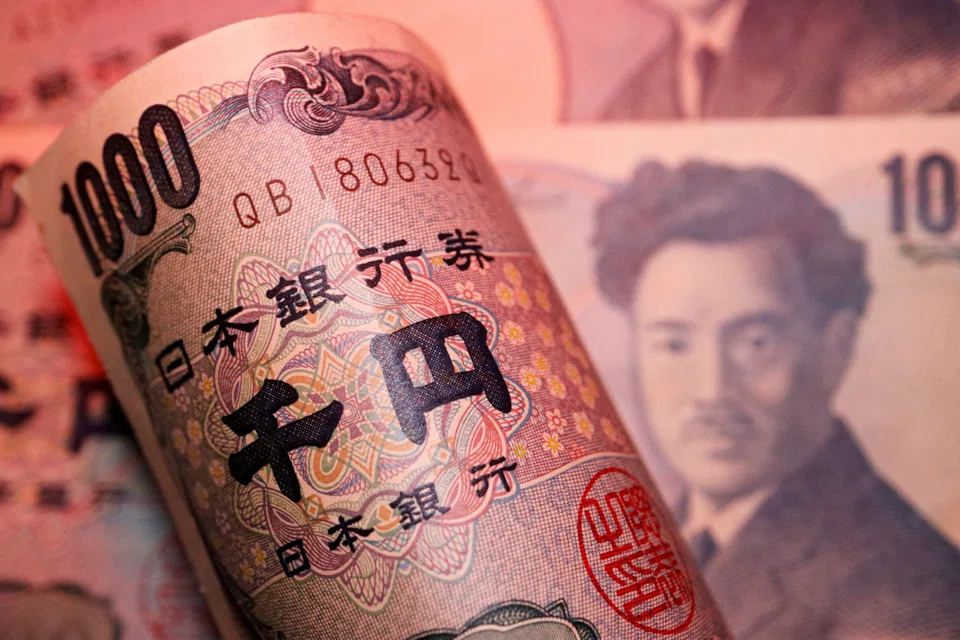
DeeperDive is a beta AI feature. Refer to full articles for the facts.
THE US dollar scaled new 24-year highs versus the yen on Wednesday (Oct 12), holding above levels that prompted intervention by Japanese officials last month, while investors in sterling were left scratching their heads about the Bank of England’s (BOE) next steps.
The US dollar rose as much as 0.48 per cent to 146.6 yen, with a fifth straight session of steady gains taking it to levels not seen since August 1998.
Japanese authorities staged their first yen-buying intervention since 1998 on Sep 22, when the US dollar was at 145.90 yen.
Officials have reiterated they stand ready to take appropriate steps to counter excessive currency moves, though whether they wish to defend particular levels is less clear.
“Given the overriding strong US dollar trend in place, it’s possible that instead of defending the yen at a particular level, the Bank of Japan would try to slow down the pace of US dollar-yen’s rise by defending at a higher level” than previously, said Alvin Tan, head of Asia currency strategy at RBC Capital Markets.
The yen is particularly sensitive to the gap between US and Japanese long-term government bond yields. The benchmark 10-year Treasury yield is trading not far from 14-year highs just below 4 per cent while the equivalent Japanese yield is pinned near zero.
Navigate Asia in
a new global order
Get the insights delivered to your inbox.
Yields outside Japan have been pushed higher by spillover from the turmoil in Britain’s bond market.
Long-dated gilt yields jumped again, with the 20 year hitting a 14-year high a day after Bank of England governor Andrew Bailey reiterated that the central bank would end its emergency bond-buying programme on Friday, telling pension fund managers to finish rebalancing their positions by then.
Sterling fell to a two week low of US$1.0925 after Bailey’s remarks, reiterated by a bank spokesman on Wednesday morning, though the currency later rebounded to stand 0.9 per cent higher at US$1.1062.
However, the Financial Times reported that the BOE has signalled privately to lenders that it is prepared to prolong its bond purchases, and additional media reports suggested the government could U-turn on more elements of its recent “minibudget” that roiled the market.
Jordan Rochester, executive director FX Strategy at Nomura, said there was no clear reason to reduce sterling shorts given that “it’s falling global growth that drives GBP anyway”.
Data earlier in the session showed Britain’s economy shrank by 0.3 per cent in August, hit by weakness in manufacturing and maintenance work in North Sea oil and gas fields.
Elsewhere, the euro remained under pressure, but was flat on the day at US$0.9709.
The risk-sensitive Australian dollar sank to a 2 1/2-year low of US$0.62395, and bitcoin, which also typically moves in line with investors’ attitude to risk was struggling around US$19,000. REUTERS
Decoding Asia newsletter: your guide to navigating Asia in a new global order. Sign up here to get Decoding Asia newsletter. Delivered to your inbox. Free.
Share with us your feedback on BT's products and services
TRENDING NOW

Autobahn Rent A Car directors declared bankrupt over S$50 million each owed to DBS

Amazon’s MGM Studios gains creative control over ‘James Bond’ franchise

UOB’s Wee Ee Cheong says S$4.9 billion Citi deal ‘paying off’ as Asean push accelerates

In taxing wealth, how far can Singapore push property owners?

