

Yield on 6-month Singapore Treasury bill at decades-high of 4.19% in latest auction
November Singapore Savings Bond closes with applications totalling S$2.2 billion, vying for an allotment size of S$900 million

Tay Peck Gek
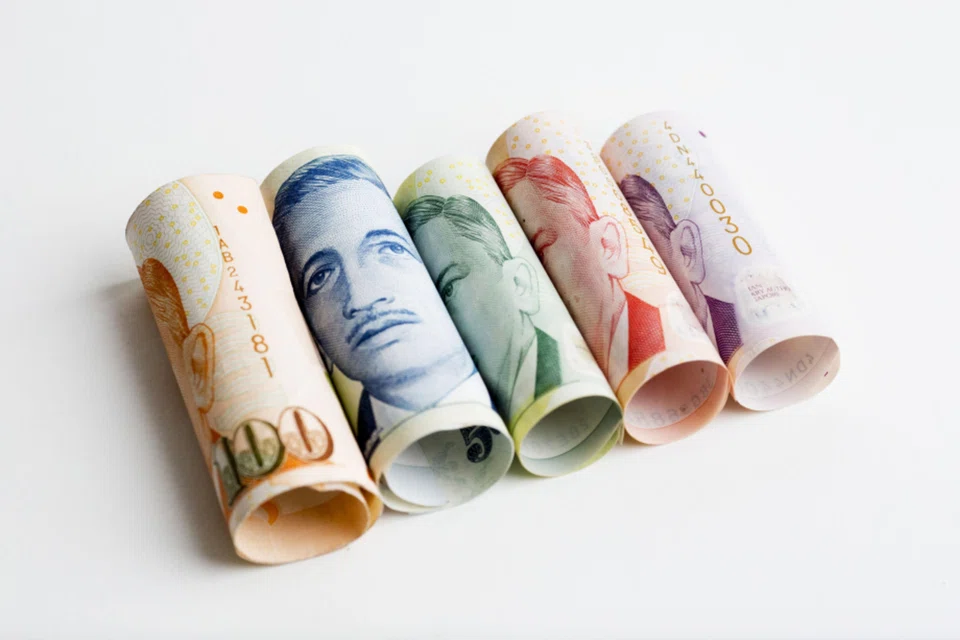
SINGAPORE’S Treasury bill (T-bill) with a six-month tenor auctioned on Thursday (Oct 27) reported a cut-off yield of 4.19 per cent per annum – a record high in decades and 42 basis points higher than the 3.77 per cent on the issuance a fortnight ago.
The risk-free fixed-income instrument last achieved a yield of 4 per cent in 1989 after peaking at 4.73 per cent in 1988, said the Monetary Authority of Singapore (MAS) website, which showed results dating back to 1987.
Yields on six-month T-bills started to nudge above 3 per cent in September, jumping from 2.99 per cent for the Sep 1 auction to 3.32 per cent for the issuance a fortnight later, amid a rising-interest-rate environment as the United States central bank goes on a hiking spree to arrest runaway inflation. And there is a spill-over effect in Singapore.
The T-bill auctioned on Thursday received applications amounting to S$10.9 billion against an allotment of S$4.6 billion. All non-competitive applications of S$1.8 billion were allotted; only 14 per cent of competitive applications were allotted at the cut-off yield.
Meanwhile, the November Singapore Savings Bond (SSB) closed on Wednesday, with applications totalling S$2.2 billion vying for an allotment size of S$900 million. Those who applied for S$10,000 or lower got their full allotment (subject to the individual allotment limits).
Those who applied for S$10,500 or higher were allotted either S$10,000 or S$10,500, with about 29.2 per cent of these applicants selected at random and allotted the additional S$500, going by the results published on the MAS website on Thursday.
This tranche of SSB offers a first-year interest rate of 3.08 per cent and a 10-year average rate of 3.21 per cent – both all-time highs.
Purchase of SSBs can be made using cash or Supplementary Retirement Scheme funds, whereas T-bills can be invested with these two sources of funds as well as Central Provident Fund (CPF) Investment Scheme funds, although using CPF money requires physical attendance at any branch of the local banking trio.
In a non-competitive bid for T-bills, the investor specifies only the amount to invest and accepts the cut-off yield. Investors who would want to invest only if the yield is above a certain level should submit a competitive bid.
Up to 40 per cent of the total issuance amount will be allotted to non-competitive bids first. If the amount of non-competitive bids exceeds 40 per cent, the bond will be allocated to non-competitive investors on a pro-rated basis, with the balance of the issuance amount going to competitive bids from the lowest to highest yields.
Interest in these risk-free securities climbed as equity markets have turned bearish and volatile, sending investors to seek haven in these fixed-income instruments, even if the rising yields are still lower than the inflation rate.
With the T-bill yield over 4 per cent, one might wonder if it still makes sense to invest in stocks, especially if the dividend yield is also 4 per cent (or not much higher) – yet riskier in this volatile investment climate.
Wealth advisory firm Providend’s senior client adviser Tan Chin Yu said: “Equities still make sense for the long term because they would still have a higher expected return and serve as a natural hedge against inflation, as long as you’re sufficiently diversified.” While T-bills cannot totally hedge against inflation over the long term, they are an extremely good tool if the investor has short-term needs that cannot afford market volatility, he added.
TRENDING NOW

Singapore identifies 7 firms responsible for haze fires, notices issued urging action: Grace Fu

‘How many will survive?’: Bubble fears arise as China’s humanoid robotics face reality check

GIC-backed Bank Jago sees wealth management as next growth engine as Indonesian investor base grows

Ageing in Asia: Huge potential for the consumer economy

