

Yuan near 4-year high despite state bank US dollar buying
 Add BT as a preferred source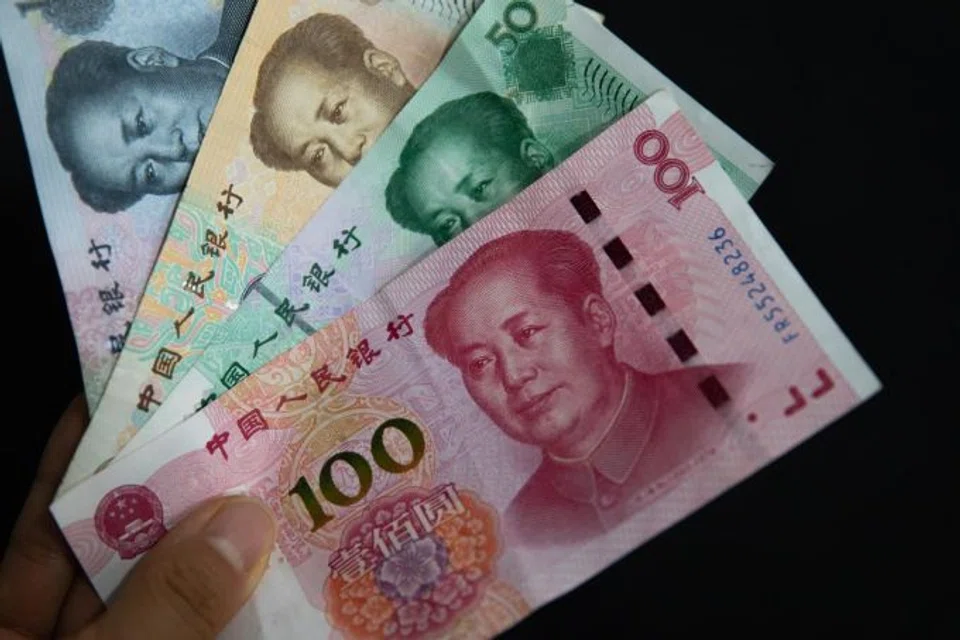
DeeperDive is a beta AI feature. Refer to full articles for the facts.
[BEIJING] China's yuan finished domestic trade at a near 4-year high against the US dollar on Monday (Feb 28), despite major state-owned banks buying the greenback to restrain the bullish Chinese currency.
The onshore spot yuan finished its domestic session at 6.3111 per dollar as of 0830 GMT, the strongest such close since Apr 24, 2018.
2 trading sources said the buying of US dollars in the onshore spot market appeared to be an attempt to prevent the yuan from breaching the 6.31 per dollar level.
But state bank buying faded after the market close, resulting in the spot rate quickly breaching the key threshold.
Traders and analysts noted that the official midpoint fixings have mostly come in line with market projections in February, providing little clarity on China's FX policy stance.
And Monday's state bank actions could be interpreted as a sign that the authorities have started to get uncomfortable with the currency's continued strength.
Navigate Asia in
a new global order
Get the insights delivered to your inbox.
State banks have proprietary accounts but also act on behalf of the central bank in the country's FX market.
On Monday, the People's Bank of China (PBOC) set the midpoint rate at 6.3222 per dollar, 124 pips or 0.2 per cent firmer than the previous fix of 6.3346, the strongest since Apr 25, 2018.
The strength in the Chinese currency was underpinned by steady demand despite heightened geopolitical worries and fresh Western sanctions on Russia.
The Chinese currency's value against its peers also climbed to a fresh 6-1/2-year high.
A slew of Western nations announced sanctions over the weekend to punish Russia for its invasion of Ukraine, including sanctions on its currency reserves and blocking some Russian banks from the SWIFT international payments system.
Traders and analysts said an escalation in the Russia-Ukraine crisis had driven up foreign inflows into Chinese assets, while corporate clients also appeared to have heavier demand for the yuan to meet month-end requirements.
"Historically, it (the yuan) has been relatively uncorrelated with external risk sentiment," said analysts at HSBC, adding this was because China's economy is very large and its capital account is not fully liberalised.
The analysts expect the yuan to trade at 6.30 per dollar at the end of the first quarter. REUTERS
Decoding Asia newsletter: your guide to navigating Asia in a new global order. Sign up here to get Decoding Asia newsletter. Delivered to your inbox. Free.
Share with us your feedback on BT's products and services
TRENDING NOW

China pips the US if Asean is forced to choose, but analysts warn against reading it like a sports result

Beijing’s calculated silence on the Iran war

Shelving S$5 billion office redevelopment plan proved ‘wise’ as geopolitical risks mount: OCBC chairman

Vietnam formalises new state leadership, redefining ‘four pillars’ power balance

