

Yuan traders at most bearish since 2009
Hong Kong
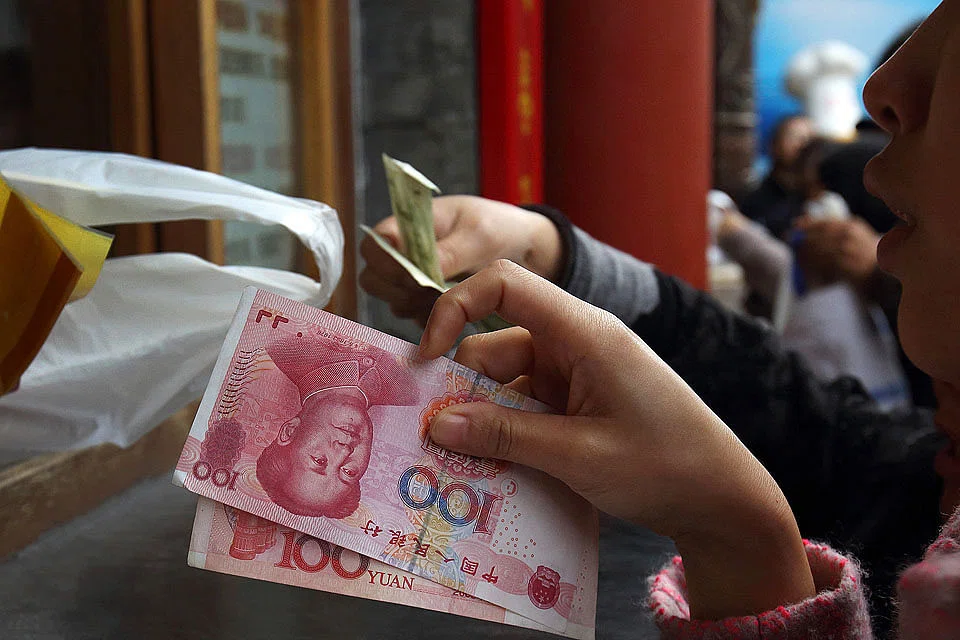
OPTIONS traders are the most bearish they've been on the yuan since the global financial crisis, betting China will allow more depreciation versus the dollar as monetary policy is loosened to support the economy.
The one-month 25-delta risk-reversal rate for the yuan surged 78 basis points this week and touched 2.68 percentage point Thursday, the highest since January 2009, according to data compiled by Bloomberg. That's also the biggest weekly jump in more than three years. The gauge measures the premium on options to sell the currency against the dollar compared with contracts that allow purchases. The offshore yuan's reading of 3.2 percentage point is the most bearish in Asia.
On Thursday, China reduced the reserve ratio for all lenders for the first time since May 2012 after a surprise interest rate cut in November, fuelling concern that a slowdown in the world's second-largest economy is deepening. The Bloomberg Dollar Spot Index has climbed 2.2 per cent this year on bets the Federal Reserve will raise borrowing costs and as the euro fell.
"If the Fed starts withdrawing the US dollar while the People's Bank of China keeps releasing yuan, we wonder how the yuan can strengthen," Kevin Lai, a Hong Kong-based economist at Daiwa Capital Markets, said in a note this week. He forecast the currency will fall to 6.60 a dollar by the end of this year.
The currency climbed 0.17 per cent to 6.2414 against the greenback as of 11.32am in Shanghai, China Foreign Exchange Trade System prices show, after the PBOC raised its reference rate to a level that the spot rate had to strengthen to stay within its permitted 2 per cent trading band.
The economy expanded 7.4 per cent last year, the least since 1990. Growth is expected to decelerate further to 7 per cent this year, according to the median estimate in a Bloomberg survey. Manufacturing gauges for January released in the past week indicated contraction. Bloomberg
TRENDING NOW

He built the Vingroup empire. Now South-east Asia’s richest man is handing some key roles to his sons

Fed hike throws Singapore banks a margin lifeline; UOB likely to benefit more

Luxury properties seized in S$3 billion money laundering case fail to sell at auction
US stocks: Tech leads Wall Street to higher close as oil eases, Treasury yields dip

