Banks woo savers for fixed deposits as mortgage rates climb

Vivienne Tay &
Ry-Anne Lim
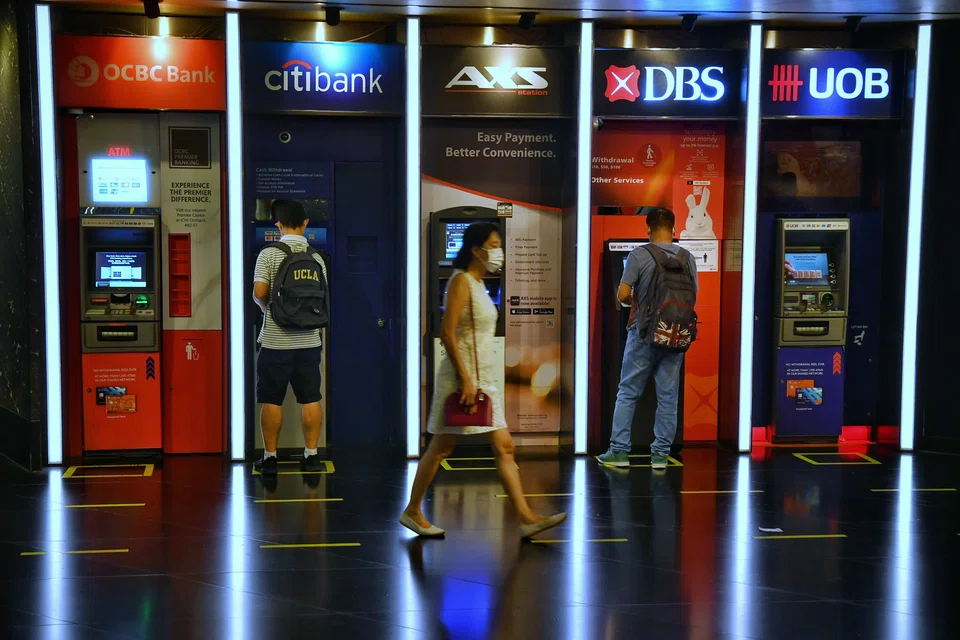
JUST one week after raising mortgage rates, lenders in Singapore are now locked in a competition for cash, luring savers with higher fixed deposit rates just weeks after increasing interest rates on savings accounts.
On Nov 16, OCBC started offering fixed deposit placements for Central Provident Fund (CPF) ordinary account savings, paying 3.4 per cent per annum. The interest rate is higher than the 2.5 per cent being earned for CPF OA savings beyond the first S$20,000 but does not take into account the monthly interest lost when money is withdrawn from CPF.
For its regular fixed deposits, OCBC is offering a promotional interest rate of 3.4 per cent for personal banking customers for 12-month fixed deposits. Premier banking and premier private clients have an interest rate of 3.7 per cent and 3.9 per cent, respectively.
Meanwhile, UOB has revised its promotional fixed deposit rate to a range between 3.55 per cent and 3.95 per cent, depending on the tenor and amount deposited.
DBS, which has no promotional rates, has made two rounds of revisions to its fixed deposit board rates this year alone, with the most recent taking place as early as last month. The rates are higher for amounts placed under S$20,000, with interest rates going as high as 1.7 per cent if placed for more than 18 months.
Michael Wu, senior equity analyst at Morningstar, believes the higher deposit rates will result in higher funding costs for the banks.
“While we continue to expect net interest margin to increase in the second half of 2022 and early 2023, the magnitude of the increase would likely be smaller than what we’ve seen in the second and third quarter of 2022,” Wu said.
For Gerald Wong, Beansprout founder and chief executive, the higher fixed deposit interest rates reflect rising interest rates globally, which is good news for savers with spare cash in their bank accounts.
“However, consumers should still keep some of their spare cash in their deposit accounts to meet short-term liquidity needs, as there might be penalties for early withdrawal of fixed deposits,” he noted.
Apart from comparing interest rates, consumers should also think about the time horizon they would like to deploy their cash. Instruments of shorter duration come with potential reinvestment risk upon maturity, Wong said. For instruments of longer duration, consumers need to be comfortable with their funds being locked in over a period of time.
The uptrend in fixed deposit rates comes in tandem with accelerating home loan rates in recent months. Last week, DBS, OCBC and UOB raised their fixed-rate home loan packages, which have sped past the 4 per cent mark.
This far exceeds the 2.6 per cent home loan rate the Housing Development Board (HDB) is offering for public housing, pegged at 10 basis points (bps) above the prevailing CPF OA interest rate.
Of the three local banks, UOB had the highest rate at 4.5 per cent per year for a two-year fixed-rate package, followed by OCBC, which has one-year and two-year packages at 4.3 per cent. DBS was the most competitively priced among the three, with fixed-rate packages for tenors ranging between two and five years priced at 4.25 per cent per annum.
When it comes to floating packages, however, UOB was the most competitively priced among the three banks, with a lower interest rate spread of 70 bps for its three-month SORA-based loans, compared with DBS’s 100 bps and OCBC’s 98 bps.