The battle of the wealth hubs: Singapore, Dubai and Hong Kong
Asian financial hubs emerge as strong contenders in a global wealth migration wave


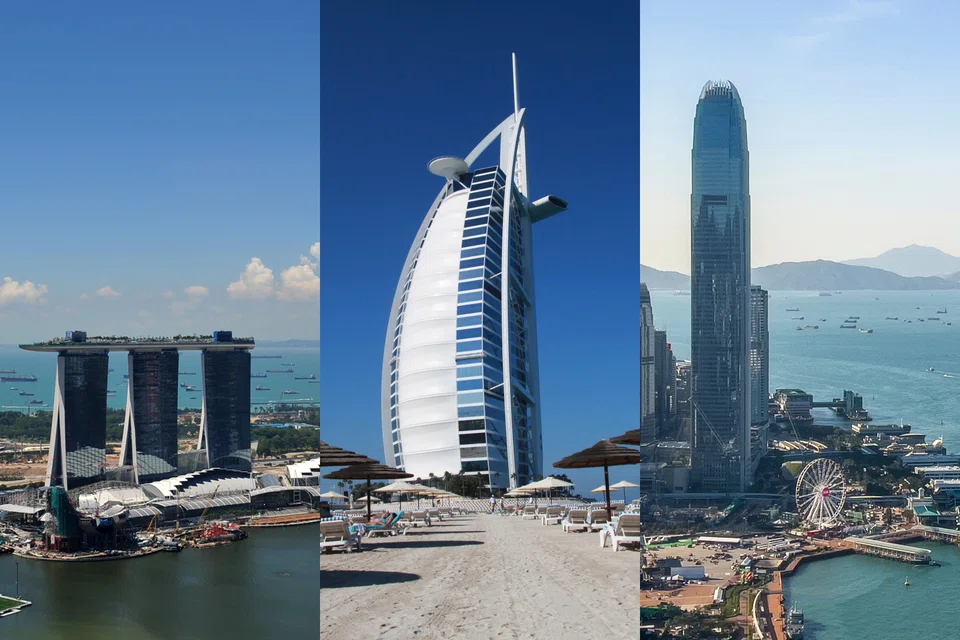
WEALTH is moving around the world at an unprecedented rate, and three of Asia’s prominent wealth hubs are actively vying for a slice of this pie.
Migration consultancy Henley & Partners expects 128,000 millionaires to relocate in 2024, eclipsing the previous record of 120,000 in 2023.
“This year is shaping up to be a watershed moment in the global migration of wealth,” said Dominic Volek, its group head of private clients.
“As the world grapples with a perfect storm of geopolitical tensions, economic uncertainty, and social upheaval, millionaires are voting with their feet in record numbers, seeking greener pastures and safer harbours for their assets and family interests,” he said.
In Asia, Hong Kong and Singapore are traditionally seen as the twin pillars of wealth management.
But the United Arab Emirates (UAE), especially Dubai, has quickly caught up with its favourable policies, through lessons it drew from the other two, observers said.
Hong Kong and Singapore rank among the top three booking centres globally, while the UAE has the highest percentage growth in cross-border wealth, according to a 2024 report by the Boston Consulting Group.
Singapore has diversified sources of wealth and is capturing flows from other fast-growing economies in the region, attracted by the stable and politically neutral landscape.
Meanwhile, Hong Kong is trying to regain the capital it lost in recent years, due to political riots in 2019-2020 and the Covid-19 pandemic.
Hong Kong is, and will continue to be, the gateway to mainland China and the Greater Bay area, being a deep capital market and a hub for cross-border renminbi flows.
Dubai, meanwhile, is poised to receive wealth through its favourable tax policies and government support for flows.
The city has already observed an influx of Russian wealth amid the Russia-Ukraine war, and is expected to see an incoming wave of global Indians and UK resident non-domiciled individuals amid impending tax changes.
But even as competition heats up, observers say it is not a zero-sum game to become the top wealth hub in Asia.
“It’s actually all the above – the system of having options within Asia is a testament to the region’s broader wealth creation and also wealth servicing needs,” said Song Jianing, KPMG China’s head of advisory for Hong Kong.
The Business Times lays out the opportunities presented by the three hubs and the type of wealth flows they attract.
Singapore: A stable and safe bet
Singapore’s established systems and transparent regulatory framework continue to attract high-net-worth individuals looking to tap opportunities in South-east Asia.
These wealthy individuals also appreciate the city-state’s political stability and predictable business landscape, noted Joel Seow, investment funds partner at global law firm Linklaters.
Henley & Partners’ Volek agreed, saying that Singapore “is and always has been this politically neutral safe zone”.
“There’s no sort of Big Brother or impending political event that’s going to affect Singapore, while that’s clearly something on the cards with Hong Kong.”
Though Hong Kong and Dubai provide better tax outcomes, many high-net-worth individuals looking to relocate with their families gravitate towards Singapore due to lifestyle factors as well.
One family office principal told BT that Singapore was “an easier sell” to his family compared with Hong Kong or Dubai, as the lifestyle here was more appealing, plus they already had existing familial connections.
As for the demographic Singapore attracts, PwC partner Lim Kexin noted that wealthy Indonesians and Malaysians have traditionally relied on Singapore as their offshore banking hub and usually base their family offices here.
Meanwhile, many wealthy Chinese also prefer Singapore and Hong Kong due to the availability of Mandarin-speaking peers, added Lim, who specialises in tax and entrepreneurial and private business.
Furthermore, Singapore is a popular choice for wealthy Taiwanese looking for an “insurance policy” amid geopolitical tensions in the region, noted Volek.
In terms of opportunities, high-net-worth individuals see the Republic as a gateway to the region.
Compared with Dubai, Singapore is not just a “pure financial hub” – it services both portfolio and foreign direct investment flows into the region, said Eric Robertsen, Standard Chartered’s global head of research.
Singapore-based family office Manoharan Capital moved from Australia to Singapore in 2024 to understand the venture capital and private equity landscape in South-east Asia.
“The next decade to 30 years looks very exciting for Asia in general, and we want to do more in the region,” said a spokesperson for the family office.
On a sectoral level, investors see Singapore as a stepping stone to tap emerging opportunities in the tech sector, the biomedical industry and net-zero initiatives, said Seow of Linklaters.
James Marshall, chief executive officer of Kibo Invest, agreed, saying Singapore has been a “sensible innovator” in the area of climate tech. “We have invested in (companies with a local presence), such as Ampd Energy, and SunGreenH2, as part of our global climate tech strategy.”
For Ronald Chan, founder and chief investment officer of Hong Kong-based Chartwell Capital, Singapore has a stronger market for real estate investment trusts, as well as the infrastructure and utilities sector.
The city-state also has strong capabilities in the energy and commodity trading space, and its less volatile equities market makes it a better wealth preservation hub, Chan said.
Market observers noted, however, that compared with jurisdictions such as Dubai, business costs are higher and processing times for licensing applications are lengthy and slow.
Dubai: A new playground for the wealthy
Dubai is an up-and-coming wealth hub, thanks to its suite of tax incentives and comparatively lower barriers for visas and business licensing.
“With zero income tax and low corporate tax rates, the (UAE) offers one of the most attractive tax jurisdictions in the world,” said David Gibson-Moore, president and chief executive of Gulf Analytica.
Its rising status as a global financial centre comes amid a broader shift in global trade patterns.
StanChart’s Robertsen noted that non-oil trade between the Gulf Cooperation Council countries – which includes the UAE – and Asia has expanded 10 to 15 per cent annually, with the potential to eventually reach S$1 trillion per year.
For Henley & Partners’ Volek, Hong Kong and Singapore may attract investors going after the Asian market, but “as more companies and individuals become more globally-focused in their business, then there might be a bit of a pull towards the Middle East and Dubai”.
The city appeals to high-net-worth clients from Europe and the United Kingdom, given its closer geographical proximity – being just six or seven hours away by plane – compared with Singapore and Hong Kong, he said.
Geographical proximity is also why Dubai is popular among wealthy Indian families, apart from cultural similarities, said Vivek Sharma, head of the international clients group at Indian wealth manager Nuvama Group.
Furthermore, Dubai has taken a more liberal approach towards cryptocurrencies and digital assets, attracting more players in that sector, said PwC’s Lim.
The authorities are also investing heavily in non-oil sectors, such as tourism, aviation, real estate and logistics, said Abbas Basrai, partner and head of financial services and financial risk management at KPMG Lower Gulf.
But some observers believe it is still too early to say how Dubai will match up with the other financial centres.
For one, while the ultra wealthy are moving there in droves, they still prefer to keep their assets in more established wealth hubs such as Singapore and Switzerland.
“From a Dubai perspective, it feels more like there’s outward capital coming this way and looking to Asia to diversify their portfolios, if anything,” said the spokesperson for Manoharan Capital.
“I think the story is still very early days, I personally don’t think that it’s been fully fleshed out,” said KPMG’s Song.
“And it’s not just Dubai, right? When you talk about the Middle East, obviously Dubai is top of the conversation, but you also have Saudi Arabia,” he said.
He anticipates that other Middle Eastern cities could also emerge as promising financial centres, which could then turn the region into a dual proposition.
Hong Kong: Gateway to the world’s second-largest economy
Hong Kong has been a global wealth hub for many years, and remains a key location for wealth coming from China, as well as individuals who want access to China.
“I don’t think this is going to be easily taken away simply because our next-door parent is China – a US$17 trillion to US$18 trillion economy,” said Chartwell’s Chan.
“Imagine if we just serve China for its super-rich, wealthy segment – that’s already a huge market for Hong Kong; you don’t need to serve everyone,” he added.
Hong Kong is also the “perfect” place for those who want to navigate North Asia – which includes Japan and South Korea, Chan said.
Kevin Teng, chief executive of Wrise Wealth Management Singapore, agreed. “Like it or not, proximity does matter. Hong Kong continues to draw a lot of North Asian clients,” he said.
Wrise – which has a presence in Singapore, Hong Kong and Dubai – has South-east Asian clients who have expressed interest in setting up operations in Hong Kong, on top of their Singapore family office, as they expect more growth from Greater China in the longer run.
This is in part due to Hong Kong’s friendly business environment.
The government is boosting its financial hub status by “getting the whole Hong Kong Inc ecosystem together”, said KPMG’s Song.
Henley & Partners’ Volek also noted that Hong Kong has reintroduced its capital investment entrance scheme, making it easier for inventors to get residency status in the city.
Chartwell’s Chan said Hong Kong’s entire system has been built to attract flows – it uses common law, and has international financial reporting standards as well as a deep capital market.
Hong Kong provides access to many Chinese technology companies, traditional manufacturers, and brands ranging from sports apparel to food and beverages, he said.
“Great volatility creates great payout opportunities; it’s both a centre for growth of wealth and preservation of wealth.”
Hong Kong has also been “very friendly” to the cryptocurrency market, with supportive regulations, said Wrise’s Teng.
But proximity may be a double-edged sword – investors are increasingly concerned about how US-China tensions may affect Hong Kong.
A spokesperson for Manoharan Capital said: “I think I’m not the only one who shares the view that Hong Kong is like China now, and they may face some hardship with (US president-elect Donald) Trump coming up.”