

To be a wealth hub, Singapore must accept risk of rogue actors: Chee Hong Tat
MAS deputy chairman wants the Republic to be a place where entrepreneurs would bring their capital and talent

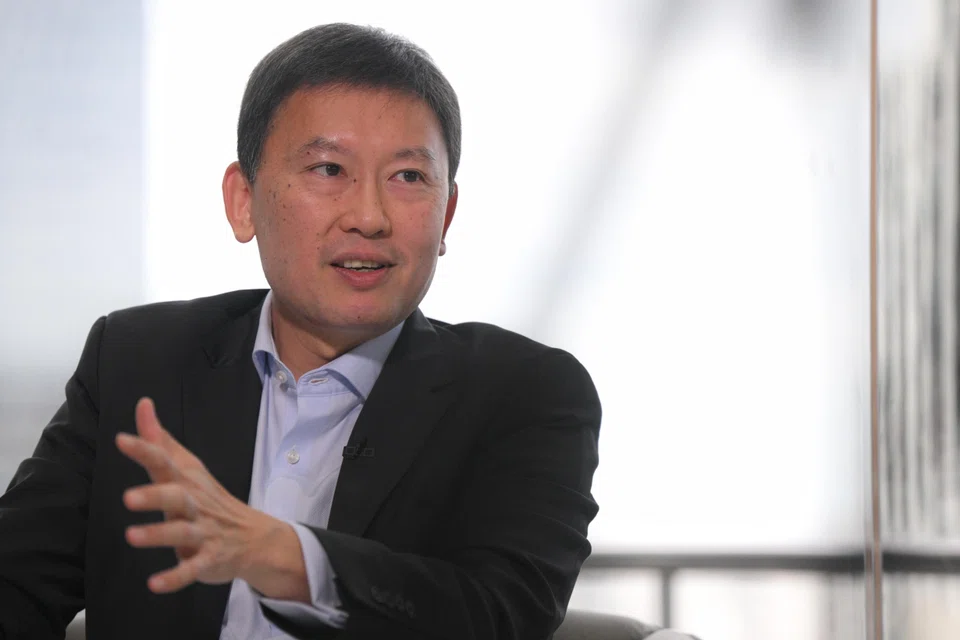
[SINGAPORE] To achieve the goal of becoming a wealth management hub, Singapore must accept that there will be rogue actors from time to time, said Chee Hong Tat, deputy chairman of the Monetary of Singapore.
It is “not realistic” to take a zero-risk approach, as that will stifle innovation and new ideas, said Chee, who is also minister for national development.
“I don’t think Singapore should become a place where it is just safe and stable – full stop,” he said.
“If that’s all that we are, you may get some people who come, but they will just park their money here and won’t do much with it.”
Chee was speaking at a 2026 outlook conference organised by the Bank of Singapore (BOS) on Thursday (Jan 8), in a fireside chat hosted by BOS chief executive Jason Moo.
The deputy chairman said he wants Singapore to be a “happening and vibrant place”, where entrepreneurs would bring their capital and talent to translate their ideas.
To maintain reputation and give confidence, Singapore must thus keep the number of rogue cases small, and deal with them when discovered in a firm and decisive manner, he said.
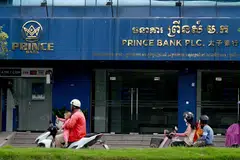
One of the more significant money laundering cases of late in the city-state involved Cambodian scam kingpin Chen Zhi – who was arrested on Jan 7 and deported to China – and his associates. Prosecutors alleged that Chen and his Prince Holding Group stole from victims of online “pig butchering” operations in the US and other countries, and laundered billions of US dollars in illicit funds.
In a parliamentary response on Nov 5, Chee said that MAS has ceased tax incentives for two single family offices funds linked to the sanctioned individuals. Several assets owned by Prince Group worth billions have been seized globally, including properties, bitcoins and luxury vehicles.
SEE ALSO
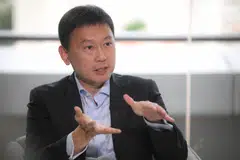
During the conference, Chee also said not everything needs to be done in Singapore – even if a company is based in the city-state, part of its operations could be done overseas, for example, and the Republic should encourage its companies to expand outside for growth.
“If you only rely on Singapore, the growth potential will be more limited,” he said.
The need to balance different objectives in wealth management is also true for other areas, including the digital economy and tokenisation, Chee said. At the panel, he also spoke on the rise of stablecoins and the Asean Digital Economy Framework Agreement (Defa).
Singapore needs to view stablecoins in a balanced and sensible manner, he said.
“It’s not free for all… it doesn’t mean that we don’t do anything, but it also doesn’t mean that we want to do everything.”
Mindful that there is rising competition in the tokenisation space, such as from Hong Kong and Dubai, there is a need to “go one layer deeper” to understand use cases and safeguards, to avoid hype.
“Don’t end up being pressured to do something because of the fear of missing out, because then you end up making the wrong decisions,” Chee said.
Regional collaboration
As for Defa, Chee said the region is still not yet performing at potential and can further strengthen collaboration.
While each country in Asean will want to have their own development plan, the region as a whole can still work towards having a smooth flow in terms of payments, trade and the digital economy, he said.
The region should also accept that those who can move ahead should go first, but stay open for the rest to join later, he added.
This difference in the level of development is the main challenge for the Asean region. Asean as a region is the world’s fifth-largest economy, but not all of its countries are at the same stage of development, he pointed out.
“(It is this) concept of how each of us still maintains our own independence and sovereignty… But it doesn’t mean that we cannot strengthen the collaborations and integration between the different Asean member states – in fact, we should do more,” Chee said.
He noted that Asean does not want to be like the European Union, with a central government or a single currency.
But there are further opportunities to work together to achieve a win-win outcome, such as with the Johor-Singapore Special Economic Zone, or the Asean Power Grid.
Decoding Asia newsletter: your guide to navigating Asia in a new global order. Sign up here to get Decoding Asia newsletter. Delivered to your inbox. Free.
Copyright SPH Media. All rights reserved.
TRENDING NOW

Once staunchly pro-China, Malaysian Chinese businesses are now distancing themselves from Beijing

Britain’s mansion tax shows the difficulty of targeting wealth
Three hats, one goal: How Ng Kian Swan runs sustainability at NUHS

COE review: The gap between luxury and mass-market cars isn’t the only one worth bridging

