

Beijing’s offshore trust tax changes could affect wealth hubs including Singapore
The city-state’s lawyers, financial advisers and banks say impact is hard to evaluate, still in ‘early stages’

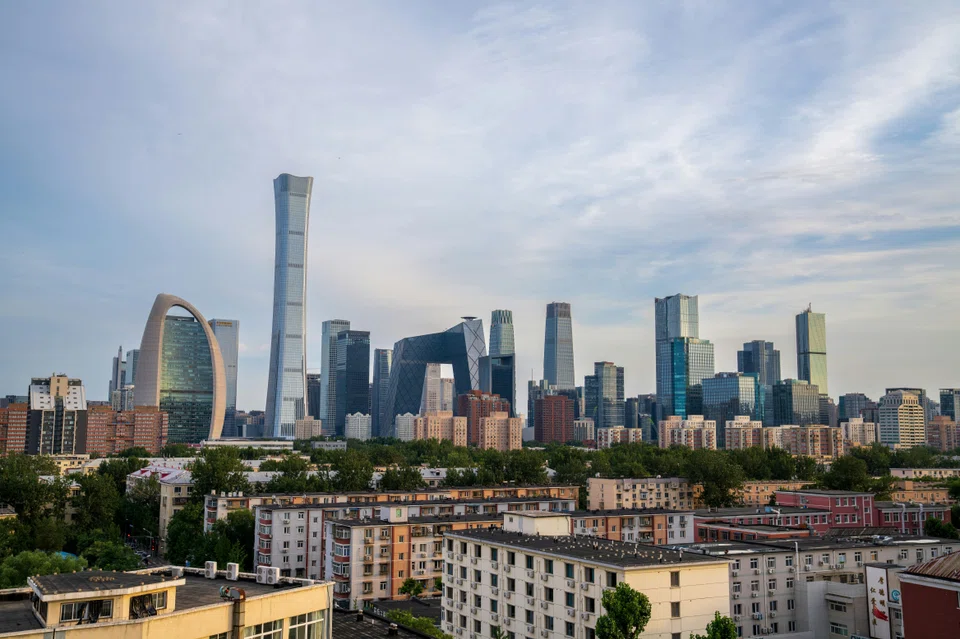
[SINGAPORE] China’s new rules announced on Jul 24 to tax offshore trusts could have widespread implications for wealth hubs such as Singapore, experts say.
Offshore trusts have long been used by wealthy Chinese families as a cross-border asset protection and succession tool.
Within two weeks of the announcement, media group Caixin reported that local tax bureaus had begun levying personal income tax on returns from insurance policies, though this has not been confirmed by official sources.
Together, these developments have set off a scramble among Chinese wealthy and their trustees, lawyers and advisers to work out exposure of mainland clients based in Singapore, a popular destination for these clients seeking offshore asset allocation.
“Offshore trusts were never intended to fall outside China’s tax system, but the practical rules have long been uncertain,” said Loh Kia Meng, senior partner at law firm Dentons Rodyk.
He noted that existing tax laws are now being implemented through a more comprehensive enforcement framework, signalling that offshore structures are now squarely part of China’s domestic tax conversation.
Ryan Lin, director of Bayfront Law, noted that these rules sit alongside existing Common Reporting Standard (CRS) reporting and China’s Controlled Foreign Corporation (CFC) rules, which many clients are already subjected to – adding another layer to an already-strict compliance picture.
Enforcement on both fronts rests on the same mechanism: the CRS, which China has used since 2018 to receive automatic account data from financial institutions in jurisdictions including Singapore.
Tax authorities are now cross-checking self-reported figures against that data, leaving holders of offshore trusts or other wealth structures little room to under-report.
No one-size-fits-all solution
Loh said that his firm has received inquiries from high-net-worth families, family businesses, private banks, trust companies and insurance providers since the new rules kicked in.
“The questions vary considerably,” he said. “Some clients want to know whether they are affected. Others are reviewing whether existing structures remain appropriate. There will not be a one-size-fits-all response.”
Suzanne Johnston, partner and head of private wealth, Stephenson Harwood, Singapore, said that clients are “considering the changes and how they apply to their structures”, adding that trusts have often been established for many years.
For Bayfront Law’s Lin, the “right move” for clients now would be disclosures and proper tax treatment, as recent rules promulgated reward transparency and penalise ambiguity.
He noted that the tax cost of using trusts now needs to be priced in and properly disclosed, rather than assumed.
Previously, a lot of clients assumed that once the assets sat inside a Singapore trust structure, the China nexus was effectively closed. “These rules make clear that residence, not location, is what triggers tax,” Lin added.
“If a client still spends significant time in China, or if wealth is substantially generated from Chinese business interests, they may be caught even with a fully compliant Singapore structure.”
But lawyers say that clients are not looking to unwind their trusts immediately, and the new tax does not diminish a trust’s underlying benefits.
Loh said the likelihood of clients unwinding is “low”; doing so without fully understanding the tax, succession and commercial implications could create more problems than it solves.
Navin Raj Jaidev, senior investment director at Cambridge Associates, a global investment firm, noted that for Chinese government regulations, there is an acceptance among investors that frequency of changes can be high.
Larry Ikard, CEO of Yuvarra Singapore, a specialist lender bringing life insurance premium financing to the wealth market, said that rather than unwinding existing trusts, clients would instead be reviewing all the existing arrangements under the new rules.
This is to stay in line with the family’s objectives, he said.
Singapore-based advisers, he noted, are likely to be working through the practical steps of identifying relevant historical transfers, gathering documentation needed to ensure that any required filings and settlements can be completed within the stated window.
Johnston of Stephenson Harwood said that her firm has long encouraged clients to focus on the broader objectives of trust planning.
“It has never been solely about tax deferral or optimisation,” she pointed out.
“Settling a trust and giving away your assets to a third party is no small decision; and it must always be contemplated in the context of broader succession planning, asset protection and governance.”
Insurance policies next?
With the new rules, Loh said that some of the structures may require regularisation while others may benefit from restructuring or improved governance.
Other common structures used by private wealth clients include funds, foundations, private investment companies and insurance wrappers.
Lin noted that the increased scrutiny on offshore insurance policies could also impact Singapore insurers.
Yuvarra’s Ikard said that the firm is seeing the wealthy and their advisers looking at insurance policy, the ownership vehicle and the financing as a whole.
This, he added, makes regulatory clarity important, as the structures need to be properly coordinated and built around long-term objectives such as succession, liquidity management and asset protection, rather than around a single tax outcome.
Impact on Singapore
Despite the new tax rules on offshore structures, industry players say it is too early to assess the full impact, even as most remain bullish on Singapore’s position as a wealth hub.
DBS noted that the new rules have reinforced a trend that the bank has flagged for the past decade: the growing importance of onshore presence and wealth centres closer to clients.
“(We) need to provide strong domestic wealth management solutions for clients,” said DBS CEO Tan Su Shan at the bank’s earnings briefing on Aug 6.
She added that DBS’ wealth centres are spread across different high-growth markets, including China, and onshore wealth is booked domestically.
OCBC’s private banking arm Bank of Singapore said that it has not seen any significant outflows since the news came out. It added that while clients expressed concerns and want more clarification, some welcomed the clarity of the new rules.
Meanwhile, UOB noted that this is a fairly recent development; the bank is assessing the impact, and will be “watching very closely”.
Ikard said Singapore should still be very attractive for families from mainland China. He cited its established regulatory framework, strong emphasis on economic substance and deep network of professional advisers.
“For families that value safety and as much certainty as possible, and that are prepared to invest in a structure for the long term, Singapore still has a great deal to offer.”
TRENDING NOW
DBS, OCBC, UOB rout lops billions off STI as inflation, rate concerns spook investors

Grab CEO’s wife Chloe Tong on life with Anthony Tan and finding her purpose
OCBC sheds S$8 billion in value as shares close nearly 6% down; analysts cautious on banks

Deal between tycoon friends sparks scrutiny of Philippine power sector

