

Being a good asset manager is like conducting an orchestra: HSBC’s Lim Pang Qi
As HSBC Asset Management’s CEO for South-east Asia and Singapore, he ensures the bank’s teams gel and tracks changes in clients’ needs

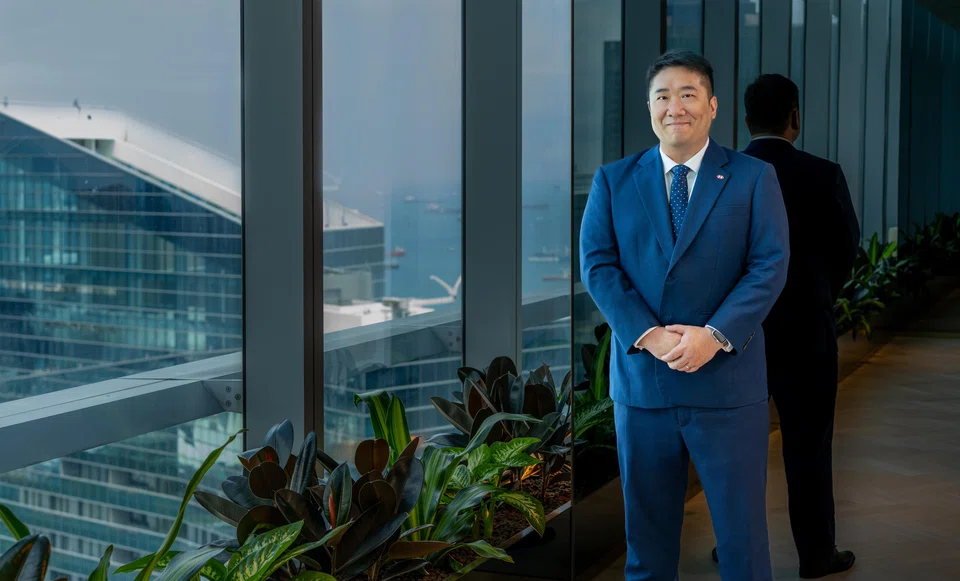
AS THE chief executive for South-east Asia and Singapore of HSBC Asset Management, Lim Pang Qi’s role is to align the bank’s diverse capabilities to ensure that its teams work in concert when serving clients.
He feels just like a conductor of an orchestra, who needs to have a deep understanding of various instruments and be able to bring them together to make music.
“You might have the best instruments, or a bunch of really good musicians, but if they don’t come together, the music output is not going to be great, and the clients are not going to enjoy it,” said Lim, who has been playing the piano since the age of four.
Having been musically-trained from that early age, he sees many parallels between orchestral music and asset management.
“This trade is a people business,” he said. “People value good people: grow the good people, and you will see growth come along with it.”
Here are some excerpts from his conversation with The Business Times:
How did you end up in your role?
I pretty much did mainstream, classical music from a very young age. Then came the pragmatic moment when I had to decide what I wanted to study. I wasn’t very sure whether I would go into a specific discipline, so I chose business.
I did my fair share of internships and found my way into a summer analyst role at Fortis Private Bank, where I realised that it was something that I quite liked to do. I liked the fact that we’re constantly looking to push boundaries and create best solutions for clients.
I was at Fidelity International for 12 years before joining HSBC Asset Management. I saw a project in HSBC – there were notable leadership changes and a clear direction that the asset management arm wanted to go towards.
What is a key trend you see within your area?
In the past, the thinking was more siloed: When you asked someone about their business, they talked about specific markets and asset classes.
Today, you tend to think about flows in terms of corridors rather than markets.
We also see a lot more global clients now, compared to sticking to your core capabilities and talking about home markets.
The trend of being able to offer public and private market type strategies as an asset manager is also increasingly important today.
In the past, getting listed was the holy grail for companies who wanted to capitalise, and people looking for loans and credit terms would go to a bank.
These days, companies are finding value staying unlisted, and investors no longer need to go to just banks, but also other credit providers.
How does this affect your role?
There are a few unique things about being a conductor.
For one, he coordinates and facilitates the delivery of that music. He has to know the orchestra well in terms of the different families of instruments – in my case, the bank’s capabilities and all the subject-matter experts.
As a conductor, your back is facing the audience. Doing what I do, I got to make sure that the right capabilities are brought to the right clients at the right time. And that means that most of the time, the conductor is looking at the orchestra and facilitating.
Being extremely aware of the capabilities, whether it’s public markets, private markets, sales, marketing or product development, is very important to ensure that the right music comes across to the audience and that they get the best experience.
There’s also the need to make sure that you keep adding the right mix of capabilities to stay relevant to the market. We have to always keep asking ourselves what the client wants as client tastes can evolve and vary.
TRENDING NOW

Britain’s mansion tax shows the difficulty of targeting wealth

Once staunchly pro-China, Malaysian Chinese businesses are now distancing themselves from Beijing

The only common thing in S-E Asia is that we all eat rice: Cisco’s Asean president

Singapore data centre operator DayOne opts for US IPO at likely US$20 billion valuation

