

Bellagraph, Hin Leong sagas show weak spot in exempt private companies

Sharanya Pillai
THE recent debacle over Bellagraph Nova (BN) Group - and the rollover impact on Catalist-listed Axington - revives long standing calls for improved disclosure standards when it comes to Exempt Private Companies (EPCs).
Under the Companies Act, Singapore-incorporated firms that do not have more than 20 shareholders and do not have any corporations holding beneficial interest in their shares, whether directly or indirectly, count as EPCs.
Regardless of the size of their assets or turnover, solvent EPCs are not required to file financial statements with their annual returns. They are also allowed to undertake certain types of transactions that other companies cannot, such as extending loans to a director.
The exemptions can be beneficial to smaller businesses, helping them to save on compliance costs. But they also allow companies to obscure their financial health, to the detriment of other stakeholders.
There is scope for the EPC criteria to be reviewed to take into consideration a company's size as well as its business dealings and systemic importance.
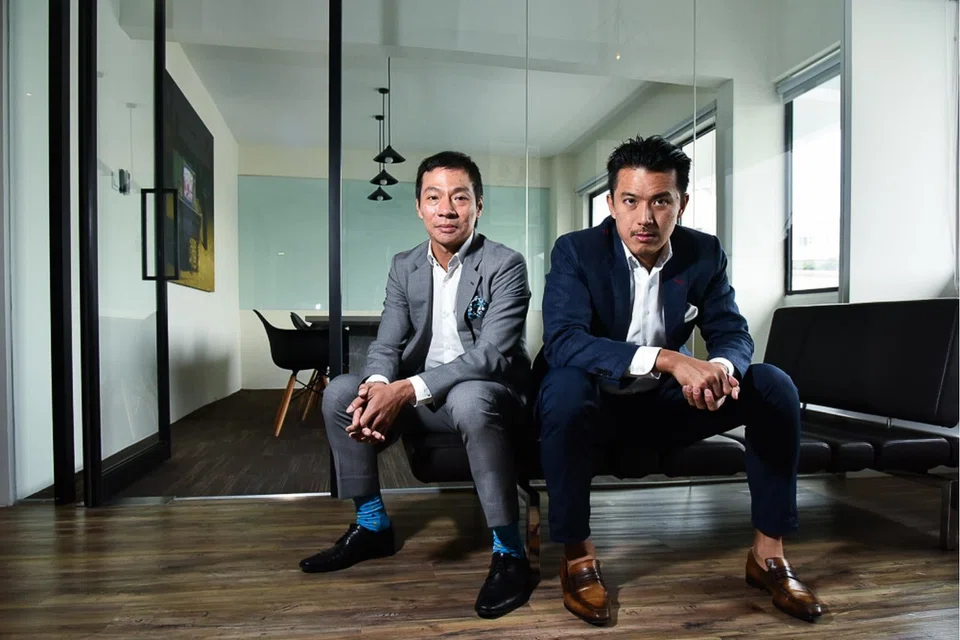
The entrepreneur-cousins behind BN Group, Nelson and Terence Loh, came under the spotlight when they made a mandatory cash offer for Axington in June, via a Singapore-incorporated firm, Dorr Global Healthcare International Pte Ltd (DGHI).
However, it would have been difficult for retail investors or business partners of Axington to conduct much due diligence on the Lohs based on publicly-available information. This is because DGHI, along with at least 12 other Singapore private firms linked to the cousins, are EPCs, and hence have no financial statements publicly filed.
BN Group made big claims about the size of its business dealings - some of which have since unravelled. Some, such as a press release about a luxury clinic in a Bulgari hotel in Shanghai, have been easy to check. Others, such as the assertion that BN Group made US$12 billion in revenue last year, cannot be verified because of the lack of financial filings.
Several other high-profile collapses among Singapore's oil and gas companies this year add to the case for reviewing the EPC criteria.
In a May blog post, corporate governance watcher Mak Yuen Teen pointed out that oil trader Hin Leong Trading (HLT) is larger than many listed peers when it comes to the scale of its revenues. Yet the company was not required to file financial statements as an EPC, as it only had three individual shareholders - all from the founding Lim family.
Likewise, two other firms owned by the Lims, Ocean Tankers and Xihe Holdings, were also EPCs.This allowed the family to take on significant risks while enjoying the limited liability protection of the corporate structure, Prof Mak had said at the time.
When asked about the BN Group saga, Prof Mak says it reinforces his view that to qualify as an EPC, companies should not be subject to just a shareholding test, but also a "size test". This means that companies that exceed a certain threshold in revenues, assets or number of employees should not count as EPCs.
"The EPC is a case of trying to have your cake and eating it too. Founders want the protection of limited liability on the one hand and at the same time want the lack of transparency of say, a partnership or sole proprietorship with unlimited liability," he said.
"That to me is a recipe for disaster. I am absolutely not surprised that we are seeing more scandals involving private companies, and in particular EPCs."
Significant number
This is not the first time that EPCs are facing scrutiny. In 2011, the steering committee for the review of the Companies Act had in fact proposed to abolish the current status of EPCs. At that point, solvent EPCs formed more than half of all companies in Singapore.
"This lack of transparency for a significant number of companies may prejudice persons dealing with solvent EPCs, given that they are not able to verify the financial position of an EPC declared as solvent. In particular, in the case of large EPCs, creditors and other interested persons may not have the bargaining power to ask for financial information from the EPC directly," the committee wrote in its report.
This recommendation was, however, rejected by the Ministry of Finance (MOF), on the basis that the abolition would affect Singapore's competitiveness.
"Feedback was also received which indicated that financial information confidentiality was important to certain companies, (such as) family investment companies and companies where their financial statements contain commercially-sensitive information, which if disclosed to the public, would be detrimental to the interests of the company", MOF had said.
In this year's public consultation on amendments to the Companies Act, the Accounting and Corporate Regulatory Authority (Acra) once again sought feedback on EPCs. One key area is whether some or all solvent EPCs should be required to file and make financial statements available to the public.
The Companies Act Working Group (CAWG) involved in the review took the view that "there are no compelling reasons" for abolishing EPCs. It noted that while the UK has long abolished this company type, it is still used in Malaysia and "well-entrenched" in the local context.
Proponents of EPCs say that they are beneficial to entrepreneurship. The regime "presents a potentially more nimble corporate structure which may be attractive to startups and family-run companies", said Grace Lai, head of capital markets at Drew & Napier.
For small business owners, EPCs also provide "more freedom to structure transactions", said Stefanie Yuen Thio, joint managing partner of TSMP Law Corp.
But Ms Yuen Thio added: "That said, I agree that these can be used to mask certain transactions that would be prohibited in non-EPCs. Perhaps a good middle ground would be to designate that companies with a certain minimum turnover would no longer be considered EPCs."
A new proposal by the CAWG could also present a good alternative for promoting entrepreneurship.
In its report, the CAWG suggested that the concept of a "micro" company be introduced. This may be defined as a firm with total annual revenue and total assets each not exceeding S$500,000 for the previous two consecutive financial years.
Such companies which are non-publicly accountable could then prepare reduced or simplified financial statements.
This S$500,000 threshold may seem like a low bar. After all, it is possible these days for even a fledgling startup to raise over S$1 million in seed capital from individual angel investors.
But there is also value in getting young firms used to disclosing their financial statements from an early stage. In some cases, it may alert stakeholders to red flags.
Case in point: grocery delivery startup honestbee, which had not filed its financial statements with Acra from 2016, was later alleged to have deep-seated corporate governance problems, and subsequently collapsed.
As more private companies seek public funding, the benefits of increased disclosure will surely outweigh the downsides.






