TOPLINE

Beng Kuang Marine strips non-core business units, pivots to asset-light model to chart turnaround

It has shuttered its ship chartering, hardware distribution and bottled water supply businesses

Benjamin Cher
Published Mon, Oct 7, 2024 · 05:00 AM
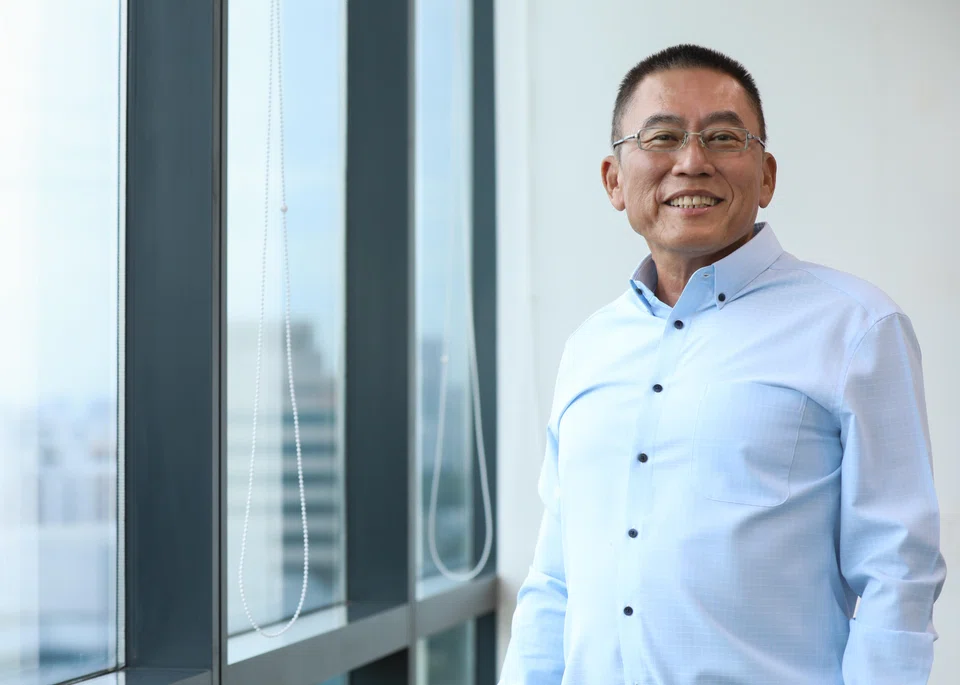
    • CEO Yong Jiunn Run says the move to an asset-light model came after Beng Kuang suffered during the oil and gas downturn.
    • CEO Yong Jiunn Run says the move to an asset-light model came after Beng Kuang suffered during the oil and gas downturn. PHOTO: KEZIA KOO, BT

    WHEN a live cattle carrier owned by Beng Kuang Marine was detained in Indonesian waters, chief executive officer Yong Jiunn Run thought it seemed like the right time to call it a day for the ship chartering business.

    At the time, in 2021, the offshore and marine player owned two live cattle carriers. One had an accident during the pandemic, and the company incurred heavy charges for towing it back to port. As vessel owners, Beng Kuang could exercise few rights, and would always be on the losing end should anything happen to a ship.

    Coupled with heavy depreciation costs, as well as maintenance, crewing and insurance, it made sense to wind down the business, said Yong.

    “We took the charges between 2021 and 2022, and incurred massive losses due to that,” said Yong. Beng Kuang chalked up losses of S$13.4 million for FY2021 and S$21.8 million for FY2022.

    This was not the only business unit that Yong shuttered at Beng Kuang, having wound down the hardware distribution and bottled water supply businesses. The way he saw it, these were commoditised businesses with not much to differentiate on; being susceptible to inventory risk and price wars, it was a race to the bottom.

    These moves were done after a strategic review in 2021, which charted a course for Beng Kuang to transform into an asset-light model. This meant streamlining the company’s business units to focus on infrastructure engineering and corrosion prevention.

    “We have been hard hit by the oil and gas downturn – at that time we were straddling two warehouses, vessels, a yard in Batam… when you are asset light, in a downturn you can walk away very quickly,” said Yong.

    Yong embarked on a cost optimisation exercise, divesting the shipyard in Singapore, as well as bringing down the debt level which stood at S$60 million in 2021. This was in the name of financial resilience, turning profitable and strengthening the cash position to weather future storms.

    Beng Kuang is now focused on the service model with its expertise in maintaining and certifying floating production storage and offloading (FPSO) vessels and floating storage and offloading (FSO) vessels. These vessels are not typical ships. Instead, they are floating vessels that process and store oil drilled from the middle of the ocean.

    Beng Kuang’s employees would work out of existing FPSOs and FSOs to maintain and certify that the vessels meet safety standards, without the company actually owning or operating any of the assets.

    Ongoing maintenance and certification of these vessels are paramount for oil companies regardless of the oil price. Without the vessels, oil production at offshore rigs would have to halt as there will be no way to process or store oil.

    “The scope of work is huge, we cover close to 80 per cent of service and maintenance onboard an FPSO,” said Yong.

    Maintaining and certifying FPSOs has high barriers to competition. Technical certifications and expertise are necessary to ensure that the vessels can be continuously operated.

    The company also offers project management expertise in building new projects, helping customers manage the project rather than building the projects out of its own shipyard.

    “The days of vessel building are over, we just can’t beat the supply chain in China,” said Yong.

    Another legacy business Beng Kuang has kept on is corrosion prevention, which it does out of its Batam shipyard. This is the company’s bread and butter, having initially listed with this business, said Yong.

    “We are also a market leader (in corrosion prevention) here; it is a steady cash cow generating revenue and profits,” he said.

    He reckons that FY2023 was the turnaround year, as the company swung back into black with earnings of S$3.4 million. Revenue was up 33.9 per cent for the period to S$79.2 million, from S$59.1 million in FY2022.

    The latest set of results has shown a continued upswing, with revenue up 88.1 per cent for the first half of 2024 at S$59.9 million, from S$31.9 million a year prior. It reported earnings for H1 2024 of S$8.5 million, from a loss of S$854,000 in H1 2023.

    The company is also looking to expand its international footprint. In South America, its main business is in Guyana, and will be entering Suriname, which has recently been developing its offshore oil reserves.

    Yong is aiming to build on Beng Kuang’s positive momentum in the coming year, and will continue to build up the company’s finances. There are plans to increase productivity as well as to seek higher value renewables projects for the corrosion prevention business.

    “Although the market is a bit stagnant, we are repositioning ourselves as a resident contractor giving higher value services,” he said.