‘The best risk-return wins’: Partners Group eyes Asia private wealth growth amid private credit jitters
The firm, which has ramped up its Asia team, will engage more distribution partners and launch new products to woo investors

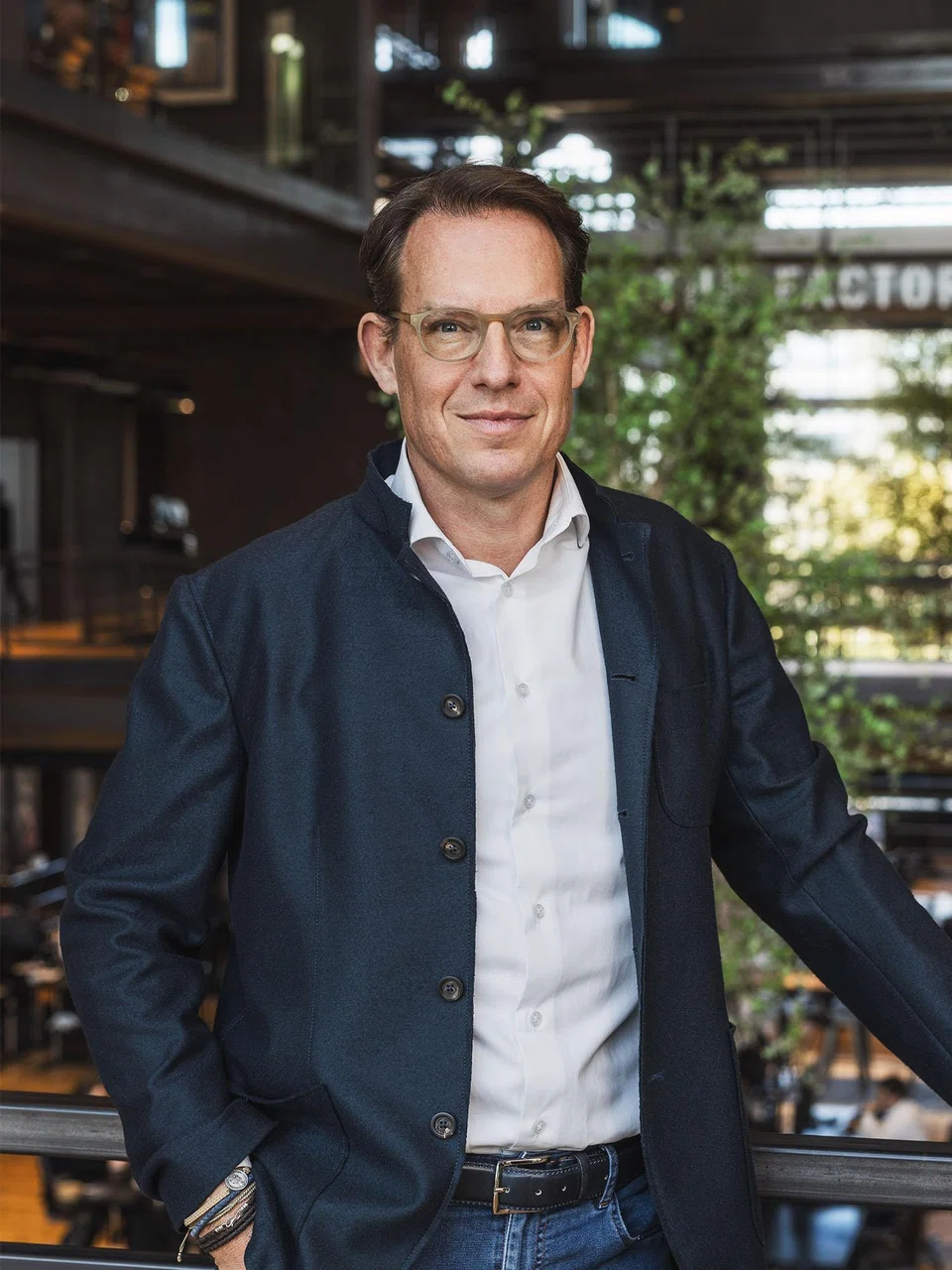
[SINGAPORE] In a polarised geopolitical environment, neutrality can be an advantage for global investors, said Juri Jenkner, president of private markets firm Partners Group.
In his firm, every investment must pass through a global investments committee that meets every Tuesday. It is when deals compete on risk-return merits – regardless of geography, he told The Business Times.
This means that if a solar plant in India is more attractive because of the costs and favourable weather conditions, it would be judged as a better deal than a solar plant in Germany, which used to be an attractive investment destination years ago because of subsidies.
“That’s just an example where we look at global relative value – the best risk-return wins on a fully hedged basis,” said Jenkner.
This strategy appears to be resonating with Partners’ investors. Clients committed US$26.2 billion in capital in 2025, and assets under management (AUM) grew to US$185 billion – up US$30 billion – as at Dec 31, 2025.
Asia is a key growth focus for the firm, and Partners sees the region’s “strong potential”, said Jenkner.
Asia accounted for about 6 per cent of the firm’s AUM as at June 2025, and Asian clients are increasingly seeking diversification away from large US private market houses, he noted.
One area that is getting strong traction in Asia is mandates, under which clients allocate sums of money to fund managers, who manage these in line with the clients’ asset and geographical preferences.
The group structures bespoke portfolios for mandates above US$100 million, which Jenkner described as “a tailor-made fund of one”. Investors committing between US$50 million and US$100 million have separate semi-customised portfolios.
Globally, Partners manages 180 mandates of these two types.
Another key driver in Asia is private wealth. The firm works with 25 Asian distribution partners; Singapore, Hong Kong, Japan and emerging markets in South-east Asia are among the key markets driving inflows.
Henry Chui, head of private wealth for Asia-Pacific at Partners, said: “We’re still in the early innings, when we’ve seen a big ramp-up... We believe that now is the time we can really start to see the scale and get built up.”
The firm has ramped up its team in Asia, beefing up the after-sales, serving and marketing functions.
Partners is looking to tap the historically low allocation to private markets among the wealthy. The shift towards such markets is following the trend among institutional investors in the last two decades.
“Maybe 10 to 20 years ago, pension funds went from 1 per cent allocation to some 2 per cent, or some from 5 per cent to 10 per cent and above,” Jenkner noted. “Now, we see a similar trend in the private wealth side of things.”
The firm was among the pioneers of the evergreen fund structure, which has become popular with private wealth investors today. These funds have no fixed tenure, are semi-liquid in nature, and come without long lock-up periods.
Track record remains critical for private wealth clients. On that note, Partners has generated around 20 per cent net realised returns after fees in the last 30 years, a time frame that included the global financial crisis, pandemic and other market cycles.
In response to concerns around private credit, following developments at Blue Owl Capital, Jenkner pointed to Partners’ track record as a differentiator. In private credit, the loss rate for the firm is 0.1 per cent in the US, 0.02 per cent in Europe and zero losses in the Asian portfolio, he said.
Private credit jitters surfaced in recent weeks after alternative asset manager Blue Owl restricted withdrawals from one of its funds. This led to more investors dumping private credit funds amid fears that artificial intelligence would disrupt the software companies they financed.
Serving Asian investors requires local expertise, said Jenkner.
“You have to serve the clients on a daily basis in their language, and (know) their customs,” he noted. “You’ve got to be on the ground, speak the language and understand the regulations. You’ve got to have friends there to tap deal flow.”
About 30 per cent of Partner’s workforce is now based in Asia.
Over the next two years, Partners plans to enlarge its footprint in private wealth in Asia. It plans to do this by increasing the number of distribution partners and rolling out additional products, including giving investors exposure to intellectual property rights for music, pharmaceuticals and sports.
The firm also expects to expand private credit offerings in the region.
“Some mandate clients want exposure to certain geographies. When we come with (a track record of) zero losses in Asia, that starts a good discussion,” Jenkner said.