

Trust, transparency and support: What it really means to love where you work
At the companies recognised by Great Place To Work, feeling valued isn’t just a sentiment – it shows up in open conversations, real opportunities, and a culture where people genuinely belong
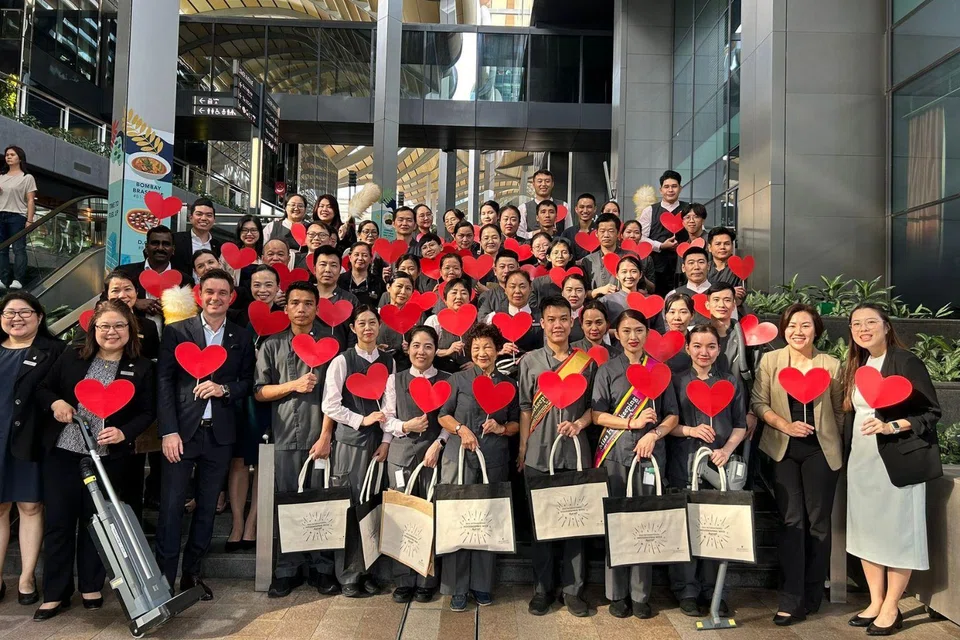
Once a month at Visa, a small group of employees sit down for coffee with Adeline Kim, the company’s country manager for Singapore and Brunei. There is no agenda and no presentation deck.
Some conversations are about current projects, others are about career plans and what staff want to do next.
Despite her hectic schedule, Kim pencils in time for these conversations at least once a month, and makes it a priority to show up, to prove that her door is always open.
“Very often as leaders, we forget that our people are not looking for us to have all the answers, but to be able to be candid and authentic in our sharing,” she says. “That transparency builds a sense of partnership rather than fear.”
These sessions encourage staff to share their views and build a company culture based on openness and collaboration. Her approachability carries into all meetings at Visa. Staff speak up openly during discussions instead of waiting for direction. Leaders explain why decisions are made, especially when those decisions affect how teams work.

This is one of the reasons Visa was recognised as a Great Place to Work, based on feedback from its employees. In 2025, the company was ranked fourth among large organisations in Singapore by Great Place To Work. The global workplace culture and research authority evaluates companies based on employee trust and their day-to-day experience at work.
According to Stuart Elliot, director of consulting, Great Place To Work Asean, an emphasis on trust and transparency is one of the strongest signals employees look for in a workplace.
“Our research shows that organisations with visible, supportive and responsive leadership experience greater willingness among employees to share new ideas and try new things,” he says. “When leaders treat people with dignity and understanding, trust increases, turnover decreases and problems are often solved earlier and faster.”
He adds that companies recognised by Great Place To Work outperform non-certified workplaces by more than 30 percentage points on key metrics like agility, productivity and innovation. Thirty years of Great Place To Work data suggests that what employees respond to most is management that shows sincere interest in them as a person, whether the workplace feels psychologically safe, and whether the rules apply to everyone equally.
As a result, they are more effective at retaining talent. It isn’t certification that makes a company’s workplace culture great, it’s that only companies that earn an employee-generated total score high enough to achieve certification tend to be great.
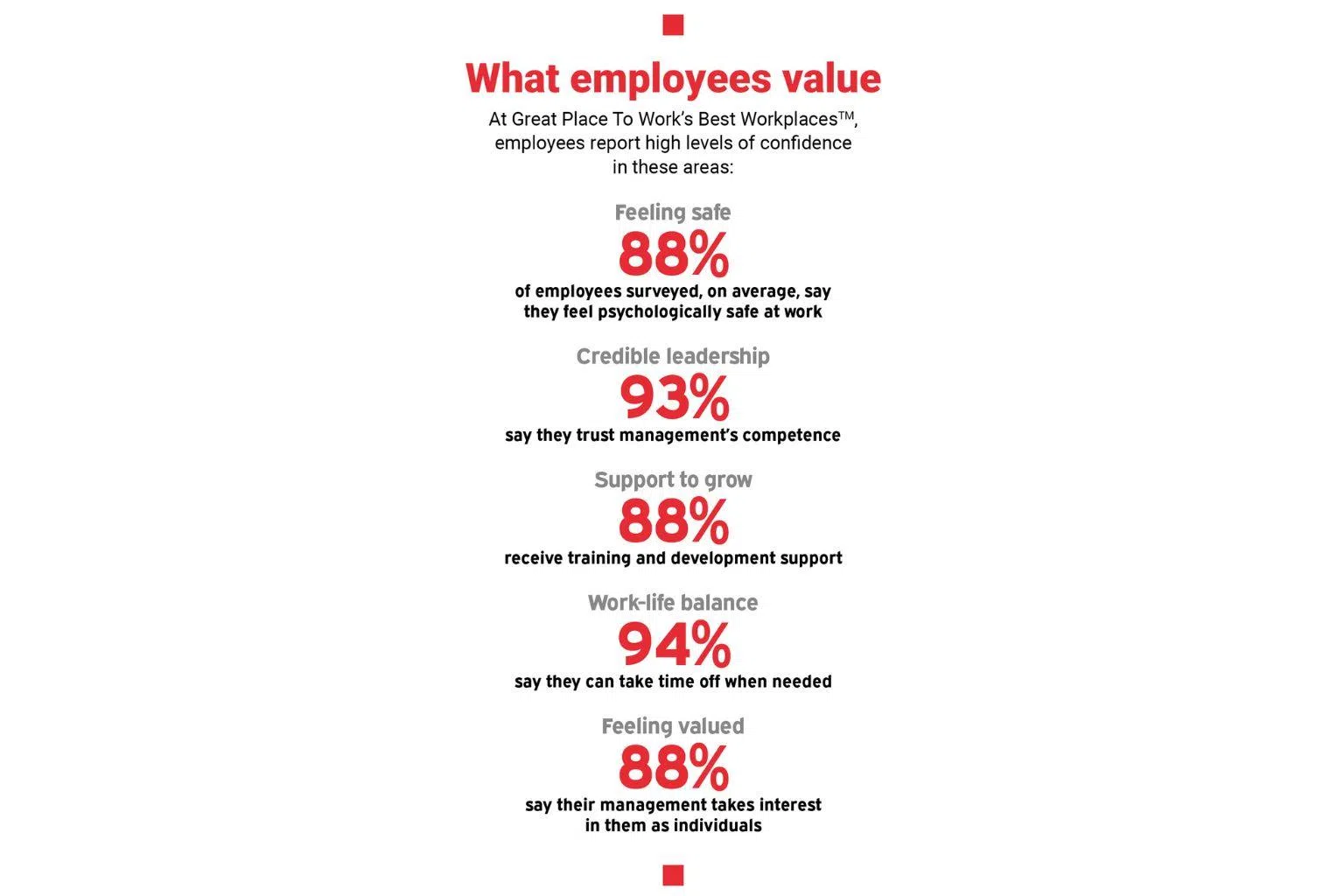
Feeling safe, respected and heard
Transparency and support can show up in how leaders make time to listen. At JW Marriott Singapore, coffee also plays an important role in giving staff a space for conversations with a senior leader. Every month, the hotel’s general manager meets up to 12 staff in roles from mid-level and below over a brew to encourage an open culture of sharing. Group sizes are kept small so everyone has time to speak.
“The point is to hear directly from staff about what affects their work,” says Alice Lee, director of human resources. “Sometimes it’s about operations. Sometimes it’s about how things can run better.”
Staff raise issues that affect their day-to-day work, from shift arrangements to service routines. Nothing is dismissed as too minor. What matters to staff is what happens after the conversation. Feedback from these sessions is reviewed by the hotel’s executive committee, says Lee, to decide what can be changed or improved.
One issue surfaced repeatedly. Salt and pepper shakers were clogging during service, leading to guest complaints that frontline staff had to manage. Inspection routines in the restaurants were adjusted. The problem occurred less often, and frontline staff no longer faced the same issue during busy periods.
“These are small things,” Lee says. “But they make a difference.”
JW Marriott is part of Marriott International, which was ranked fifth among large organisations in Singapore by Great Place to Work in 2025.
For Nurfadiah, a reservations agent at The Westin Singapore, which is also part of Marriott International, feeling safe to speak up mattered, especially when she was new to the job.
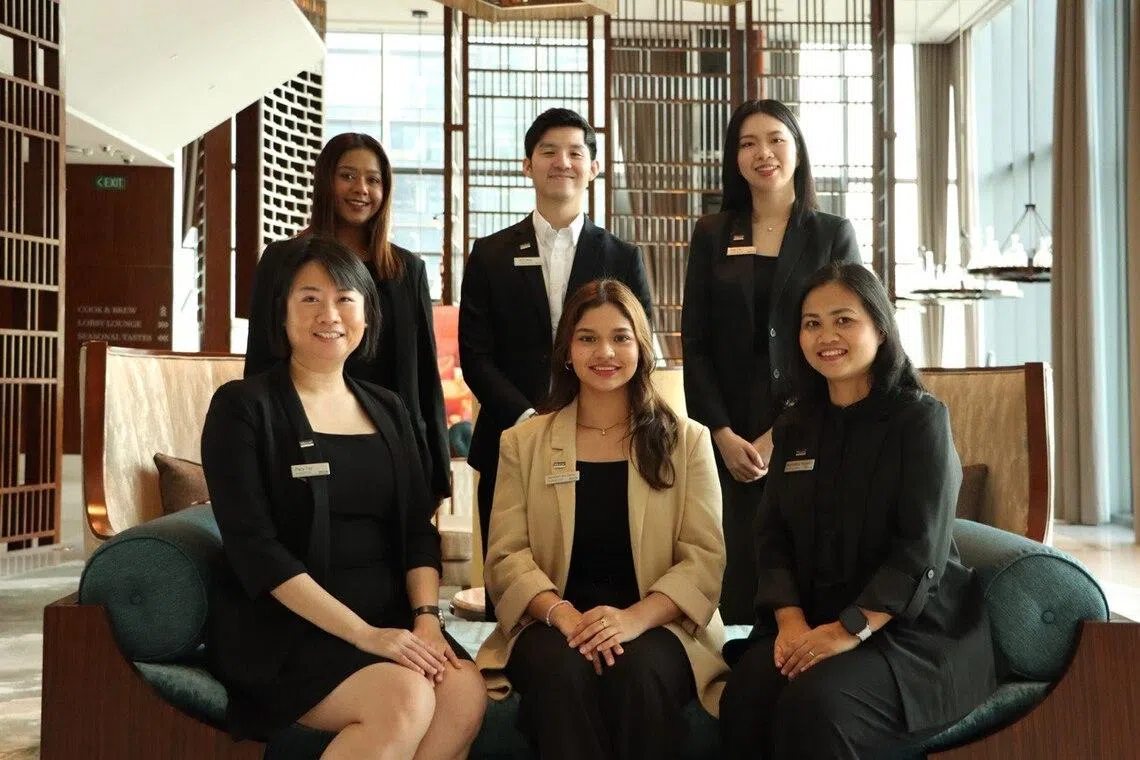
“When I first joined, I wasn’t sure when it was appropriate to share my views,” she says. “I was still learning.”
Her manager encouraged her to ask questions and speak up, even as she was finding her footing. “I was told it was okay to ask and clarify, even if I wasn’t sure,” she says.
Over time, she saw that her opinions were taken seriously. Despite being one of the newer members of the team, she was asked for her input on everyday matters, such as ideas for staff bonding activities.
She was also consulted on more formal decisions. For instance, when her department was hiring a new supervisor, Nurfadiah was asked what she looked for in someone she would report to. Her views were taken into account, including what she felt was missing in the team and the kind of support she needed in a supervisor.
Being included in conversations like these is what makes her look forward to coming into work.
“I have never been made to feel that I was lesser,” says Nurfadiah. “I feel safe, respected and trusted.”
Beyond trust and open communication, how supported employees feel in their growth and relationships also shapes whether they feel valued at work.

At Visa, supportive culture shows up in how leaders explain decisions openly, says Goki Muthusamy, head of people for Asia Pacific. Employees are also given time to build new skills, with some taking part in short-term assignments across teams or markets to broaden their experience.
Feeling supported, she adds, means employees can stretch themselves and try new things without fear of being penalised for early missteps.
“The message is simple: learning is work, and investing in yourself is part of the job,” she says.
For Visa’s Kim, the strongest indicator is whether people look forward to coming to work – and feel supported and connected to their colleagues.
“If we’re spending so much time at work and not having fun, something is not right.”
How workplace culture is evaluated
Great Place To Work assesses organisations based on confidential employee surveys and culture benchmarks. Here’s how the process works.
- Employees are surveyed Staff complete the confidential Trust Index survey, sharing how they experience leadership, fairness, respect and collaboration at work.
- Trust is measured across all ranks Responses are analysed to ensure employee experience is consistent, regardless of seniority, function or background.
- Results are benchmarked Data is compared with industry and market benchmarks, both locally and globally.
- Minimum standards apply Organisations must meet a defined trust threshold to qualify for certification.
- Insights guide improvement Certified companies receive data-backed insights to strengthen workplace culture over time.
Find out more about Great Place To Work.

Decoding Asia newsletter: your guide to navigating Asia in a new global order. Sign up here to get Decoding Asia newsletter. Delivered to your inbox. Free.
Share with us your feedback on BT's products and services
TRENDING NOW
Prima to move out of historic Keppel Road flour mill building in 2028

Grab CEO’s wife Chloe Tong on life with Anthony Tan and finding her purpose

OCBC sheds S$8 billion in value as shares close nearly 6% down; analysts cautious on banks

As Asia’s food delivery giants rejig the pie, who will win the market?

