Better year expected for S-Reits as data centre, hospitality players top volatile 2023

Raphael Lim
Raphael Lim

Published Tue, Jan 9, 2024 · 05:00 AM
    • The peaking of interest rates could be positive for S-Reits in 2024.
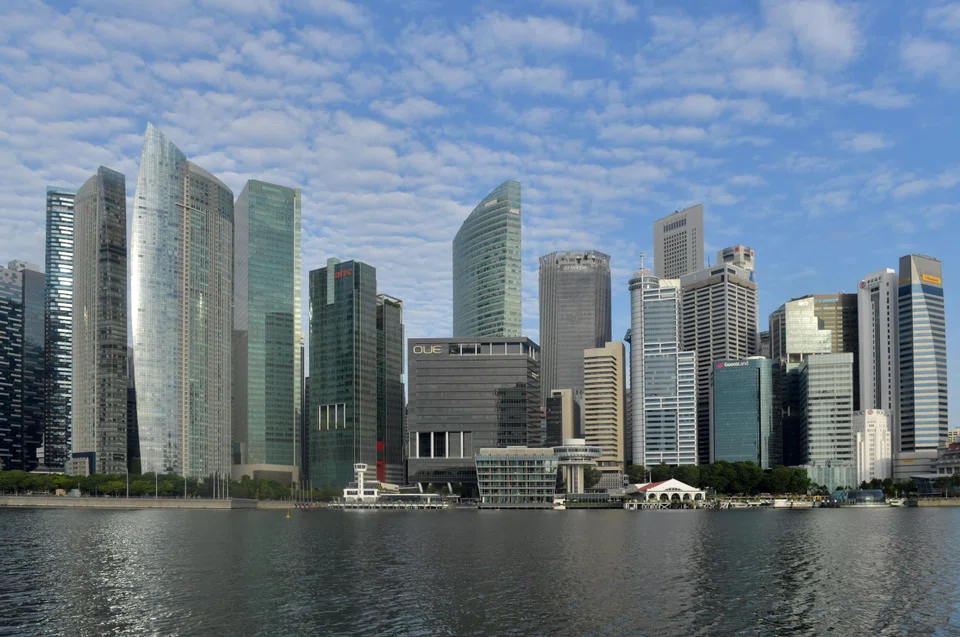
    • The peaking of interest rates could be positive for S-Reits in 2024. PHOTO: BT FILE

    MARKET watchers are expecting fortunes to turn for Singapore-listed real estate investment trusts (S-Reits) in 2024, as interest rate fears abate amid signs of stabilising inflation.

    This comes after S-Reits faced volatile trading in 2023, with the yield-sensitive instrument heavily affected by changes in interest rate expectations through the year.

    “We think the biggest catalyst for S-Reits this year is definitely a pivot in the interest rates. This will take off some pressure faced by S-Reits refinancing their debt in 2024,” said Morningstar analyst Xavier Lee.


    As rates retreat, DBS Group Research thinks it is time for investors to invest – or invest more – in S-Reits.

    “With yields peaked and likely headed lower in 2024, we believe there is more room to run for yield-sensitive instruments like S-Reits on the back of expected re-positioning back from dividend-hungry investors,” analysts Derek Tan, Rachel Tan, Dale Lai and Geraldine Wong said in a report.

    Singapore’s Reit benchmark, the iEdge S-Reit Index, delivered total returns of 6.6 per cent in 2023, assuming dividends were reinvested. This was stronger than the 4.7 per cent total returns from the market benchmark Straits Times Index in Singapore.

    Data centre outperformance

    The top performing S-Reit for the year was Digital Core Reit, which had delivered total returns of 25.6 per cent. The counter had been in the red for most of the year, but rallied sharply from November after the manager announced a resolution to the bankruptcy of its second-largest customer – previously reported to be Cyxtera Technologies.

    The other pure-play data centre Reit, Keppel DC Reit , had also been the second-best performing S-Reit – up until mid-December when the counter took a tumble. The Reit fell 9.1 per cent on Dec 15 after announcing that it would be demanding late rental payments from a tenant. It ended the year with total returns of 15.6 per cent.

    Other industrial trusts that have data centre exposure such as Mapletree Industrial Trust and Capitaland Ascendas Reit were also among the top five S-Reit performers.

    Daniel Cooney, deputy chief investment officer of PGIM Real Estate’s Global Real Estate Securities business, noted that data centres and senior living are two sectors they are most positive on in the US.

    “The kind of generative AI (artificial intelligence) wave that hit this year (2023) has just been explosive for data centre demand,” he said. Cooney added that the third quarter of 2023 was a record leasing quarter in the top 20 global data centre markets.

    “While there was initially some scepticism on how much demand could come from AI, in terms of data centre leasing, it’s already coming in incredibly strong,” Cooney noted.

    Lee from Morningstar said that the data centre asset class is relatively resilient, with a favourable long-term outlook driven by emerging technologies such as generative AI.

    “Looking ahead, we expect data centre Reits to continue to benefit from strong secular growth trends driving the data centre sector. That said, investors should remain watchful on tenant specific issues that may negatively impact distributions going forward,” he added.

    Maybank analyst Krishna Guha noted that industrial Reits and selected hospitality and retail Reits outperformed last year. “Industrial Reits have likely benefitted from structural tailwinds and ability to recycle capital. Hospitality and retail had reopening tailwinds and resilient domestic consumption to back up.”

    Frasers Hospitality Trust ranked among the top five Reits, delivering total returns of 16.9 per cent, while Far East Hospitality Trust returned 13.6 per cent.

    Darren Chan, senior research analyst at Phillip Securities, said that revenue per available room continues to grow year on year, with higher average daily room rate and occupancy.

    “Also, the growth in topline revenue for Reits with hospitality exposure could more than offset any rise in finance costs, and as a result generate distribution per unit (DPU) growth,” he added. “We expect strong performance from the hospitality sector in 2024 given the robust pipeline of meetings, incentives, conferences, and exhibitions events as well as major concerts in Singapore.”

    Similarly, Lee also observed that the easing of border controls in China has supported the global travel recovery. “For hospitality Reits, we think that there is still room for recovery driven by China as flight capacity expands and an increase in the number of visa free access granted by other countries.”

    Tough market

    While some sectors outperformed in 2023, the overall scorecard for S-Reits has still been muted, with half the sector ending the year with negative total returns. S-Reits with overseas assets were among the worst performers, especially those that were focused on US office assets.

    The DBS analysts noted that asset valuations are the “last datapoint” that is holding back investors.

    “Investors are rightly concerned about the knock-on effects on gearing, but our sensitivity analysis shows that around 90 per cent of S-Reits are likely to be within the MAS (Monetary Authority of Singapore) lower gearing limit of 45 per cent, post-assumed cuts to book values,” they said. “This implies that worries that dilutive equity fund raisings will recapitalise balance sheets are unfounded.”

    Improving sentiment in the sector could also reduce Reits’ discounts to their valuations.

    PGIM Real Estate’s Cooney said: “A lot of Reits – including in the Singapore market – can think about accessing the secondary equity market and can start to de-lever at a point that’s now no longer dilutive to their investors, and then all of a sudden now go on offence, rather than being on defence for so long.”

    The fund manager has a favourable view on the Singapore market. “When you look at the industrial market, the publicly traded Singapore Reit sector is about 50 per cent industrial, and trends have been quite strong in that sector and remain strong,” he said. “Even on the office side in Singapore, the office fundamentals have held up… much better than what we’re seeing around the world.”

    Maybank’s Guha believes that performance in 2024 is likely to be more stock-specific instead of a specific sub-sector dominating outperformance. “Low base effects and reopening tailwinds are things of the past,” he explained. “Reits are expected to trade in line with 10-year yields. I expect funding cost to rise as reported funding cost spreads are way below the levels of pre-pandemic times. This will weigh on DPU.”

    Meanwhile, the DBS analysts recommend that investors rotate into value plays. “We continue to prefer resilience in retail (such as Frasers Centrepoint Trust and Lendlease Global Commercial Reit) and diversified Reits with deep value (such as Mapletree PanAsia Commercial Trust and Keppel Reit) given that yields are still wider-than-average with more room to normalise,” they said. (see amendment note)

    Amendment note: The article has been updated to reflect the correct name of Frasers Centrepoint Trust.