

Beyond full Asean coverage, GWM aims for localised manufacturing
The Chinese EV brand is launching assembly plants in Malaysia, Vietnam and Indonesia to mitigate protectionism risks

GREAT Wall Motor (GWM) prides itself as one of the earliest entrants in South-east Asia and one of the Chinese electric vehicle (EV) brands with the widest outreach in the region, amid strong competition from rivals making vast inroads into Asean.
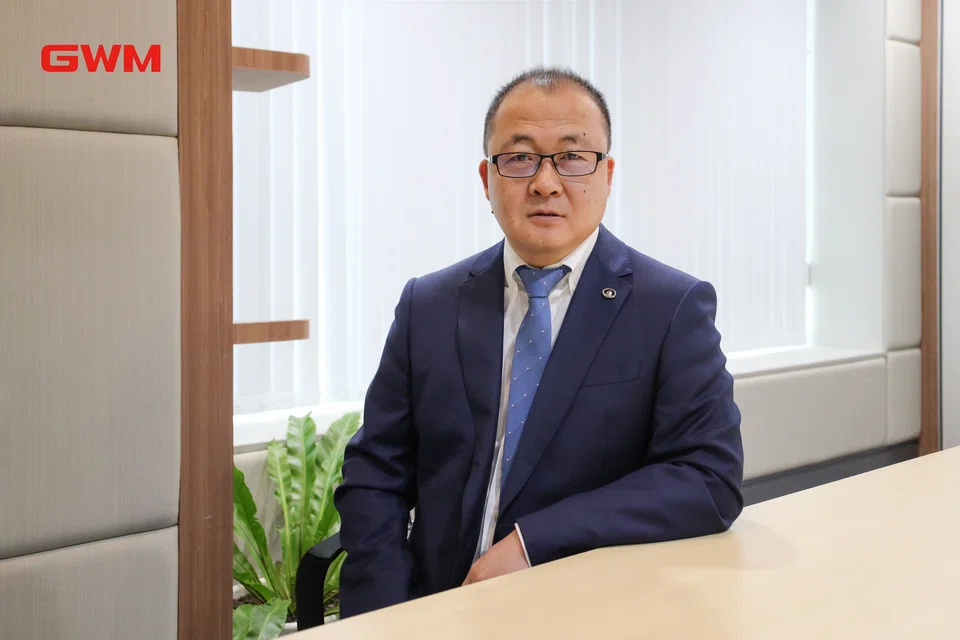
Cheng Jinkui, president of GWM’s Asean operations, told The Business Times in an interview that the group only achieved full coverage in the region in 2023. The company sees itself as still in the early stages of investing in Asean, with more developments expected.
Speaking in Chinese, he added that the group now operates a completely built factory in Thailand, with new facilities in Malaysia, Indonesia and Vietnam expected to be launched this year or next.
In addition to its 10 full-process vehicle production bases in mainland China and its Thailand factory, the Hong Kong-listed car manufacturer has established complete production sites in Russia and Brazil. It also operates knock-down factories in Ecuador, Pakistan and several other locations.
“Asean remains crucial for GWM’s global strategy due to its significant potential for car ownership development, driven by rapid economic growth and a young demographic,” Cheng said.
Asean expansion
GWM began its Asean expansion in 2020, when it acquired production facilities in Thailand’s Rayong province from General Motors after the US automotive giant shuttered its operations in the country.
Despite having over 30 years of experience as an automotive manufacturer in China, GWM chose to debut in South-east Asia as a full “new energy” brand, covering the spectrum of EVs.
The Thailand factory is GWM’s first overseas facility solely focusing on EVs.
“It is also the first overseas production plant that is fully ‘new energy’ across all Chinese brands,” Cheng noted.
The Thailand factory, which also exports to the region, has a maximum production capacity of 80,000 vehicles a year – spanning battery electric vehicle (BEV), hybrid electric vehicle (HEV) and plug-in hybrid electric vehicle (PHEV) models.
Cheng highlighted that the factory contributed to a revenue of 2.8 billion yuan (S$521.2 million) from the sale of full vehicles and 120 million yuan from the sale of vehicle parts in 2023.
Since its Thailand launch in 2021, the group has sold over 30,000 vehicles so far in the country. These include the brand’s Tank, Haval, Ora and Cannon models, all produced locally.
GWM is the first Chinese manufacturer to commercially produce BEV in Thailand, having begun production as early as January this year, while its competitor BYD is set to begin production in Thailand in the third quarter of the year.
In Malaysia, GWM is partnering Malaysia-listed EP Manufacturing for the assembly of its products in Melaka.
Cheng added that the factory is expected to begin production as early as July.
The group also has an assembly plant in Indonesia in the pipeline, expected to come into operation this July or August, and a Vietnam factory slated for local assembly next year.
Localisation strategies
Local manufacturing is a key part of GWM’s strategy.
Cheng highlighted that its Thailand factory has a research and development (R&D) team of over 60 people that optimise the product lines for the local road conditions, driving habits and climate characteristics.
He added that there are plans for the other Asean factories to collaborate with local partners for further localised R&D, as well as production.
The group has also implemented a localised distribution strategy across various markets. It currently directly distributes in Malaysia and Thailand, while partnering local distributors in other Asean states that have smaller market sizes.
Cheng said: “One of the biggest obstacles of operating in the region is that while the Eurasian vehicle certification system has been connected, each Asean member hopes to develop its own automotive capacity.
“To boost the local economy, there are protective measures in each member state, such as quotas and additional taxation for not having local production.”
He explained that it is difficult to use the model of having a presence in one country and exporting to neighbouring countries, which is why GWM is moving to establish local production and assembly plants.
While having a presence and sales network across the region, Cheng said the group’s development focus in the next three to five years remains on Indonesia, Vietnam and the Philippines given the size of their respective domestic markets.
In Thailand, the focus is on introducing new car models and upgrading old ones. In other countries, the priority is on integrating into the local economy and enhancing market outreach.
The group currently does not have plans for more factories beyond Thailand, Malaysia, Indonesia and Vietnam. However, it would be open to changes depending on market conditions, said Cheng.
“It only takes one year to set up a factory, thanks to our mature system of expansion,” he said.
Unfettered by fluctuations
Despite an increase in sales volume, the group recorded a drop in global net profit in 2023, attributed in its annual earnings report to foreign exchange losses.
According to Cheng, most of this loss could be attributed to Russia.
While there are fluctuations in Asean currencies, he emphasised that as a group with global operations, GWM has guidelines for managing exchange risks and considers the fluctuations in managing accounts and decision-making.
“We will continue to improve our foreign exchange management and use currency derivatives to counter the exchange risks,” he said.
On the challenges facing Chinese EV brands with the imposition of tariffs in the US and the EU, Cheng does not seem too perturbed about the measures denting GWM’s growth in Asean.
He added that Asean is one of the key automotive markets worldwide, and government policies so far have been encouraging the development of EVs, despite the gradual reduction of subsidies. For example, Thailand reduced its EV subsidies at the start of 2024.
“Government policies have their restrictions and timeframes, but it is always the market force pushing for industrial developments,” Cheng said, citing how the China EV market has continued to grow even after government support measures have declined.
Recounting his observations from recent auto shows, Cheng shared that one reason for optimism is that consumer patterns are changing.
Instead of “starting with a brand or model in mind”, consumers are now more open to new makes and new models when purchasing a vehicle, he said. “If we focus on having good products and good services, we can reap benefits when consumers’ preference for EVs grows.”






