From billionaires to towkay heirs: UBS widens Singapore wealth push
The Swiss banking giant is sharpening its focus on clients with at least US$2 million in investable wealth

[SINGAPORE] UBS, long associated with managing the fortunes of billionaires, is casting its net wider in Singapore.
The Swiss bank is sharpening its focus on clients with at least US$2 million in investable wealth, as the region produces more millionaires and established fortunes are divided among a new generation of heirs.
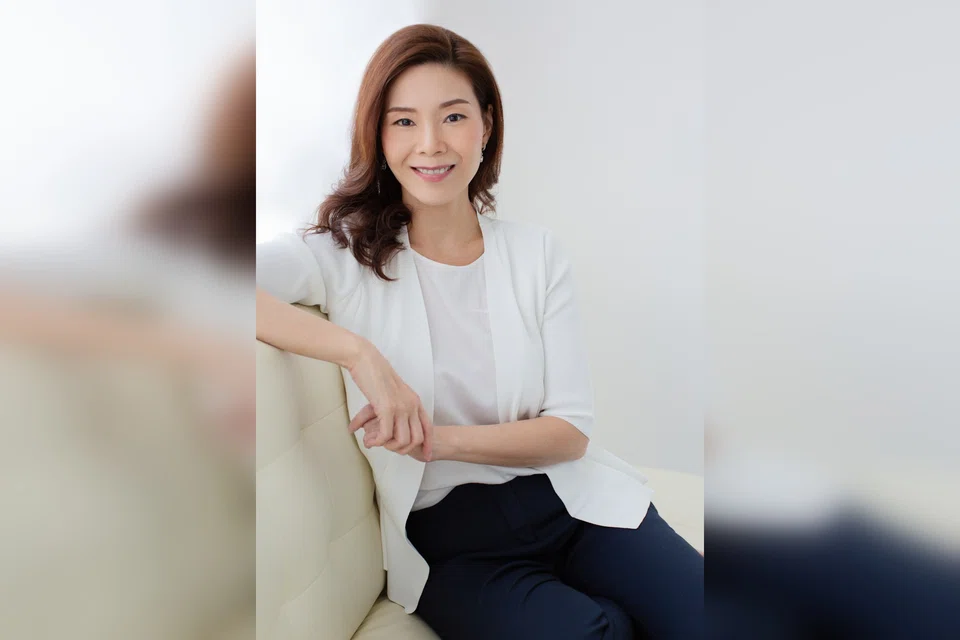
“We’re at the heart of where wealth is growing, and we’re in a good position to capture it,” said Patricia Quek, UBS’ business sector head for Singapore and Malaysia, in an interview with The Business Times.
The renewed push also reflects the scale of the opportunity in Singapore, where the ranks of the wealthy have expanded rapidly.
Between 2000 and 2025, the number of adults here with US$5 million to US$10 million grew at a compound annual rate of 8 per cent, UBS’ Global Wealth Report 2026 showed. The population with US$10 million to US$50 million increased by 7.6 per cent a year.
Their collective wealth grew even faster, rising at an annual rate of 9.4 per cent in both brackets over the same period.
In all, Singapore had about 27,000 adults with between US$5 million and US$100 million in wealth in 2025, the report showed.
UBS is already seeing early signs of that opportunity. Investable assets held by its high-net-worth clients in the region – the bank did not disclose the applicable wealth threshold – rose in 2026 to date compared with 2025, while clients new to UBS contributed more than half of the region’s high-net-worth net new money inflows over the same period, Quek said.
One fortune, several clients
The next wave of clients may emerge not only from newly created wealth, but also from existing fortunes being divided among heirs.
Quek cited the example of a “towkay”, or business owner, with US$60 million in investable wealth and four children. An equal division would leave each heir with US$15 million. In other words, “one towkay would therefore result in four high-net-worth clients”, she said.
Such transfers can also make family wealth more complicated to manage. Children may study, work or settle overseas, leaving assets divided not only among several heirs but also across multiple jurisdictions.
This creates demand for succession planning, overseas accounts and advice coordinated across UBS’ global network, Quek said.
The bank must, however, contend with a potential obstacle as it broadens its reach: the perception that its doors are open only to the ultra-rich.
“The perception that people have is that UBS is for ultra (high-net-worth),” Quek acknowledged. In fact, the bank already serves clients with more than US$2 million in investable assets, she said.
She likened discovering UBS’ offerings to using an Apple smartphone for the first time.
“You don’t know what you don’t know until you get the exposure,” she said.
Nor does the bank view high-net-worth customers merely as a feeder pool for its ultra-high-net-worth business.
“High-net-worth clients are already one of our core client groups, so we’re not looking at them in the hope that they become ultra,” Quek said. “We’re looking at a spectrum of clients – high net worth, ultra-high net worth and billionaires – from the perspective of their needs.”
Those needs, rather than a client’s wealth bracket alone, determine the services offered, she added, as UBS does not restrict clients with a particular level of wealth to a fixed menu of products.
The bank does not expect to hire bankers specifically for the renewed push, with its existing staff already serving clients across the wealth spectrum.
For individual clients, the bank structures its advice around what it calls the “3L” framework: liquidity, longevity and legacy.
Liquidity covers funds required over the next two to five years. Longevity refers to the larger pool of investments intended to support retirement and longer-term lifestyle needs, while legacy comprises assets earmarked for the next generation.
The balance shifts as clients move through life. Younger professionals may concentrate on growing their wealth and funding their lifestyles, while retirement and legacy planning become more prominent with age.
Standing out in a crowded market
The push places UBS in an already crowded field, alongside other global private banks, Singapore lenders and low-cost online brokers competing for the same pool of clients.
One way the Swiss giant is seeking to differentiate itself is by drawing on the wider group, including its investment bank.
For instance, its capital markets and corporate finance business units can be particularly relevant to entrepreneurs whose personal wealth remains closely tied to their businesses.
Beyond that, Quek described the bank’s proposition through four areas: products, platforms, people and perspectives, with the last referring to its investment views and thought leadership.
As mainstream trading becomes increasingly commoditised, wealthy investors can already buy and sell many assets cheaply through online brokers. UBS is therefore betting that clients will continue paying for advice and access to investments they cannot readily obtain elsewhere.
Alternative investments are one example. The bank launches almost 20 new alternative investment offerings each year, Quek said.
Potential offerings can be monitored for three to five years before they are made available to clients.
Quek described the process as a “baptism of fire”, intended to ensure that the bank can stand behind the products it distributes.
UBS is also advising clients to diversify their exposure rather than have portfolios concentrated in a handful of names. One example she cited was large US technology stocks, following their strong run over the past two years.
Rather than simply recommending the “flavour of the day”, Quek said, advisers should first ask what a particular pool of money is intended to achieve over the long term.
It is on that combination of advice, access and perspective that UBS is staking its bid for a broader share of Singapore’s growing wealth market, she added.
TRENDING NOW
Grab CEO’s wife Chloe Tong on life with Anthony Tan and finding her purpose
US trade chief to consider trade deal tariff caps in excess capacity probe
Bee Cheng Hiang customers’ e-mail addresses exposed in Singapore’s first case of AI-related data breach
DFI Retail to take over Starbucks business in Asia from Maxim’s Caterers