Responsible forward-looking disclosures
Investors expect transparent insight into companies’ strategic direction, risk exposure and future prospects
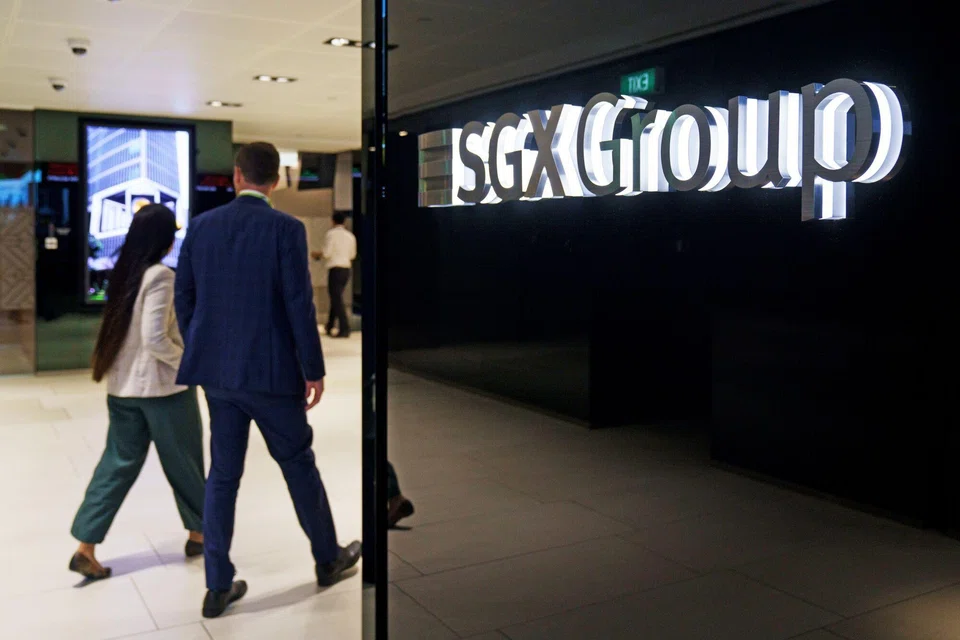
FEW companies in Singapore produce forward-looking statements. Those that do are few and far between. They include public-listed companies like Sats, Singtel and Singapore Exchange (SGX Group).
Sats sets out its projected multi-year profitability and return targets, while Singtel provides guidance on earnings before interest and taxes, and annual cost savings, accompanied by explicit caveats clarifying that such guidance is not a representation of future performance. SGX Group offers medium-term guidance on revenue, expenses, capital expenditure and dividend policy.
It may be telling that their stocks have generally outperformed the market, with Singtel and SGX Group surging past the benchmark Straits Times Index over the past 12 months.
When prepared responsibly, forward-looking disclosures enable investors to make informed investment decisions based on the quality, clarity and integrity of information disclosed to them. Investors expect not only financial information but also transparent insight into companies’ strategic direction, risk exposure and future prospects.
Why then do companies eschew forward-looking disclosures? Despite strong encouragement from the Singapore Exchange Regulation (SGX RegCo) to improve transparency, many firms prefer to stick to historical reporting. Why? One reason might be that they prefer to avoid potential backlash if forecasts are not met. But is that the case?
Internal controls and oversight
Under the Securities and Futures Act, companies can be held liable for making false or misleading statements that influence market prices. Directors may fear personal liability if projections lack a “reasonable factual basis”. However, SGX RegCo has clarified that issuers will not face regulatory action merely because guidance later proves inaccurate, provided the statements were soundly based when issued.
While forward-looking statements do not require an auditor’s signoff, the disclosures should be carefully prepared and supported by reasonable assumptions. Where significant deviation arises, companies should update the guidance at the next reporting or business update.
A change in mindset is thus required. Singapore companies tend to have a cautiously optimistic corporate culture, which leads firms to produce boilerplate, vague disclosures rather than concrete, actionable projections. To be fair, many listed firms, particularly small and medium-sized companies, lack the resources and sophisticated internal forecasting capabilities needed to provide reliable, data-driven forward guidance.
Boards and management cannot treat forward-looking disclosures as “set and forget” statements. To mitigate regulatory and litigation risk, companies should therefore ensure that forward-looking statements are subject to the same internal rigour expected of other announcements released by the company.
SEE ALSO





Announcements should be subject to internal review and validation by management as well as board oversight. The announcement should also include cautionary language that explains key assumptions and risks rather than generic boilerplate statements.
The discipline applied to financial reporting should likewise apply to forward-looking disclosure.
Why forward-looking statements matter
Financial results describe the past, but investors make decisions about the future.
Forward-looking disclosures help bridge the gap by enabling companies to communicate strategic priorities and explain management’s expectations. In highlighting emerging risks and opportunities, forecasts can provide context to financial trajectories.
As global reporting frameworks increasingly emphasise long-term value creation, sustainability and strategic narrative, companies that articulate a clear outlook are better positioned to engage the market and reduce information asymmetry.
SGX listing rules on financial reporting also require boards to provide a commentary on the industry competitive conditions and prospects that may affect the group in the next reporting period and next 12 months.
International standards
Forward-looking statements are well established in global markets. In the US, for instance, companies routinely provide forward-looking commentary in regulatory filings. In 2000, the US Securities and Exchange Commission implemented Regulation Fair Disclosure requiring public companies to disclose material, non- public information to all investors simultaneously rather than exclusively to market professionals or major shareholders to prevent selective disclosure of earnings or significant news.
In the UK, liability arises when such statements are made recklessly or dishonestly, reinforcing the obligation of care. The Australian Stock Exchange imposes obligations under the Corporations Act and listing rules to address material variances between earnings and market expectations.
These jurisdictions treat forward-looking guidance not as speculative or inherently problematic, but as a legitimate and expected part of meaningful disclosure, provided the statements are substantiated and responsibly framed.
Forward-looking disclosures should not be viewed as optional, risky add-ons or marketing optimism. Instead, they should be crafted and scrutinised with the same discipline applied to all disclosures made to the exchange.
This means that forward-looking statements must be accurate, balanced and fair, and timely. Boards must ensure that they are prepared with a sufficient basis and grounded on reasonable assumptions. Similarly, they should avoid the use of promotional jargon, and refrain from presenting favourable news as more certain or probable than is actually the case. Finally, boards must update their shareholders when information becomes inaccurate, incomplete, or outdated.
Culture of transparency
Global experience demonstrates that such statements can coexist comfortably with regulatory frameworks.
When prepared responsibly, regularly reviewed and updated when necessary, forward-looking statements provide corporate transparency, improve investor understanding, strengthen market confidence and contribute to a vibrant capital market.
Organisations committed to transparent disclosure practices should not shy away from disclosing adverse developments as openness in times of difficulty reinforces credibility with regulators and sustains investors’ trust.
The market may forgive bad financial performance, but investors and the public rarely forgive poor disclosure.
The writer is a Governing Council member of the Singapore Institute of Directors

Decoding Asia newsletter: your guide to navigating Asia in a new global order. Sign up here to get Decoding Asia newsletter. Delivered to your inbox. Free.
Share with us your feedback on BT's products and services