

Boardroom sees opportunity in unicorns' stock option plans
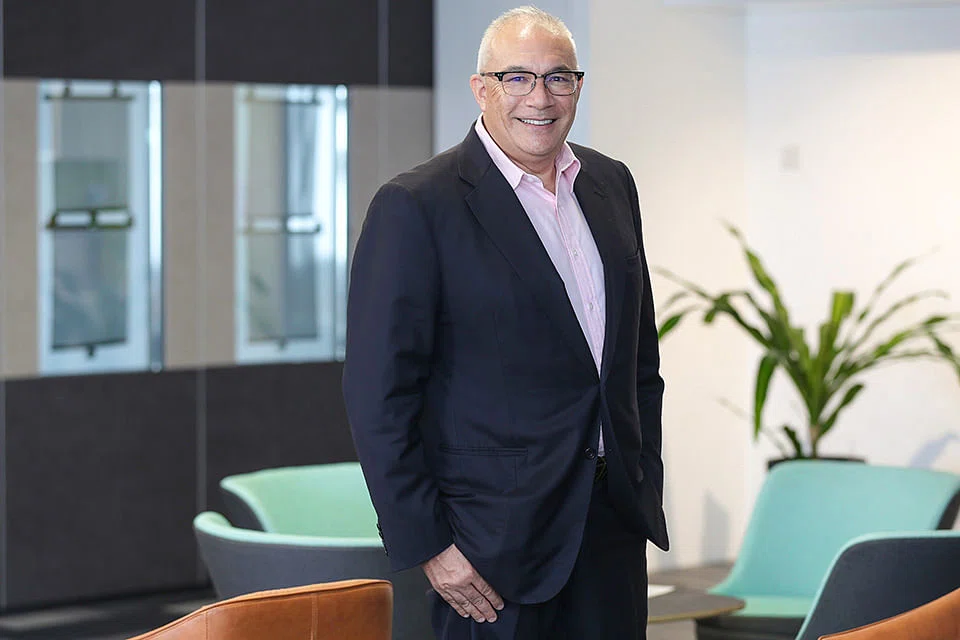
CEO Kim Teo says the Covid-19 pandemic has been driving interest in these schemes, a core growth area for his firm

Singapore
CORPORATE services provider Boardroom is seeing greater demand for employee stock ownership plans (ESOPs) among Asian companies, chief executive Kim Teo told The Business Times.
Designing and implementing ESOP schemes - popular among tech startups as a means of incentivising early employees - is a potential growth area for Boardroom, which is mostly owned by mainboard-listed GK Goh.
Such schemes are often run in-house but can become complex as the startup grows. Boardroom currently provides ESOP services to "several hundred" clients, including an Asian tech unicorn - a company valued at over US$1 billion - in the supply chain industry.
Mr Teo hopes to serve more of such unicorns, as well as provide ESOPs for a wider range of companies.
The Covid-19 pandemic has been driving interest in ESOPs, he said. "In Singapore, share plans fizzled out, but they are now coming back, because in an economic downturn, salaries are one of the large cash outflows of the company.
"Instead of paying salary increases or bonuses, they can give incentives by way of share plans."
Even established companies are looking into share plans, Mr Teo said. Common structures involve directly granting employees stock or options. Listed companies, meanwhile, are implementing "phantom" share plans - so called because the instruments are not actual stock, but are linked to the company's share price.
Mr Teo called ESOPs a "core differentiator" and "core growth" area for Boardroom. "I believe that more can be done in a win-win situation, where companies are aligning with the employee; at the same time, they can manage their cashflow better," he said.
"Generally, we find that this is an area where North Asia and the US are perhaps a lot more developed, from an employee engagement standpoint."
Founded in 1968, Boardroom provides corporate services such as accounting, human resources, payrolls and compliance in five markets: Singapore, Malaysia, Hong Kong, China and Australia.
It serves about 5,500 private companies and 1,500 listed companies in the region. It also counts most Reits (real estate investment trusts) in Singapore as clients.
The company was delisted from the Singapore Exchange's mainboard in 2019, but recently came into the spotlight after Bloomberg reported in January that GK Goh is mulling a sale of its 92 per cent stake in Boardroom for US$300 million.
In its latest earnings statement, GK Goh confirmed it was looking at a potential divestment, among other options, and will make an announcement in due course. Mr Teo declined to comment on the matter.
For FY2020 ended December, revenue from GK Goh's corporate services segment, which takes into account its stake in Boardroom, rose 6 per cent to S$112.5 million. Profit after tax rose 65 per cent to S$14.5 million.
Boardroom saw growth across all segments, GK Goh said, with its Australian business doing "especially well".
It expects Boardroom's earnings to continue improving this year.
When it comes to overseas expansion, Mr Teo said "the ambition is there" and Boardroom remains open to opportunities for acquisitions. It will, however, proceed cautiously in deciding whether to go in as a business owner or to operate via a partnership model.
"We look at acquisitions all the time, we have proposals coming to us," Mr Teo said. "We've looked at Japan, Indonesia, the Philippines, Thailand, Vietnam."
The choice of whether to operate alone in a new market or with a partner would depend on the risks and the partner, he added. "If the business comes to a certain level and the risks are too great, I may have to go in and operate myself."
Boardroom is also looking at whether it can enter new markets purely online, without the need for boots on the ground. "Covid-19 has been a catalyst for positive change" as it makes clients more receptive to going digital, Mr Teo noted.
"The aspirations to grow the business are there, but how I grow the business depends on the opportunities and the risks."
TRENDING NOW

Stocks to watch: CapitaLand Ascott Trust, Keppel Infrastructure Trust, iFast, ESR Reit, First Sponsor

Indonesia says gas export cuts to Singapore remain within contract terms

If Europe goes to war, the fallout will be felt in East Asia

Government to bring forward raising of retirement age, give employers more financial support to create flexi-load jobs

