Bonds or equities? Pictet says 5% US 10-year Treasury yield could tip the scales
Swiss private bank sees inflation settling closer to 3% than 2%, keeping bond yields structurally higher over the next decade

[SINGAPORE] Investors may have to get used to inflation being volatile and sticky for years to come, with 3 per cent becoming the effective anchor in place of the 2 per cent target by central banks, keeping long-term bond yields structurally higher, said Pictet Wealth Management.
The note of caution comes as long-dated US borrowing costs climb, with the 30-year US Treasury yield on Tuesday (Aug 18) hitting its highest level since June 2007 at 5.34 per cent while 10-year yields went above 4.7 per cent.
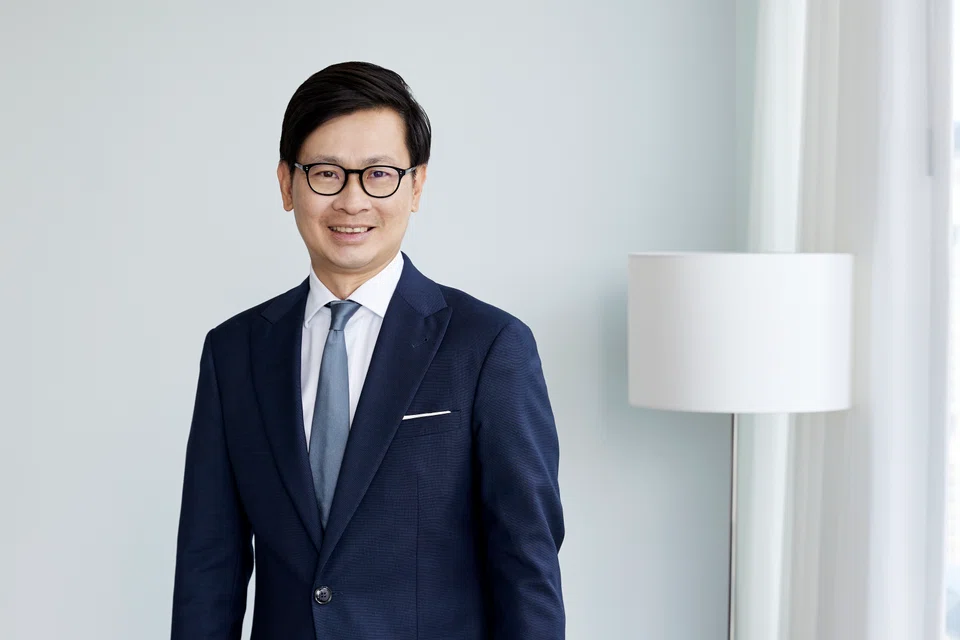
Kelvin Tay, chief investment officer for Asia at Pictet Wealth Management, noted that “3 per cent is the new 2 per cent for inflation, and that means that your bond yields will likely be higher”.
He flagged 5 per cent on the 10-year US Treasury as the level at which the equity risk premium comes into question, prompting investors to weigh whether bonds or equities look cheaper.
Pictet’s 14th annual Horizon investment outlook report, which sets out 10-year return expectations across asset classes, forecasts annualised US dollar returns of 5 per cent from US government bonds over the coming decade. This is up from an annualised 0.9 per cent over the past 10 years.
For equities, the Swiss private bank expects returns for Asia excluding Japan at 8.3 per cent annualised, ahead of Europe at 7.9 per cent, Japan at 7.8 per cent, and the United States at 6.9 per cent, for the next 10 years.
Why term premiums are rising
The term premium – the extra compensation investors demand for holding long-dated debt – and inflation are being pushed up by three structural forces: ageing populations, competition for resources and geopolitical risk, said Tay.
He pointed out that the labour participation rate in the US has dropped to a 50-year low, in part due to issues with working visas.
“The Trump administration is not really giving out H-1B visas or not renewing some of these H-1B visas that are... expiring,” he noted, referring to visas for foreign workers in specialised fields such as technology and engineering.


Competition for resources is a second pressure point, with a shortage of dynamic random access memory (DRAM) chips keeping memory prices high. Tay said meaningful new supply is unlikely to come onstream before end-2029 to 2030.
Persistent unrest in the Middle East, meanwhile, will keep resource prices such as oil elevated, he added.
Taken together, these forces will keep inflation and therefore bond yields higher.
Tay said that the next 10 years will see a move from capital abundance to one of greater competition for capital.
Yet, he noted that over a longer horizon, artificial intelligence could lift growth through productivity gains and exert disinflationary pressure.
Frederik Ducrozet, head of strategy and macro research at Pictet Wealth Management, said services are the next step in AI adoption. Economies with a higher share of services relative to manufacturing, such as the US and the UK, should benefit more.
Healthcare and defence were singled out as beneficiaries of AI, with adoption and productivity gains broadening across both.
Emerging markets move beyond China
Emerging markets sit at the heart of the AI and technology build-out rather than on its periphery, Tay said.
“The semiconductor chips, the DRAM chips, are largely manufactured in just a few countries within the emerging market space,” Tay said. He cited South Korea, Taiwan, China, Malaysia and Thailand as key players in the space. He also included Singapore, even though it is not within the emerging market class.
China also controls much of the rare earths and commodities supply, while Latin America and Europe, the Middle East, and Africa hold a similar grip on other inputs key to AI, he added.
That makes the asset class a different proposition compared with five to 10 years ago.
“In the past, you needed China to outperform, where the emerging market equities space is concerned,” he said. “But this year, China is actually underperforming; and yet there is Taiwan, (South) Korea bringing up the entire market.”
Local currency bond markets have also deepened, providing a more stable source of domestic funding and reducing vulnerability to foreign exchange swings.
Tay noted that there is room in the near term for the won, Taiwan dollar and yuan to appreciate, given their current account surpluses.
“If your currency stabilises, then that means you can issue debt in your local currency at a lower level, at a lower yield – and that means you have less exposure to the US dollar or foreign currency-denominated debt,” Tay said.
Singapore: stable growth, stronger currency
Closer to home, Tay expects Singapore to deliver stable growth, with upside for both the Singdollar and local equities.
“We do expect Singapore to do well as there are a whole slew of measures coming in to try to boost the (stock) exchange,” he said, adding that the three local banks should perform well at current rate levels.
The Monetary Authority of Singapore introduced its Equity Market Development Programme in February 2025 and expanded it from S$5 billion to S$6.5 billion in Budget 2026. It has allocated S$3.95 billion across nine appointed asset managers to date.
Tay expects the Singdollar to strengthen to 1.25 against the greenback, with exports holding up on the back of AI-related demand.
Alison Lim, chief executive of Pictet Wealth Management’s Singapore branch, said the firm generally recommends a globally diversified portfolio dominated by the US dollar, although Singapore dollar-denominated solutions are drawing local interest.
“We do frequently propose Singdollar solutions, and it is quite well-received by some of the family offices based here,” Lim said, but did not provide further details.
While Singapore dollar fixed-income generally offers relatively lower yields, local equities could benefit from family-office demand for higher-dividend names, including real estate investment trusts, she added.
Decoding Asia newsletter: your guide to navigating Asia in a new global order. Sign up here to get Decoding Asia newsletter. Delivered to your inbox. Free.
Copyright SPH Media. All rights reserved.