Boustead bets on Reit launch, geospatial boom to drive growth
The engineering and technology group aims to unlock real estate value and ride the transformation of geospatial industry

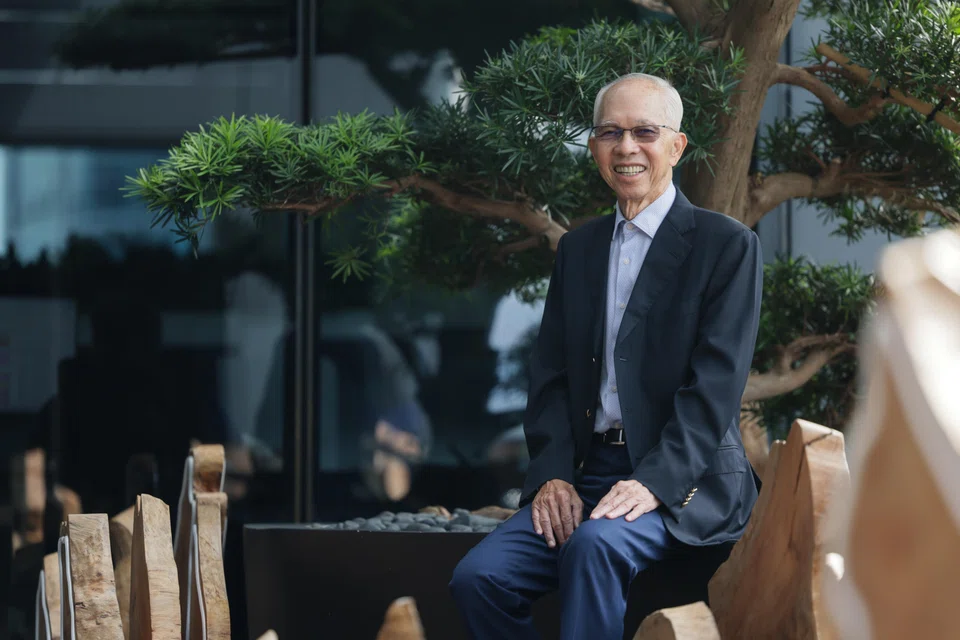
[SINGAPORE] Boustead Singapore is gearing up to launch its first public real estate investment trust (Reit), joining a wave of new listings on the Singapore Exchange, as it seeks to recycle capital and fund growth across markets and asset types.
The proposed logistics and industrial Reit is likely to include stabilised assets managed by UIB – a logistics platform in which Boustead holds a 20 per cent stake – and will enable its real estate arm Boustead Projects to unlock value from existing properties.
Chairman and group chief executive Wong Fong Fui told The Business Times that the listing will also enhance UIB’s valuation and serve as a “take-out or co-investment vehicle” for future projects, accelerating growth in the group’s real estate and funds management businesses.
While the listing process is still ongoing, Wong noted that the Reit could launch later this year if conditions – such as interest rates, equity performance, and the capital market momentum – are favourable.
The move builds on Boustead’s near decade-long strategy of capital recycling, which began in 2016. Since then, the group has launched two private funds and even sold some of its prime logistics properties to other Reits, to free up cash and manage depreciating leasehold assets.
But rising competition from new Reit entrants “squeezed (Boustead) out of the market”, said Wong. “For mature developments, what we can do is sell them, but if you sell, there’s no strategic value.”
Today, Boustead holds a mix of assets that it plans to monetise through a public Reit. “We have the reputation and experience, and we feel that we can go places,” he added.
Poised for growth
The Reit comes at a pivotal time for Boustead.
Despite uneven revenue in recent years, profitability and shareholder value have consistently improved.
In FY2025, net profit rose 48 per cent on the year to S$95 million. This represented a 46.3 per cent increase in earnings per share, and an 11.8 per cent growth in net asset value per share.
Boustead’s geospatial business, one of four verticals, is poised for further expansion.
The group is the exclusive distributor of Esri’s ArcGIS technology in major Asia-Pacific markets such as Australia, Singapore, Malaysia and Indonesia. It is used by more than 27,000 companies worldwide, from major tech players such as Google to government agencies, and continues to grow.
Geospatial technology uses mapping, data and analytics to capture and interpret location-based information, and is used from city-planning to logistics and utilities.
“I think (Boustead’s) revenue will grow because the pie is going to be much, much bigger,” said Wong.
Talent development is a key challenge, however.
Staff are often lured away by higher-paying tech roles in other “more exciting” companies, he noted, and few universities offer geospatial specialisations, making skilled talent scarce.
Even so, Boustead has managed to double the size of its geospatial division to over 700 staff – more than half of its 1,358 headcount – over the past decade.
“There’s a looming explosion that will change the niche industry into mass market,” said Wong. “We will be propelled to be bigger, but we also have to be prepared to do it right.”
Some challenges
Meanwhile, growth in Boustead’s energy engineering business has slowed amid geopolitical headwinds in the oil industry.
Still, Wong noted that margins remain healthy, ranging from 20 to up to 30 per cent in good times.
He pointed out that, even with the global push for renewable energy, demand for oil, gas and coal is still substantial, with consumption likely to rise to support data centre growth.
He also acknowledged shareholder concerns over Boustead’s healthcare division, which posted an operating loss of S$1.3 million in FY2025, widening from a S$0.2 million loss a year earlier. He stressed, however, that the losses were “insignificant” at the group level.
The drag came mostly from its half-owned associate in China, which incurred significant losses following new government policies that restricted the imports of foreign medical devices and equipment used in public hospitals, he said.
Boustead Medical Care, its South-east Asian business, generated a S$0.7 million operating profit in FY2025, reversing from a S$0.2 million loss previously.
Wong reckons that healthcare is a “sunrise industry” with much potential.
Boustead is exploring partnerships in China and other markets such as Japan to develop its own products and expand market reach, he said. However, regulatory approvals could take up to four years, and the industry remains “highly fragmented”.
“This business is going to take longer (than) my usual style of a one-year turnaround,” he added. “It will need another two to three years to see some reasonable results; so have patience with us. It will come.”
He noted that Boustead’s diversified portfolio – spanning energy engineering, geospatial technology, real estate and healthcare – helps balance performance.
“When one or two divisions are down, there are always other divisions to support (the) overall performance of the group. That’s actually how we’ve been dubbed among the most consistent dividend-paying companies in Singapore.”
The group’s strong cash position also provides flexibility in weathering downturns.
“Some would say you shouldn’t run a company with a lot of cash because you don’t leverage it,” he said. “But I don’t want too much stress. At least shareholders get more than the market norm, consistently.”
Future plans
Looking ahead, Wong said that Boustead will continue pursuing expansion opportunities, but in a measured way and through partnerships that balance risk and enhanced returns.
“We should not try to be too gung-ho and grow the business, expand so much that when the industry faces a recession, then we’ve had it.”
When asked about succession planning, Wong, who is 82, said that he does not plan to retire in the next one to two years, and that his health remains sound.
“(When the time comes), I would like to still work, but may not run the company directly.”
He added that succession planning was complex given Boustead’s “chap chye” (mixed vegetables) portfolio, but stressed that the group’s division heads are capable of carrying it forward.
“I will assure you that the company will go on.”