

BRC Asia still keen on China expansion
Company wants to leverage growing governmental support and overseas connections.

Claudia Chong
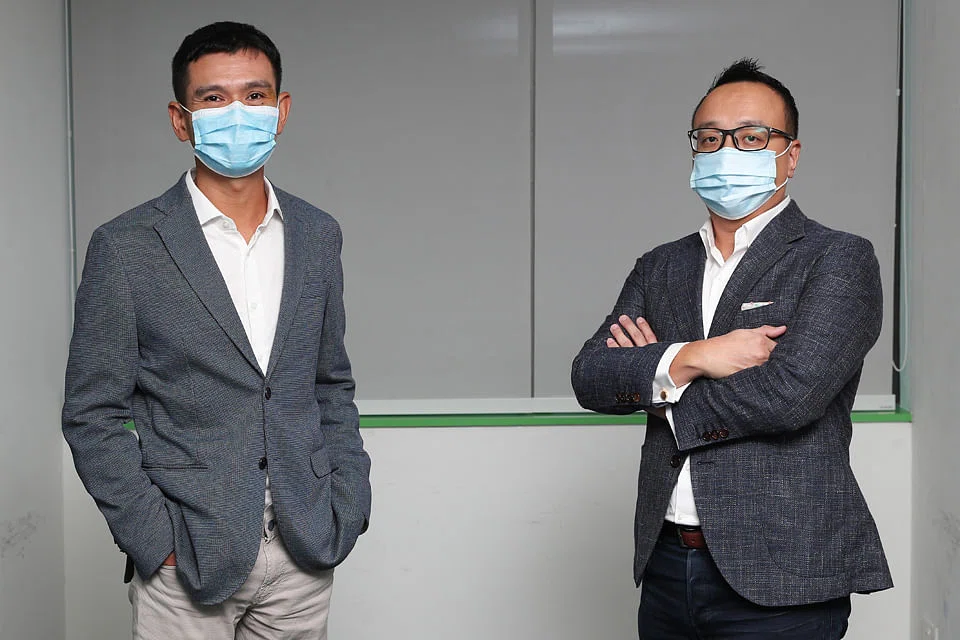
THE Covid-19 pandemic has dealt a blow to the construction sector, leading BRC Asia to put its internationalisation plans on the back burner. Nevertheless, the mainboard-listed steel dealer says it continues to have China and overseas expansion in its sights.
Now that a vaccine is available and countries are actively trying to restart their economies, CEO and executive director Seah Kiin Peng is cautiously optimistic that the company can aggressively pursue expansion in the second half of 2021 or early 2022.
The 82-year-old company supplies prefabricated steel products for reinforced concrete. It grew its business in Singapore after extensive government support encouraged this advanced model of construction amid a shortage of land and labour.
In China, however, the penetration rate of precast and prefabricated structures in construction was 14 per cent in 2018. This compared with 70 per cent in Singapore, and over 80 per cent in the United States, European Union and Japan, according to BRC Asia's latest annual report.
In recent years, the Chinese government has been encouraging prefabrication to save energy and reduce construction waste. With rising labour costs and increased government support as growth drivers, Mr Seah told The Business Times that he now hopes to introduce BRC Asia's expertise to the overseas market.
The company has had a presence in China for about 17 years through a joint venture that supplies mesh products to high speed rail projects. But it has struggled to make significant inroads.
"China is a tough nut to crack because it's mainly dominated by state-owned enterprises," said Mr Seah. But he believes the group now has a "key ingredient" in the form of its parent company Esteel Enterprise, which in September 2017 made an offer for the group at S$0.925 per share.
Esteel Enterprise, which currently has a stake of 71.9 per cent in BRC Asia, is 80.1 per cent controlled by You Zhenhua. Mr You is the chairman and executive director of iron ore trader Prosperity Steel United Singapore, which has a significant presence in China's steel industry.
Esteel Enterprise also has links to Rui Gang Lian Group, one of China's biggest iron ore traders and importers.
BRC Asia is also exploring expansion opportunities in Australia, Indonesia and Vietnam, Mr Seah said.
Keeping an eye on risks
BRC Asia's net profit for FY2020 ended Sept 30 fell 36 per cent to S$20.4 million. Revenue was down 33 per cent to S$612.4 million due to disrupted manufacturing operations during Singapore's Covid "circuit breaker" that started in April.
Though sales volume has since picked up steadily, it has yet to return to pre-pandemic volumes.
There was no breaking of contracts, but there were delays. "Our customers continue to fulfil the contracts that they have tendered for, whether they are local contractors or foreign," Mr Seah said.
As at Sept 30, the group's order book stood at about S$1 billion, with the duration of projects going up to five years.
BRC Asia is now keeping a closer eye on credit risk. Across the construction industry, some contracts tendered for during pre-pandemic times are expected to become unprofitable. This affects the contractors' ability to pay suppliers, though the company has not had to make provisions for doubtful debts so far.
The group had cash and bank balances of S$77.9 million as at Sept 30, while its total debt and borrowings stood at S$279.3 million.
Its liabilities include S$110.8 million of short-term unsecured bills payable. Banks extend credit lines to BRC Asia for the purchase of steel.
Executive director Darrell Lim said the company typically keeps an inventory of about a third or quarter of its order book. The inventory cycle is three to four months, while the accounts receivable cycle is about 90 days on average, he added.
Excluding a S$20 million loan from its immediate holding company, BRC Asia's net debt amounts to 68.6 per cent of its equity. The group's gearing ratio has in fact come down in recent years - from 135.1 per cent in FY2018 and 91.6 per cent in FY2019.
Its leverage could fall further. The group in September said it will dispose of a Nassim Road residential property for S$38.4 million after a third party exercised a purchase option for the house, providing the group with additional capital.
Another potential risk for the group will come from BRC Asia's 17 per cent stake in a Maldives venture that operates an airport, hotel and resort.
For FY20, BRC Asia's share of loss from the venture was S$14.4 million. This included a S$6.8 million impairment. The group flagged that the pace of recovery for Maldives tourism is unclear for the next 12 months.
Nonetheless, the company remains hopeful of the project's long term prospects. "We still think it's a good asset...and we're under no pressure to sell," said Mr Lim.
In position for recovery
Within the next one to two months, the group will reach maximum capacity for its factory operations under "new normal" working conditions. Output will be reduced by 10 to 15 per cent, according to Mr Seah.
In spite of the Covid-related disruptions to the construction sector, analysts remain sanguine about BRC Asia's business. A Dec 1 report from UOB Kay Hian (UOBKH) noted that build-to-order projects continue to be in demand, with the new project launches in Tengah, Bishan and Toa Payoh being oversubscribed. New construction contract awards are therefore expected to recover from lows seen in August, UOBKH said.
"We are optimistic of BRC's recovery, given its strong order book as well as its sizeable market share," the report said.
The group's gross profit margin has improved by 4.3 percentage points since 2017, to 10.8 per cent in FY2020. BRC Asia bought out its competitor Lee Metal Group in mid-2018 for S$199.3 million, which allowed the combined entity to save on the cost of bulk purchases of raw materials.
Analysts estimated that the acquisition raised BRC Asia's market share to 45-55 per cent from about 20-30 per cent. While both entities share the same customer base, Lee Metal specialised more in civil engineering while BRC is more focused on building works such as public housing flats and hotels.
Shares in BRC Asia closed at S$1.470 on Thursday. The counter is down a mere 1 per cent this year, having climbed from a 52-week low of S$1 in April. It now has a market capitalisation of S$343.9 million and trades at a forward price-to-earnings ratio of 8.9 times.
TRENDING NOW

IOI Properties and CapitaLand Investment closer to acquiring One Raffles Place in joint bid

OCBC sheds S$8 billion in value as shares close nearly 6% down; analysts cautious on banks

Grab CEO’s wife Chloe Tong on life with Anthony Tan and finding her purpose

Crystal Jade closes four more outlets, cuts 120 jobs ahead of proposed sale

