Breakaway football league sparks war over world's richest sport
 Add BT as a preferred source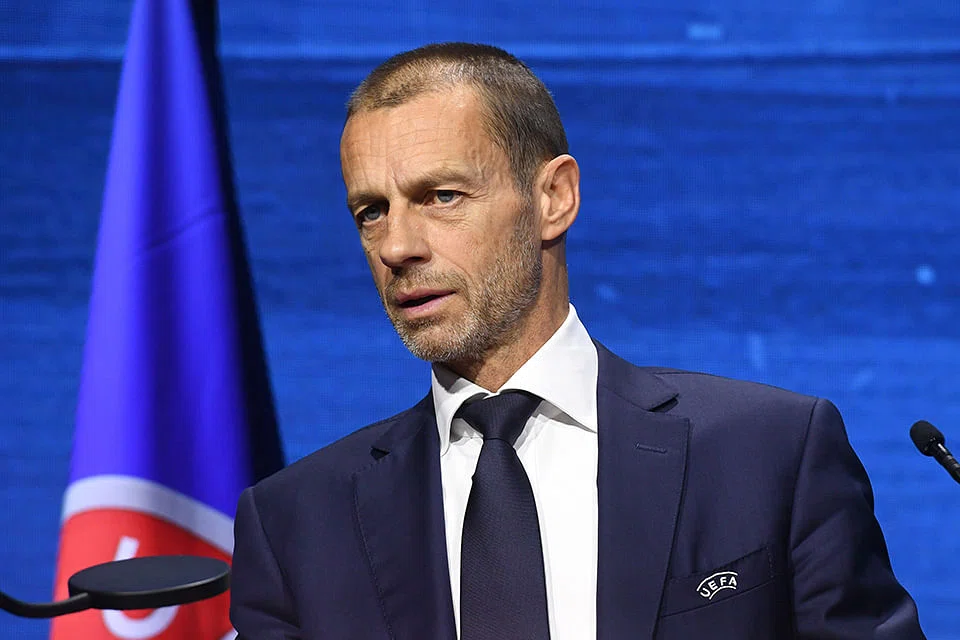
DeeperDive is a beta AI feature. Refer to full articles for the facts.
London
EUROPEAN football is embroiled in an escalating multi-billion-euro battle for control of the continent's most prestigious club competition after a dozen teams declared themselves founding members of a breakaway league.
The announcement of the four-billion-euro (S$6.4 billion) defection financed by JPMorgan Chase prompted an outcry from fans, governments and Uefa, European football's governing body.
In response, Uefa is now exploring a six-billion-euro financing proposal from UK-based asset manager Centricus to fund a revamped Champions League, people familiar with the matter said.
The confrontation reflects the evolution of the world's most popular game as a global business, yet also the financial realities during the pandemic.
Led by clubs from England, Italy and Spain, teams with vast fanbases and significant debts are seeking to squeeze more cash from broadcasting rights and underpin revenue after a year spent playing in empty stadiums.
Navigate Asia in
a new global order
Get the insights delivered to your inbox.
Of the teams that have so far joined the JPMorgan-backed Super League, all but a few ended last season in the red and at least eight have net debt exceeding 100 million euros, according to accountancy firm KPMG. What comes next is likely to be some high-stakes brinkmanship.
Uefa president Aleksander Ceferin branded the breakaway proposal a "spit in the face" for soccer supporters, while his organisation vowed to take all measures necessary - from turning to the courts to banning teams and players from international football tournaments - to stop the move.
It could hinge on the prospect of money up front for indebted clubs, according to Kieran Maguire, a lecturer in football finance at Liverpool University in England.
"Poor financial management at some European clubs has forced them to generate advanced funds to help alleviate their debt situation," he said. "Clubs will either achieve their objective from this competition or extract further income and certainty from Uefa."
Centricus has been in talks with Uefa for a number of months regarding financing, a person familiar with the matter said.
The investment firm discussed an initial package of about 4.2 billion euros, which was increased following the Super League proposal, the person said, asking not to be identified discussing confidential information.
Negotiations are ongoing and there is no certainty Uefa and London-based Centricus will reach an agreement, according to the people.
Uefa held its annual congress on Tuesday.
In the background, though, is a plan by Uefa to expand the Champions League to 36 teams from 32 and increase the number of games.
That has irked some teams, complaining the season already has too many matches, while also diluting the number of games between the continent's biggest attractions.
Under the Super League plan, the biggest clubs such as Manchester United and Real Madrid would start their own competition in August.
Six teams from England, three from Italy and three from Spain have signed up so far, and they would play each other midweek as an alternative to the Uefa tournament.
In addition to what will be 15 permanent teams, another five will qualify each year for the Super League. Clubs in France and Germany, including 2020 Champions League winner Bayern Munich, are not part of it.
"If this were to happen, we wish to reiterate that we and all our member associations will remain united in our efforts to stop this cynical project," Uefa said in a statement on its website before the Super League announcement early on Monday.
The potential advent of the rebel league has galvanised opposition to it, including from British Prime Minister Boris Johnson and French President Emmanuel Macron. The hashtag #SayNoToEuropeanSuperLeague was trending on Twitter.
Indeed, the tug-of-war goes to the heart of soccer's identity in the 21st century. Leading clubs with a rich history have spent recent decades embracing global capitalism, pay-TV deals and debt-fuelled foreign ownership.
Local fans, meanwhile, have regularly complained of being priced out of the game they love and vented their fury at a move they see as an abandonment of football's long-held traditions of open competition.
"It was a tone-deaf proposal, but the owners of those clubs won't have been able to ignore the near universal roar of outrage from all parts of the football community over the past 24 hours," British Culture Secretary Oliver Dowden told the UK Parliament.
A meeting of England's Premier League (EPL) clubs was due to go ahead on Tuesday without the six Super League entrants in attendance.
While a breakaway has been mooted for years, the development has roots in a proposal - known as Project Big Picture - first put forward by the billionaire American owners of Manchester United and Liverpool last year. The plans proposed a structuring of the governance of the EPL, Europe's most lucrative national competition, to give the biggest clubs an outsized voice in its future direction.
The idea was rejected by the league, but it opened up an opportunity to reshape the game.
Moves to set up a breakaway European league started to strengthen as the pandemic hit soccer hard, with the prospect of cancellations first prompting broadcasters to seek rebates from clubs and governments reluctant to bail out those hit by declining matchday revenues.
In total, the top 20 clubs have suffered a two-billion-euro hit from the pandemic, according to Deloitte.
Italy's top league Serie A invited private equity groups to submit bids for a stake in its media rights operation, but negotiations have been fraught and there has been no deal yet.
Germany's Bundesliga, which was the first of Europe's major leagues to restart games after Covid-19 struck, has opened a similar auction for a stake in its overseas rights.
By the beginning of this year, Bloomberg reported that the organisers were closing in on a roster of permanent members, and that JPMorgan would provide financial backing.
"Covid-19 has provided a useful smokescreen and an opportunity for clubs to try to force through this proposal on the basis that they need to rectify financial imbalances caused by the pandemic," said Mr Maguire at Liverpool University.
The idea that the biggest, most successful clubs in European football should compete against one another underpinned the creation of the original European Cup competition back in 1955.
The tournament involved only the champions of national domestic leagues - plus the trophy holder - until the 1990s, with the list of winners including not just Real Madrid, Barcelona, AC Milan and Juventus, but smaller clubs such as Red Star Belgrade, Nottingham Forest and Dutch team Feyenoord.
It was then expanded into the Champions League, effectively ensuring the big clubs remained in the competition for longer.
Proponents argue the Super League would create a more exciting competition because the game's very top teams would play each other more often. It would also be lucrative for them, with permanent membership removing the uncertainty of qualification after a bad season.
"We will help football at every level and take it to its rightful place in the world," said Real Madrid president Florentino Perez, the first chairman of the Super League. "Football is the only global sport in the world with more than four billion fans and our responsibility as big clubs is to respond to their desires." BLOOMBERG
Decoding Asia newsletter: your guide to navigating Asia in a new global order. Sign up here to get Decoding Asia newsletter. Delivered to your inbox. Free.
Share with us your feedback on BT's products and services