

The bright side to the CSE Global clash
Coming amid the company’s strategic review, the incident offers a chance to hash out potential governance risks
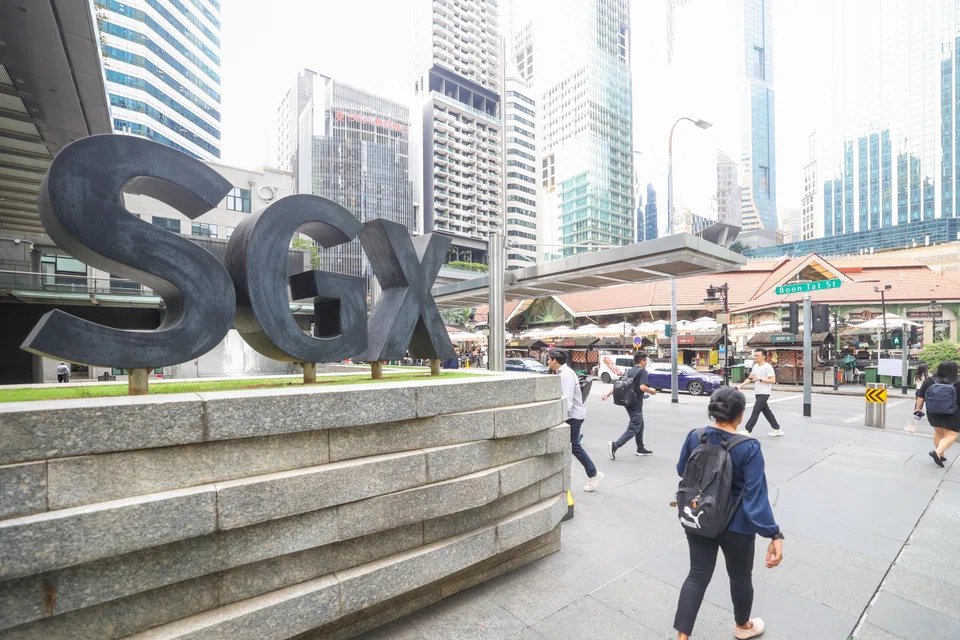
THE silver lining in the emerging boardroom row at Singapore-listed CSE Global is that an independent director is taking a stand against the controlling shareholder, and that the market regulator has taken an interest.
Singapore Exchange Regulation (SGX Regco) and CSE shareholders should seek to ensure that independent directors at the company are not hindered in performing their duties.
On Jun 2, veteran auditor Tan Chian Khong resigned as lead independent director at CSE, which builds integrated technology systems for industrial customers.
In the disclosure form for announcing his resignation, he cited “difference of views with regard to working with controlling shareholders” as an unresolved difference in opinion on material matters.
In response to a query by SGX Regco, CSE provided more details about Tan’s departure.
Tan alleges that CSE non-independent and non-executive chairman Eugene Lai had asked him to resign, even though Tan’s term ends in 2028.
Tan also alleges that Lai wanted Tan to step down as chair of CSE’s nominating committee. Tan said that he and Lai appeared to hold “increasingly divergent views” on strategic matters.
In response to Tan’s allegations, Lai said he had not asked Tan to resign, but had privately shared his view that CSE needed to refresh its board and have a lead independent director with strong merger and acquisition (M&A) experience.
Lai said that he left it to Tan to decide “what to do in the best interests of the company”. Lai is the board nominee of CSE controlling shareholder Heliconia Capital Management.

CSE is in the middle of a strategic review undertaken by Jefferies.
Two positive outcomes
CSE shareholders can be grateful for two outcomes. The first is that SGX Regco got the company to disclose more details. As Singapore’s stock market regulation shifts further towards a “buyer beware” approach, greater transparency on potentially material matters is essential to enabling sound decisions in the market.
The second positive outcome is the fact that Tan chose to raise his concerns, because there is now an opportunity to scrutinise the company’s corporate governance.
While harmonious boards are generally good to have, too little conflict should raise concerns that boards might not be diverse enough or that disagreements are being hushed over. The fact is that the market for directors discourage speaking out in public, because a reputation for being difficult can close the door to other directorships.
The market should therefore be comfortable with a healthy level of conflict, especially when the tension occurs in a sincere pursuit of the best interests of the company.
Regardless of which side is more true, shareholders should seek assurance from CSE that its independent directors are allowed to carry out their duties without inappropriate influence from Heliconia.
Shareholders should also ensure that CSE’s board has a structured approach to determining and acquiring the diverse skills and experience required to properly lead the company.
It is worth challenging the wisdom of seeking to replace the only auditor on the board with an M&A expert when the seven-member board (while Tan was still included) already has three M&A experts: Lai, through his work at Heliconia; non-executive independent director Ng Shin Ein, through her work as a corporate lawyer advising clients on joint ventures, M&A and fundraising; and non-executive independent director Kenneth Tang, another corporate lawyer whose main areas of practice include M&A and corporate finance.
This is especially relevant given that CSE could soon be involved in corporate action following the strategic review. Shareholders need to be confident that the board’s independent members are looking out for the company’s best interests and not just those of its largest shareholder, and that the board has the right balance of expertise and perspectives to help it navigate that next phase.
Whether Tan or Lai is correct may ultimately have little economic impact for CSE shareholders, since Heliconia is the controlling shareholder. If Heliconia wants a new independent director instead of Tan, it is unlikely that he would have been re-elected after his current term is up.
However, the conflict highlights potential corporate governance risks that shareholders should address before CSE embarks on a more consequential journey.
This story first appeared in the ESG Insights newsletter
Decoding Asia newsletter: your guide to navigating Asia in a new global order. Sign up here to get Decoding Asia newsletter. Delivered to your inbox. Free.
Share with us your feedback on BT's products and services
TRENDING NOW

Government to bring forward raising of retirement age, give employers more financial support to create flexi-load jobs
If Europe goes to war, the fallout will be felt in East Asia

Indonesia stocks suffer worst plunge in nearly 30 years as MSCI proposes standalone status

Vietnam’s northern provinces, not Hanoi or Ho Chi Minh City, are powering near 10% GDP growth

