

BT Explains: What is limited assurance?
The degree of confidence about a company’s sustainability and climate-related disclosures could be influenced by the kind of independent assurance that has been carried out

Michelle Quah

As the demand for sustainability and climate-related corporate disclosures grows — along with the threat of greenwashing — more and more businesses are looking to obtain external assurance for their disclosures.
The thinking behind this is that, as in the case of audits of financial statements, an opinion by an external party gives an independent and verified view of the information presented and, hence, lowers the risk of misrepresentation.
But these can take various forms, and it is important for the users of such information to understand the differences.
Limited vs reasonable
Under the Framework of Singapore Standards on Auditing, the two types of assurance engagements a practitioner can perform are reasonable assurance engagements and limited assurance engagements.
To put these two types of assurance in a context familiar to most people: limited assurance is typically used for half-year reviews of financial statements, while reasonable assurance is the opinion provided for an audit of financial statements.
The Institute of Chartered Accountants in England and Wales (ICAEW) has an oft-relied-upon explainer.
In a limited assurance engagement, the practitioner collects less evidence than for a reasonable assurance engagement, but sufficient for a negative form of expression of the practitioner’s conclusion - for example, “Based on the procedures performed, nothing came to our attention to indicate that the management assertion on XYZ is materially misstated”.
The practitioner would perform different or fewer tests — or use smaller sample sizes for the tests performed — than those required for reasonable assurance.
It’s important to note that the practitioner uses the same risk basis for planning the work and the same levels of materiality in evaluating the outcome of tests for both reasonable and limited assurance engagements.
But, since the extent of evidence collected for a limited assurance engagement may be limited due to the reduced sample sizes and test coverage adopted, the level of risk of material misstatement remaining is potentially higher than in a reasonable assurance engagement.
Hence, the practitioner is not in a position to express the same degree of confidence as in a reasonable assurance engagement.
Most companies are currently opting to obtain limited assurance on sustainability and climate-related disclosure, mostly because of the need to balance the benefits against its cost.
Singtel: a practical example
For a better sense of how such assurance would work in practice, let us look at the example of Singtel. The telco engaged professional services firm EY to independently assure a “selection” of its key ESG disclosures in its Sustainability Report 2022.
In its Assurance Statement, EY explained that its procedures were designed to obtain a limited level of assurance on which to base its conclusion and, thus, do not provide all the evidence required to provide a reasonable level of assurance.
For example, it said that even though it considered the effectiveness of management’s internal controls when determining the nature and extent of its procedures, its engagement was not designed to provide assurance on internal controls. Its procedures did not include testing controls or performing procedures relating to checking aggregation or calculation of data within Singtel’s information-technology systems.
It went on to say: “A limited assurance engagement consists of making enquiries, primarily of persons responsible for preparing the subject matter and related information, and applying analytical and other appropriate procedures.”
Briefly, such efforts included EY making inquiries of the Singtel group’s sustainability team, meeting with its data stakeholders and management, interviewing its employees and management based in Singapore, going through process walk-through of systems and processes for data aggregation and reporting, conducting analytical review procedures to support the reasonableness of the data, testing on a sample basis the underlying source information to check accuracy of the data, identifying and checking assumptions supporting relevant disclosures, and obtaining third-party reports and confirmations on relevant matters, among others.
EY then concluded that, based on its procedures and the evidence obtained, it was not aware of any material modifications that should be made to SingTel’s sustainability report.
Growing adoption
Understanding what such assurances mean will become more important, as more and more companies – both around the world and here in Singapore – begin to offer limited (and even, reasonable) assurance on their non-financial disclosures.
A study by professional services firm KPMG of sustainability reporting trends from 5,200 companies across 52 countries, published in December 2020, revealed that of the top 100 companies by revenue, 80 per cent have reporting on environmental, social and governance (ESG) matters — and that half of those reporting have gone a step further to seek independent third-party assurance.
This finding indicates that assurance of sustainability information has now become standard practice for large and mid-cap companies worldwide, KPMG’s report said.
Among the world’s 250 largest companies, the underlying trend for third-party assurance of sustainability data is 71 per cent. And, the two countries that have shown the greatest growth in such assurance since 2017 are Spain (+38 percentage points) and Singapore (+35 percentage points).
“We have seen a strong interest from boards and C-suite on pursuing sustainability strategies as integral to their business model transformations, in anticipation of the transition to a green and more sustainable economy,” said Lau Kam Yuen, partner, Climate Change & Sustainability Services at KPMG in Singapore. “Attention is being paid by business leaders to ensure that robust governance, including external assurance, exists to result in ESG disclosures that are fit-for-purpose.”
TRENDING NOW
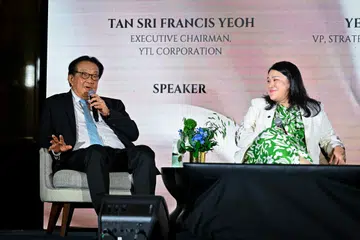
From legacy to launch: Francis Yeoh and Yeoh Pei Xien on family unity and YTL’s next‑gen ventures

Things to know about DBS’ incoming chairman Anthony Lim

Wealthy Indonesians snap up government bonds as yields near 8%: OCBC

From local AI partnerships to global opportunities: How MNCs help Singapore firms scale

