

Budget 2026: KPMG, SID propose AI training fund for board directors, new work pass category for global ‘master trainers’
Other recommendations include industry-specific job transformation maps and a digital platform harmonising FTAs
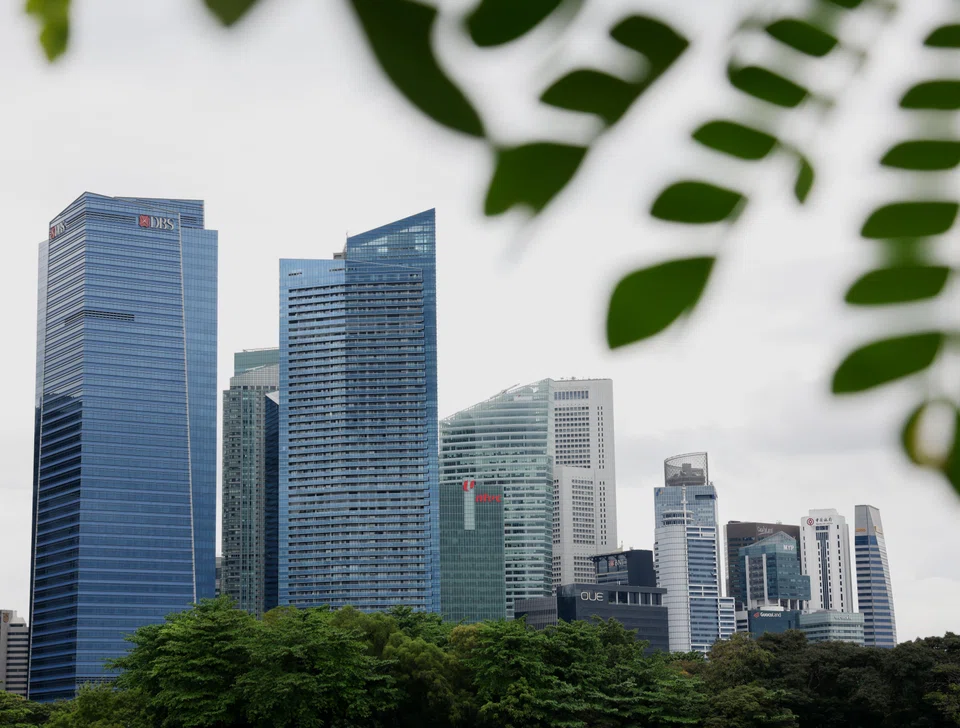
[SINGAPORE] Establishing a fund for artificial intelligence (AI) governance training for board directors and introducing a dedicated work pass category for “master trainers”, are among some recommendations proposed by KPMG in Singapore and the Singapore Institute of Directors (SID) in a joint Budget 2026 wish list. Their recommendations, which were unveiled at a media conference on Wednesday (Jan 7), aimed at tackling challenges in three areas: navigating a changing global order, bridging gaps in AI adoption and upskilling leaders.
“We believe that Budget 2026 presents a timely opportunity to address these challenges and strengthen Singapore’s competitiveness,” said Ajay Sanganeria, partner and head of tax at KPMG in Singapore.
The proposed AI fund would support hands-on training for board members and senior executives, addressing strategic and operational gaps at the leadership level.
Meanwhile, the new work pass category for global “master trainers” would encourage international professionals to join local organisations to lead structured upskilling or leadership development programmes.
“Master trainers”
The “master trainers” would be experienced professionals with proven expertise in leadership, innovation and workforce development, said KPMG and SID.
The intention behind such a pass would be to help “level up” the local ecosystem, where emerging technologies and skills such as AI remain unevenly distributed. Having such professionals bound to one institution would limit their impact, they said.

To boost the scheme’s effectiveness, additional incentives such as tax benefits, grants, or fast-track work pass renewals and increased quotas could be tied to measurable outcomes in organisations’ skills development initiatives.
Asked how this differs from Singapore’s existing Overseas Networks and Expertise (One Pass) for top talent, KPMG and SID said the “master trainers” pass will enable such experts to also develop use cases for such emerging technology for organisations.
For the rest of the workforce, KPMG and SID recommended job transformation road maps that outline sector-specific workforce disruptions, challenges and opportunities.

“While there are existing upskilling initiatives such as SkillsFuture, the speed of disruption by AI would vary across sectors,” they said.
Therefore, having such road maps with co-funded training and certification tied closely to the needs of each sector would help firms prepare workers effectively and continue to build “a strong local core”.
AI adoption
The AI fund for board directors responds to a gap in capabilities. KPMG and SID noted that 75 per cent of chief executives identified AI integration as a top barrier to growth, suggesting that equipping boards with the right capabilities is critical to unlocking enterprise-wide transformation and avoiding misaligned or low-impact investments.
The fund would complement existing SkillsFuture programmes, which primarily focus on AI awareness rather than governance-level expertise, they said.
This leadership gap is part of broader AI adoption challenges facing Singapore businesses. Among more than 1,000 professionals and business owners surveyed by KPMG and SID, 54 per cent indicated talent and skills gap as the top challenge in adopting AI.
Other key challenges included high costs of technology adoption, cited by 52 per cent of respondents, and the lack of clear AI adoption strategies, cited by 48 per cent.
In response, KPMG and SID laid out other AI-related recommendations, including an enhanced public-private partnership framework to accelerate AI adoption in Singapore. This could facilitate public data sharing and provide infrastructure access to lower the barriers for AI experimentation and deployment, KPMG and SID added.
Both organisations also recommended co-funding by the government and trade associations to establish shared, anonymised data pools tailored to specific sectors such as logistics and retail.
Lee Sze Yeng, managing partner at KPMG in Singapore, said: “To remain competitive, leaders must move beyond the basics, using AI and data to drive real business outcomes while building governance frameworks that inspire trust.”
Increasing FTA utilisation
Singapore faces the challenge of maintaining its position as a trusted connector and aggregator of the flows of goods, capital, data and talent amid rising geopolitical tensions, said KPMG and SID.
The participants surveyed by the two organisations found that 51 per cent of respondents identified rising business costs as the main challenge for cross-border expansion, followed by higher tariffs and supply chain difficulties.
To address these challenges, KPMG and SID suggested developing a unified digital platform for free trade agreement (FTA) management. This would help businesses navigate complex procedures and benefit from the FTAs.
Sanganeria said: “Grants and platforms are vital enablers, but they must be part of a broader solution that simplifies complexities and empowers businesses to focus on innovation.”
For more of BT’s Budget 2026 coverage, go to bt.sg/budget26
Decoding Asia newsletter: your guide to navigating Asia in a new global order. Sign up here to get Decoding Asia newsletter. Delivered to your inbox. Free.
Copyright SPH Media. All rights reserved.
TRENDING NOW

Once staunchly pro-China, Malaysian Chinese businesses are now distancing themselves from Beijing

Looking beyond looming CEO succession, should UOB potentially pursue a transformative merger?

Could stablecoins be the future of money?

Grab CEO’s wife Chloe Tong on life with Anthony Tan and finding her purpose

