

Budget 2026: SBF, PwC jointly propose centralised digital IP registry, expanding JS-SEZ to include Indonesia
The expanded JS-SEZ could create a more integrated and attractive proposition for global investors, say SBF and PwC
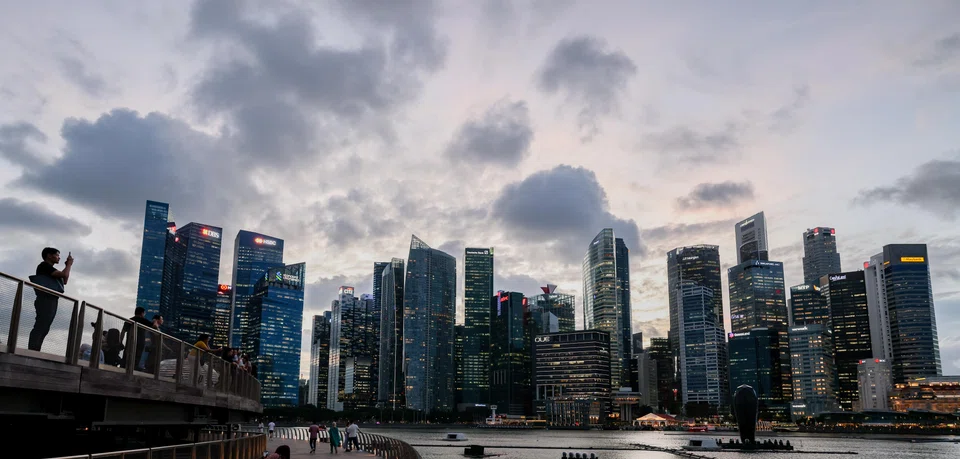
[SINGAPORE] Developing Singapore as an intellectual property financing hub to maintain its innovation-led competitiveness – this is one of the key recommendations by the Singapore Business Federation (SBF) and PwC to support local businesses, ahead of Budget 2026.
Prime Minister and Minister for Finance Lawrence Wong is set to deliver the Budget statement on Feb 12.
“Firms are gearing up to capture the next S-curve of growth and scale across the region, but they require practical and implementation-ready support,” said Kok Ping Soon, chief executive officer of SBF.
“Budget 2026 is a critical opportunity to bridge these gaps so that businesses can continue to create good jobs, anchor high-value activities in Singapore, and compete confidently as Asean’s economic flows accelerate,” he added.
SBF and PwC’s recommendations, which were unveiled at a media conference on Monday (Jan 12), targeted challenges in five areas.
Boosting Asean integration and Singapore’s hub status
The first set of recommendations addressed capturing new economic flows as Singapore prepares to chair Asean in 2027. SBF and PwC proposed the establishment of a centralised digital intellectual property (IP) collateral registry to improve transparency and enable better risk assessment.

Kok noted that the generation of IP is now shifting from the West to the East, particularly driven by China.
“The question is, what can we do to capture some of these flows? Not just in terms of the registration of the IP to make it more searchable, but the recognition of the IP file across different jurisdictions,” said Kok.
SBF and PwC added that Enterprise Singapore’s risk-sharing schemes could be expanded to intentionally cover IP-backed financing with enhanced ratios of 70 to 80 per cent for qualifying transactions.


Moreover, the government can introduce government-backed IP securitisation platforms and first-loss guarantees to pioneer IP financing transactions, said SBF and PwC.
The organisations also proposed that the Johor-Singapore Special Economic Zone (JS-SEZ) be expanded to include Indonesia’s Riau Islands. This could create a more integrated and attractive proposition for global investors, SBF and PwC noted.
Musa Fazal, chief policy and operating officer at SBF, said: “Many of the challenges that businesses tell us hinder them from taking advantage of the JS-SEZ, such as physical connectivity, digital infrastructure and navigating the regulatory environment, also extend to the Batam, Bintan and Karimun region.”
The second set of recommendations were targeted towards boosting Singapore’s hub status.
To further enhance Singapore’s attractiveness as a global and regional hub, SBF and PwC recommended that the government modernise its tax framework by transitioning from purely expenditure-based incentives to outcome-based rewards under the Refundable Investment Credit (RIC) scheme.
Additionally, the organisations recommended that the government enhance workforce flexibility for strategic service providers that support multinational headquarters by reclassifying them under a dedicated “regional HQ service providers” category.
This would address restrictive hiring hurdles and prevent the relocation of essential HQ-linked functions to neighbouring countries, said SBF and PwC.
Lastly, to establish Singapore as a premier regional private credit hub for small and medium-sized enterprises (SMEs), SBF and PwC proposed targeted tax incentives such as a reduced 5 per cent rate on management fees and tax relief for participating SMEs.
Addressing growth bottlenecks
The third set of recommendations for Budget 2026 looked at supporting SMEs in innovating, scaling and expanding overseas.
SBF and PwC recommended enhancing the Productivity Solutions Grant (PSG) with an artificial intelligence (AI) booster add-on. The PSG supports companies in automating existing processes through IT solutions and equipment, capped at S$30,000 per enterprise.
To support SMEs in using AI effectively, the organisations also recommended implementing sectoral AI pathfinder programmes. This could spur the creation of a knowledge hub that showcases best practices and case studies of successful technology adoption, said SBF and PwC.
They also proposed the expansion of the BizAdapt grant to cover compliance and training costs arising from tightening export controls. The BizAdapt grant helps businesses with tariff adoption through advisory and reconfiguration support, capped at S$100,000 per enterprise.
Beyond the BizAdapt grant, SBF and PwC recommended that the government could also support loan financing by raising the risk-share under the Enterprise Financing Scheme-Trade Loan (EFS-TL) from 50 per cent to 70 to 80 per cent. This would be tied to BizAdapt eligibility and tiered by enterprise size, growth stage and the market they are operating in.
Managing rising costs
The fourth set of recommendations focused on measures to support businesses in handling cost challenges.
To increase senior employment and support SMEs in managing the health and insurance costs of hiring seniors, SBF and PwC recommended stronger public-private efforts in developing sector-specific packages for older workers. “The government could work with trade associations like chambers to develop sector-specific toolkits, templates and guidance to help businesses with the hiring of senior workers,” said Musa.
This might include human resource policies and practices to handle senior workers who may prefer to work in part-time roles, he added.
SBF and PwC said that existing initiatives such as the Senior Employment Credit and Part-Time Re-employment Grant provide foundational support but are lacking in addressing sectoral and operational complexities.
Separately, the two organisations also recommended expanding the non-traditional sources occupation list to include higher-skilled work permit holders for the construction and civil engineering, and logistics sectors. This expansion would enable companies to manage cost pressures while continuing their long-term workforce transformation, said SBF and PwC.
The organisations also recommended maintaining a corporate income tax (CIT) rebate of 50 per cent of income tax payable for all companies, accompanied by a CIT Rebate Cash Grant.
This CIT rebate would help businesses preserve resources for growth, workforce development and innovation, regardless of tax residency, in the year of assessment, 2026, said SBF and PwC.
Finally, to mitigate costs arising from the decarbonisation transition, SBF and PwC proposed raising the carbon credit offset cap from 5 per cent to 10 per cent and expanding decarbonisation support through grants, vouchers and tax allowances.
They also proposed cutting the 2028 to 2030 carbon tax upper target from S$80 to S$50 per tonne.
SBF and PwC also recommended the creation of a “carbon transition council” to oversee businesses’ transition plans. The council would develop sector-specific best practices and road maps, leverage procurement to drive decarbonisation and extend the Enterprise Financing Scheme-Green beyond Mar 31, 2026, said the organisations.
Scaling corporate volunteerism
The final set of recommendations were aimed at reinforcing Singapore’s social compact through corporate volunteerism. SBF and PwC proposed a new social impact grant scheme and the extension of the Corporate Volunteer Scheme (CVS).
The grant would provide upfront seed funding, professional consultancy to bridge gaps in corporate volunteerism, and a Corporate Volunteering Credit Scheme that converts volunteer hours into “merit points” for government tenders.
Concurrently, the extension of the CVS is aimed at making skill-based volunteering more attractive than cash donations, said SBF and PwC. The proposed extension would last five years beyond 2026 with a significantly higher tax deduction cap of S$1,000,000 and a 400 per cent deduction rate.
Marcus Lam, executive chairman of PwC Singapore, said: “If Budget 2026 can ease resource constraints and remove friction in areas like AI adoption, trade and decarbonisation... Singapore businesses will be better placed to invest, innovate and win new markets.”
For more of BT’s Budget 2026 coverage, go to bt.sg/budget26
Decoding Asia newsletter: your guide to navigating Asia in a new global order. Sign up here to get Decoding Asia newsletter. Delivered to your inbox. Free.
Copyright SPH Media. All rights reserved.
TRENDING NOW

Once staunchly pro-China, Malaysian Chinese businesses are now distancing themselves from Beijing

Britain’s mansion tax shows the difficulty of targeting wealth

Three hats, one goal: How Ng Kian Swan runs sustainability at NUHS

COE review: The gap between luxury and mass-market cars isn’t the only one worth bridging

