

Building a network of trust in the security trade
IPS Securex has grown from a single-product business to a company with a market capitalisation of about S$78m.
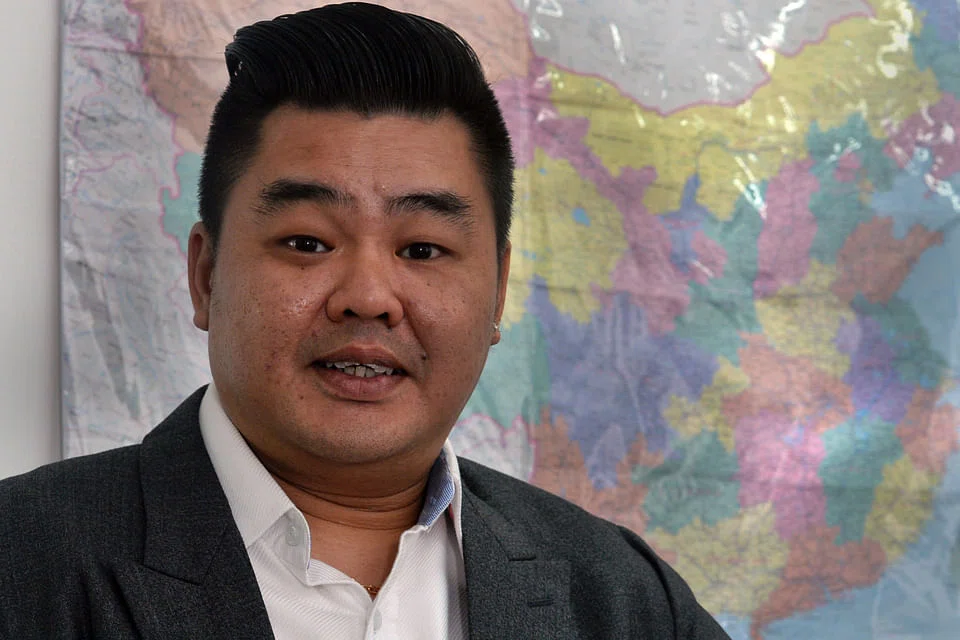
KELVIN Lim might run a security business as chief executive of IPS Securex but relationships are his chief asset, whether between customers, principals, resellers or staff.
"Service level as well as investment in human capital - these are the two key factors," he said.
Mr Lim's focus on relationships has its origins in his background as a salesman. He began his career in 1999 as a sales executive selling closed circuit television (CCTV) systems and security alarms for Ademco (Far East), a privately held company that provided security solutions and services to businesses and governments across Asia.
It was not an industry that was particularly attractive to young up-and- comers, and Mr Lim claims with confidence that he was the youngest salesman in the industry when he joined in the late 1990s.
"When I joined my trade in Ademco, security was not so well known," he said. "The demand, the needs were not there . . . All my peers were in their early 40s, but I was only about 20, so I was the youngest. The whole market, they knew me because they all called me 'Ah Boy'.
"It was an old man's trade in the past because they were selling safes, intruder alarm systems. Just to give you a rough idea, when I joined the trade, CCTV cameras were black and white . . . and we were using VHS tapes to record."
Growing the portfolio
After about 10 years, in 2008, Mr Lim grabbed an opportunity to join IPS Securex as the division manager for its general security division. Back then, the company was chiefly a single- product business specialising in cargo scanning. Mr Lim was tasked to grow the company's portfolio.
He rose to become the chief executive of the company in 2013, and today IPS Securex has a list of about 100 security products that it can offer customers, from surveillance systems and scanning equipment to cutting-edge loudspeakers, non-lethal riot control systems and ultra-loud whistles. The company has offices in Singapore and Brunei and distribution rights in the Asia-Pacific, from India in the west to Japan in the east, and from South Korea in the north to Australia in the south.
Since listing on Singapore's Catalist board in June 2014, IPS Securex's share price has grown more than three times to 16 Singapore cents after two stock splits. The company's market capitalisation stands at about S$78 million.
But being able to make a good sales pitch is not enough to sustain and grow a multi-million-dollar business. Mr Lim has also moved the company away from low-margin, commodity-type work.
Eschewing the tender-chasing business model of trawling government tender announcements to look for work, IPS Securex, for which 98 per cent of its clients are government entities, instead develops most of its business by working with customers right from the start.
Covering the blind spot
"Eventually you'll still go through the tender process, but we never bid for a project that we never put any effort in farming," Mr Lim said. "If you look at (Singapore government procurement portal) GeBIZ, every day there are CCTV tenders which we are not following because we know there's no advantage to our company. It's all based on pricing. We'd rather do something unique.
"We hear from (our clients) what are their concerns, their current system, which can't do this or can't do that, and see if there is any solution that we can propose to them, how we can cover their blind spot for them. That's where our expertise can come in and can add to the value of the tender."
To be involved at the solutions- design stage for clients, IPS Securex has to cross two hurdles.
The first is to earn the trust of clients. Mr Lim takes pride in IPS Securex's policy of responding to clients within 45 minutes, and ensuring that clients never experience downtime of more than two hours. Engineering staff are also trained across all systems so that the company is never caught short-handed.
That also explains why Mr Lim places great emphasis on developing and retaining talent, and why IPS Securex touts a turnover rate of less than 5 per cent.
Mr Lim used an example of a company that is growing and well valued. "Can you imagine if the team of people left the company? The company is still there. Do you think the value is there?" he asked. "This is where I find human capital is very important. We're always finding ways to retain our staff."
The second hurdle IPS Securex must cross in order to execute its business model is to find the right products, given that the highly secretive world of security products does not naturally lend itself to carrying offerings from competing principals.
For that, IPS Securex relies on its network of resellers, or partners, to give accurate market intelligence in terms of what clients need.
"We have our foot soldiers, our partners, in the region," Mr Lim said. "Currently, if I go and source a new product, what I'll do is normally I'll dispatch it to my partners to hear the feedback and opinions from end- users . . . In the past, obviously we didn't have that luxury but as time went by, we established ourselves and built stronger relationships with clients. Most of the time we'll run (the new product) by them and if the client says, 'No, I don't think this product has potential', we will not take it."
Close relationships with principals also give IPS Securex insight into what new products might be ready for export into Asia.
Building a network of trust is critical in an industry where discretion is valued. IPS Securex cannot speak about most of its contracts and customers because of non-disclosure agreements and secrecy laws. Word of mouth between and within governments go a long way in helping IPS Securex to do the marketing that it cannot do on its own.
One risk with such a heavy reliance on relationships is the aftermath when one of the parties changes. For example, a regime change in a country can lead to contract delays as the new administration puts on hold work ordered by its predecessor.
IPS Securex's core market is also restricted at the moment to Asia as a result of how distribution rights are awarded. But the company is trying to widen its geographical reach by moving upstream. It has a deal with United Tactical Systems and Wattre Corp to jointly develop, manufacture and sell the ultra-loud HyperWhistle. By going into manufacturing, IPS Securex gains exposure to sales in other parts of the world even if it cannot directly sell there, Mr Lim said.
Looking ahead, Mr Lim sees positive trends for the industry. "In recent years, in terms of terrorism, the South China Sea dispute, tensions have risen and that will benefit the business," he said. "Don't get me wrong, I'm not encouraging that to happen, but sad to say my business is actually leveraging on that kind of situation.
"The one thing I like about my business is regardless of any economic downturn, security is still a need. You can't do away with security. In an economic recession, for example, the crime rate will go up for sure. When the economy is good, obviously people will spend more on infrastructure, which again benefits security."
TRENDING NOW

Once staunchly pro-China, Malaysian Chinese businesses are now distancing themselves from Beijing

Britain’s mansion tax shows the difficulty of targeting wealth
Three hats, one goal: How Ng Kian Swan runs sustainability at NUHS

COE review: The gap between luxury and mass-market cars isn’t the only one worth bridging

