Bulls are not dead yet, but trading calls turning defensive

Genevieve Cua
Singapore
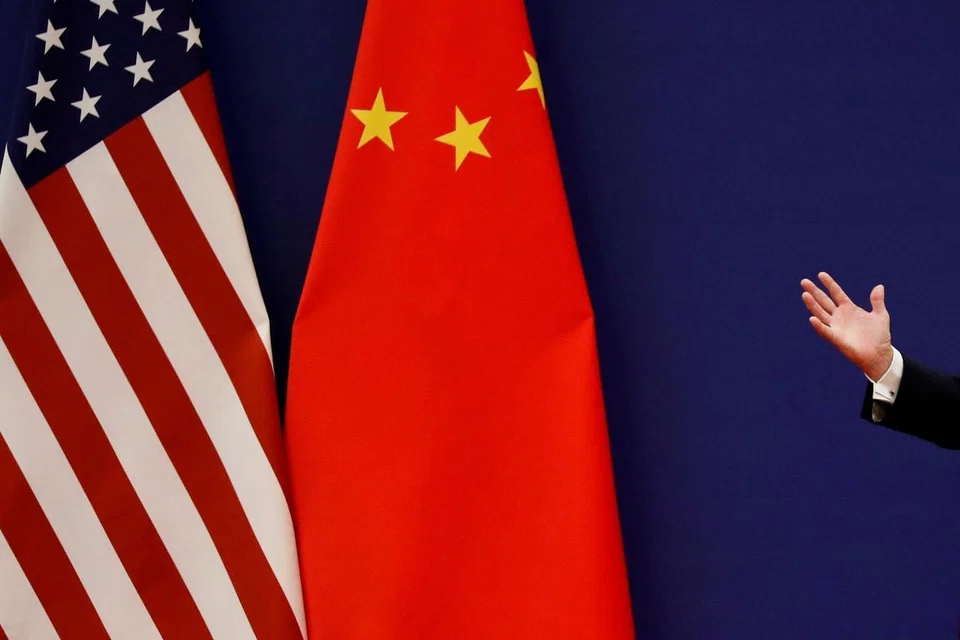
PRIVATE bank strategists are telling clients to brace for more volatility as higher interest rates and the ongoing US-China trade tussle prompt a fresh look at risk.
Most strategists, however, have stopped short of calling an end to the US bull market. One of the more optimistic is UBS which calls the downdraft "a bull market resetting, not an ending".
Still, portfolio calls and positions have mostly turned defensive. Some private banks have an underweight on both equities and fixed income assets, and not surprisingly, an admonition to avoid excessive leverage.
Major stock markets led by the US tumbled last week, some by more than 5 per cent. US indexes, however, rallied on Tuesday by more than 2 per cent. Asian markets have fared relatively worse so far. Based on the MSCI Asia all-country index, month-to-date returns were minus 7 per cent, and year-to-date minus 11 per cent.
EPFR Global, which tracks fund flows, showed a net outflow of US$1.4 billion out of equity funds and US$14 billion out of bond funds in the first full week of October.
On a somewhat bearish note, the latest BofA Merrill Lynch Fund Manager survey, conducted Oct 5-11, found that average cash balances held steady at 5.1 per cent, well above the 10-year average of 4.5 per cent. A net 38 per cent of respondents expect the global economy to decelerate over the next year, the worst outlook since November 2008.
A net 20 per cent of investors also expect global profits to deteriorate over the next 12 months. This is a two-year low and a major reversal from January's survey. "Investors are bearish on global growth," said Michael Hartnett, BofAML chief investment strategist, "but not bearish enough to signal anything but a short-term bounce in risk assets".
Strategists contacted by The Business Times pointed to a panoply of factors to explain the pullback last week. Foremost among the culprits were the path of US rate hikes - there have been three so far this year - and the fallout from US-China trade dispute. Some companies such as BMW and Ford have begun to estimate the damage that tariffs would wreak.
Geopolitical risk also reared its head in the past few days, as international pressure on Saudi Arabia intensified over the disappearance of journalist Jamal Khashoggi from the Saudi consulate in Istanbul. Analysts expressed concern that oil could be used by Saudi Arabia to retaliate against any international or US sanctions. Sharply higher oil price could derail global growth.
Most of the issues, however, have been well-flagged over the past few months. John Woods, Credit Suisse chief investment officer (APAC), believes the reason for last week's decline lies in the "bumpy and uncertain path to monetary policy normalisation''. "Because there is no roadmap or timeframe (for normalisation), accidents can happen and we can lose our way.''
Hou Wey Fook, DBS Bank chief investment officer, reckons the "ferocious selldown'' over the past few days was more a function of technical rather than fundamental factors. "First, the recent spike in long-term US Treasury yields drove rates volatility higher and this spread to the equity space as well, (which) triggered broad based de-risking.
"Secondly, the sell-off was a function of extreme divergence seen between 'winners and losers'. US equities particularly in the technology sector, have been among the best performers this year. It makes sense to take some money off the table with US midterm election approaching."
But Union Bancaire Privee chief investment officer Norman Villamin says ascribing the market fall to higher rates or geopolitical risks misses the key driver at play throughout this year - which is a de-rating of price earnings (PE) multiples.
"With the decline month-to-date, S&P multiples are sitting on the cusp of pricing in an economic slowdown similar to the one that took place in 2015-16 . . . Moreover, though economic indicators remain robust, investors should keep in mind that the positive economic and earnings momentum of 2018 may well be behind us."
DBS' Mr Hou said the group is "largely defensive" on asset allocation - neutral equities, underweight bonds and overweight cash. "We are cognisant of the risks posed by the lingering trade war and the upcoming US midterms."
UBP's Mr Villamin says the bank is underweight both equities and fixed income, and favours exposure to capital protected equity and long-short hedge funds "to help tilt the asymmetric risk/reward exposure . . . more in favour of clients".
UBS Global Wealth Management regional chief investment officer Kelvin Tay says higher interest rates have made stocks relatively less attractive. But he maintains that the fundamental outlook remains unchanged, and the bank has a "modest overweight" in global equities in its tactical asset allocation.
He favours Asian high-yield bonds, where he says the risk/return parameters are most attractive. The JACI High Yield Index's yield of 8.2 per cent is at a five-year high. "The spread difference between B and BB rated issuers is now 160 basis points, compared to a historical average of 130 basis points. We think investors are finally getting compensated for taking on additional credit risk, as the spread differential has widened by 140 basis points from the tights in 2015."
Bank of Singapore chief investment officer Rajeev De Mello advocates higher emerging market bond allocations, and keeping or reducing investment grade and European and US high yields. BOS has also turned more positive on Asian and Japanese equities. "A dislocation of this type does offer interesting valuation opportunities which can help build portfolios as we move toward the later part of this investment cycle. As growth in the US is strong and should follow in other regions, we expect the long equity rally to continue for a few more years . . .
"The divergence in equity market valuations between the (somewhat expensive) US and the rest of the world offers good opportunities." Higher bond yields would also make bonds more attractive as a source of income and as protection from negative equity movements, he said.
Citi Private Bank head of Investments (Asia-Pacific) Roger Bacon says clients have been advised in recent years to reduce leverage, not only because of higher borrowing costs but also to manage risk. "This has prepared our client portfolios to weather difficult markets such as this year more effectively. However it also means that volumes in both bonds and equities have fallen. Currently we see more inflows into floating rate fixed income solutions and longer term investments like private equity."
The bank is already looking to 2019 for positive catalysts. "The most distressed area of the market this year has been emerging markets and particularly China. We would be looking to resume investing in equities with long-term growth prospects in technology, healthcare and consumer industries."