Bursa eyes new products like tokenised debt, carbon trading
It would also consider collaborations or investing for non-organic growth.
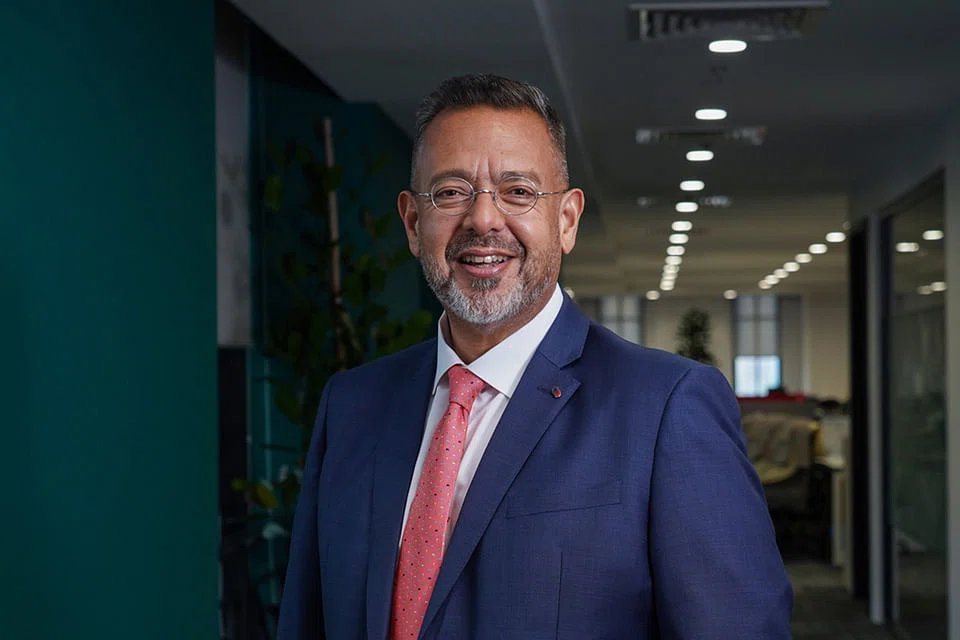
BURSA Malaysia is looking into new products such as tokenised debt and carbon trading as it seeks to capture "more share of wallet" from investors, said chief executive Muhamad Umar Swift. The exchange is also expecting more listings this year.
Umar took the helm of the exchange in February 2019, when Bursa Malaysia's business was mostly in cash equities and derivatives, and has been working to diversify its revenue streams ever since.
Like most other exchanges, it has had a good run thanks to increased trading coinciding with the start of the pandemic.
Quarterly average daily trading value (ADV) reached a peak of RM5.7 billion (S$1.8 billion) in Q3 2020 - treble that of the same period in 2019.
Revenue and net profit, too, hit records: 2020 operating revenue rose to RM779 million, up by more than 60 per cent on year. Net profit doubled to RM378 million.
Retail share of ADV rose from 25 per cent in 2019 to 38 per cent in 2020, and held steady in 2021.
"We are quite proud of the stickiness of our retail investor base," Umar said.
In August 2020, shares of Bursa Malaysia surged to as much as RM10.60 - its highest level since 2007, and more than double that year's low of RM4.42 in March - on the strength of higher trading volumes.
But the counter has lost its shine since, as the cyclical nature of markets has meant that overall ADV has been easing since its peak. Bursa Malaysia shares closed Friday at RM6.37, down 28.8 per cent over the past year.
For FY21, operating revenue fell 3.5 per cent to RM752 million while net profit fell 6 per cent to RM355 million. Securities trading revenue - the biggest contributor to trading revenue - declined 11.2 per cent in FY21.
Umar, however, noted that while people are not trading as actively, they are not leaving the market either. "They're looking for the next catalyst, the next impetus" he said. He also noted that many Malaysians are invested through the market via mutual funds even if they are not actively trading.
Having great products that delight the customer is one of the exchange's focuses, Umar said.
Listings growth
Listings would naturally be one area with the potential to attract investor attention. The exchange saw a total of 30 listings last year, up from 19 in 2020.
Umar said Bursa Malaysia is targeting 37 listings in 2022. While there is no specific sector preference, "interesting products" are what is needed, he said, adding: "We'd love to have tech stocks."
Regional exchanges have been vying to attract tech unicorn listings in recent years. Some - including Singapore and Hong Kong - have introduced frameworks to allow the listing of special purpose acquisition companies (SPACs), which are favoured by early stage companies as a means of taking their businesses public.
"The real key is valuations for unicorns, and whether institutional investors are ready to pay those premiums for those assets," Umar said. "That's an education process that we have ongoing."
Bursa Malaysia's own SPAC framework has been available for over a decade, although only a handful of such vehicles have been listed.
"It's there if people want to use it," Umar said, adding that such structures are driven by liquidity.
As liquidity dries up, he said, it is less likely that investors would park money in a SPAC at fixed deposit rates unless there was something very unique about it.
"I think it is a tool to use. But in the same regard, there are different ways of getting your access to your capital," Umar said, adding that none of the 37 listings expected this year are SPACs.
Other ways of building investor interest include improving upon the existing suite of products.
Bursa Malaysia is undertaking a transformation programme for its public listed companies, focusing on pillars such as corporate governance, and being performance driven and digitally enabled.
The exchange also focuses on education, and has an online portal - Bursa Marketplace - to teach investors about trading and investing. Said Umar: "We are a bit careful around gamification; but we know new investors like it, so we're using gamification to teach people."
The portal has a "mirror, learn, trade" service that allows public investors to view and mirror the virtual stock portfolio of an investment advisor. Close to 60,000 investors are participating on this initiative, according to the portal.
Bursa Malaysia is also looking at expanding its product offerings while harnessing innovations such as distributed ledger technology (DLT), of which blockchain is the best-known form.
One possible product is a fixed income offering targeted at small and medium enterprises (SMEs) that are large enough to go public but that have not sought listings.
As these companies would still need cash, Bursa Malaysia is partnering with a ratings agency to create a debt market for them that is tokenised and fractionalised, said Umar.
In the past, such products might only have been available to high net worth individuals through private banking, he observed.
"I want that product to be available to Joe Public. That's your democratisation of investing, and that's something else we are working on," he said.
This would give the exchange a larger "share of wallet" among investors, while the SMEs could be coached and brought to the public markets eventually.
The product is targeted at those looking to raise debt of around RM50 million: a smaller sum than is sought when going to an investment bank for a private debt issuance, but much bigger than generally done via peer-to-peer lending.
"We're actually doing a proof of concept as we speak, around the debt market," he said, but added that there is a need to establish rules for it and obtain the necessary approvals.
"But one would hope we would be well advanced by the end of the year."
Bursa is also building Malaysia's voluntary carbon market on a DLT stack, which will allow a lot of information to be embedded in carbon credit tokens, said Umar.
"The technology is a very fundamental part of it," he said. Carbon credit tokens could include metrics such as when the token was created and whether or not it complies with rules in various jurisdictions.
Besides carbon, Bursa is also working on a gold Dinar market.
Umar noted that investors like physical gold, but this comes with high commission rates.
"We are building a market where you can acquire fractional gold coins; and once you have a full coin, we can actually deliver that coin to you."
Non-organic growth
Apart from facilitating new business verticals, DLT could also be incorporated into the existing business structure when legacy systems come up for renewal, said Umar: "We are going to work with partners to accelerate that process, and get what we think is best fit for our purpose."
Meanwhile, Bursa Malaysia would also consider collaborations or investing for non-organic growth. But the company does not currently have an asset it is interested in, said Umar, adding that any acquisition would need to make sense. For instance, it should help add capabilities or data that the exchange does not have.
As of its latest financial statement, Bursa had cash and bank balances of RM499 million.
"We are well placed to roll out our technology stack and can afford to do it because we already have cash on our balance sheet," Umar said.
Another area of potential partnerships and collaborations is with regional exchanges, including trading links.
Umar had earlier said a trading link between Singapore and Malaysia would not be a major priority. When the idea of a link was first mooted many years ago, he said, cross-border trading was more clunky; but now, people can trade relatively seamlessly and online.
"You have to build an experience that creates enough value to make the investment worthwhile," he added.
Nevertheless, he said there are still opportunities to be explored - such as back-end clearing. Such developments would not take place overnight, but Bursa Malaysia would be supportive of such conversations.
"It's all about how we lower costs," he said. "If Asean as a group had a common infrastructure for back end, it would make trading with Asean so much cheaper (and) more attractive."