Bursa Malaysia dangles fractional shares and other carrots to lure young retail investors: CEO
Malaysian exchange’s bullish streak includes H1 listings which raised US$450m - leading Asean bourses

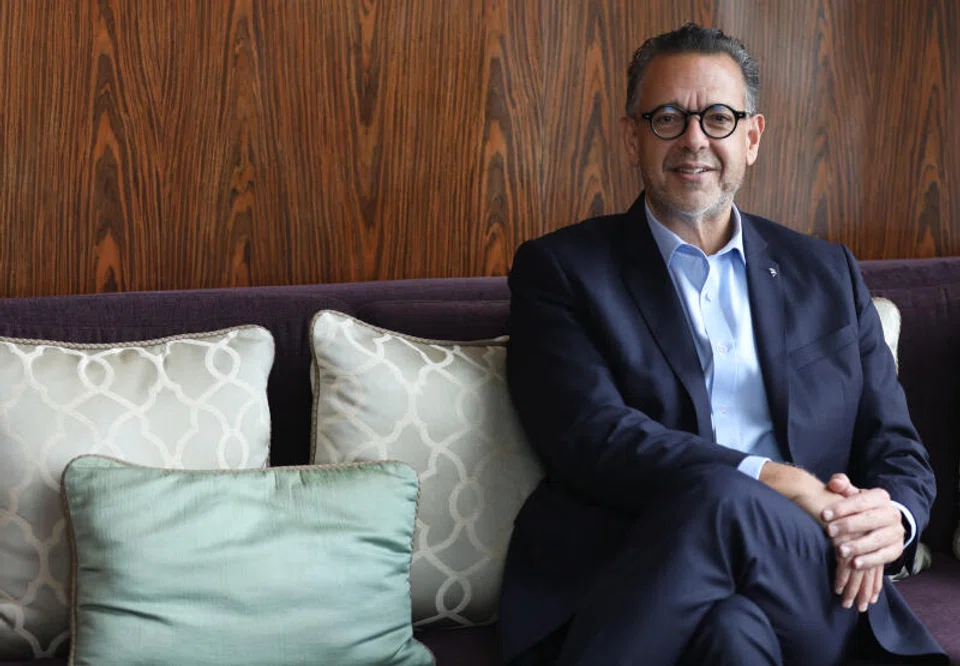
BURSA Malaysia has been on a hot streak this past year, but Malaysia’s stock exchange will have to build up its base of younger investors if it is to sustain its current performance.
Its latest initiatives aim to do just that.
In January this year, the exchange launched Bursa Gold Dinar, a new direct trading platform for gold, to draw in new retail investors for Bursa.
There are also plans to let stockbrokers offer fractional trading of shares – which are smaller and cheaper than full shares – on Bursa.
Such efforts will help Bursa build a strong investor base for its products in the equity market, said Muhamad Umar Swift, the chief executive officer of Bursa, in an interview with The Business Times.
Winning streak
Bursa has been on a winning streak recently.
It notched the highest amount of initial public offering (IPO) funds raised across South-east Asian bourses for the first half of this year, with a total of 21 new listings raising US$450 million.
Earlier this month, Malaysian mini-market chain 99 Speed Mart Retail Holdings listed on Bursa, in Malaysia’s largest IPO offering since 2017.
The benchmark Kuala Lumpur Composite Index, which represents the 30 largest companies listed on the Bursa mainboard, is up by close to 15 per cent in the past year.
The exchange’s performance “is not something that happened overnight”, said Umar.
“We build a retail investor base, we engage institutional investors, and we also work very hard to bring products to market,” he said, referring to new listings on the exchange.
As at September this year, there are 35 new listings on Bursa. Umar is “quietly confident” that the exchange will meet its target of 42 new listings for this year.
Some observers have pointed out that the majority of the new listings, totalling 27 listings, are on Bursa’s Ace market, which is designed for smaller, emerging companies with growth potential.
In comparison, there have only been seven new listings on Bursa’s mainboard this year. The mainboard caters to more established companies and are subject to more stringent listing requirements.
Umar said that the different boards catered to the differing needs of companies.
While some companies are happy to raise capital on the Ace board, others seek a broader investor base through the mainboard.
Listing on the Ace market helps companies raise the capital they need to grow their business, said Umar.
“And ultimately, as you grow, you’ll be on the mainboard,” he added.
While most of the newly listed companies are home-grown, Umar said that both foreign and domestic companies are encouraged to list on Bursa.
However, such companies have to contribute to Malaysia’s growth, such as by creating jobs, he said.
Among the foreign companies that Bursa encourages to list are those that already have private limited companies in Malaysia, as well as subsidiaries of Chinese companies that collaborate with Malaysia under China’s Belt and Road Initiative. Under the initiative, China invests in infrastructure projects globally, including Malaysia.
Attracting investors
Beyond new listings, Umar said that Bursa Malaysia also needs to expand its retail investor base if it is to sustain its current performance.
While institutional investors have “grown tremendously” over the past few years, the growth of retail investors has not kept pace, said Umar.
A majority of retail investors also fall into the baby boomer category, which broadly refers to those aged between 60 and 78 years old.
Umar said that the exchange wants its retail investors to form 30 per cent of its investor base, up from around 20 per cent currently.
One way it is encouraging this is by catering to the preferences of millennial investors, who prefer trading in smaller denominations, said Umar.
Last September, Malaysian regulators allowed stockbrokers to offer fractional trading of shares on Bursa Malaysia. A fractional share is a portion of a stock that is less than one full share. The move will allow younger retail investors to afford more expensive blue-chip stocks and diversify their portfolios, said the Securities Commission Malaysia.
The launch of direct-to-market investment products such as through the Bursa Gold Dinar will also help the exchange build a relationship with its investors, said Umar.
The platform, which has about 25,000 users, is aimed at bringing in a new group of retail investors who may have a lower risk appetite.
As their risk profile changes, Umar said that Bursa will look to mobilise investors to invest in the broader market.
Challenges to Bursa’s performance
Even as the exchange looks to maintain its momentum, Umar acknowledged that external challenges could derail its performance.
For one, Malaysia’s market could falter if either China or the US, which are its major trading partners, do poorly in their own trade performance.
And while the undervalued ringgit has been able to generate capital inflows, Bursa needs to ensure that even if the ringgit appreciates, there are products on offer that will entice investors, particularly foreign ones, to keep their investments in Malaysia, said Umar.
The CEO added that Bursa is not taking its recent performance for granted, and it will continue to engage investors and bring in new listings to the market.
For next year, Bursa will focus on building its investor base for its products in the equity market, he said.
Umar expects continued strong trading flows next year, and is “reasonably confident” that the IPO pipeline for 2026 will be larger than the final figure for 2025.