Bursa Malaysia’s outperformance may attract Singapore listcos seeking higher valuations
Singapore-listed UMS and Grand Venture Technology say they are eyeing secondary listings in Kuala Lumpur

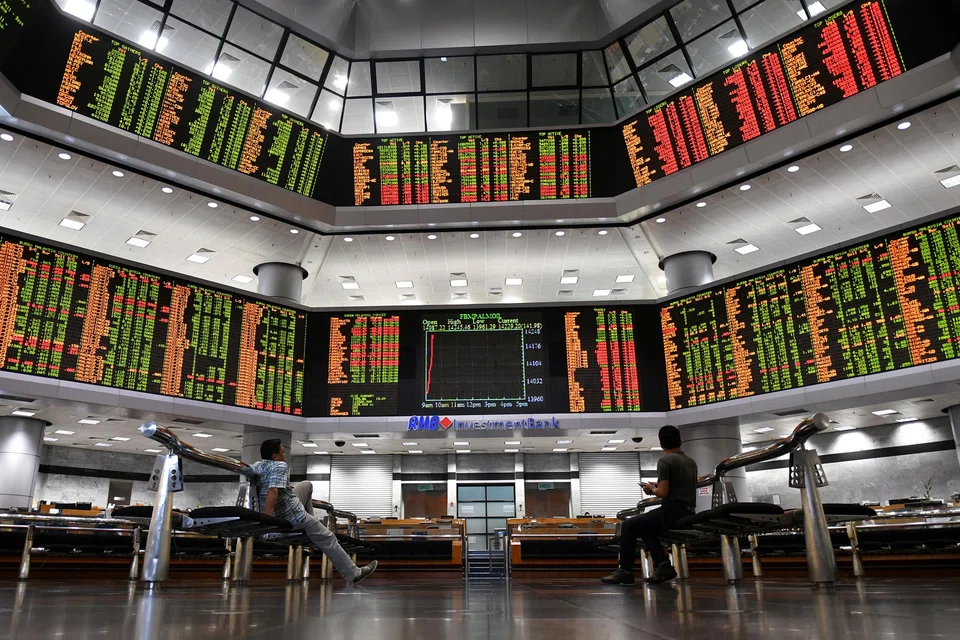
BURSA Malaysia has been one of the top-performing markets in the region, with numerous listings that have done well. The bourse is now drawing interest from Singapore-listed companies with a presence in Malaysia.
In the last three months, at least two companies listed here – semiconductor players UMS Holdings and Grand Venture Technology (GVT) – have said that they were eyeing a secondary listing in Malaysia.
UMS said that the listing could enable the company to tap a different equity market for future fundraising; GVT said it could list by introduction, without raising funds.
Linklaters partner and head of South and South-east Asia Capital Markets, Amit Singh, said that better valuations and liquidity could push Singapore listcos to consider a secondary listing on the Bursa.
“Singapore has been seen as a better place to get access to institutional investors, but I think, for many years now, that is not seen to be the case,” he said.
Similarly, Wong & Partners partner Munir Abdul Aziz said that, unlike on the Singapore Exchange (SGX), Malaysian institutional investors have been encouraged to invest locally.
In May 2023, Malaysian Prime Minister Anwar Ibrahim urged the Employees Provident Fund to increase its domestic direct investment to 70 per cent, from 64 per cent the year before.
As at FY2023, Malaysia’s federal employees’ pension fund, Kumpulan Wang Persaraan, allocated 75.6 per cent of its funds to Malaysian assets.
Munir said that such institutional funds are active traders that are looking for value in the markets. Companies choosing to list on the Bursa can pitch themselves to these funds and potentially find support.
Furthermore, Linklaters capital markets counsel Joseph Wolpin noted that retail interest in the Bursa remains strong.
“If you look at Thai (and) Malaysian deals, the retail tranche and retail interest for some of these companies is very high, to the degree that it does move the needle in terms of pricing and liquidity,” he said.
He added that when considering the potential for retail interest, some companies may consider a Bursa listing over even a US listing, which is known to have the greatest market depth in the world.
“If you are a typical South-east Asian company, you probably won’t have that sort of brand cachet with the US public to benefit off of the retail money there,” he said.
Munir said that it makes sense for companies with operations in Malaysia to consider a secondary listing on Bursa.
For the first six months of this year, GVT and UMS generated 39.4 and 4.5 per cent of their revenues, respectively, from Malaysia.
“Quite often, there is a deeper level of understanding and appreciation of the value of the Malaysian operations of that Singapore company among Malaysian investors,” he said, adding that a greater understanding of the businesses could also lead to better valuations.
Munir also noted that listed semiconductor companies in Singapore trade at 13 times earnings on average, but do so at close to 19 times earnings on average on the Bursa.
Rajah & Tann partner and deputy head of capital markets practice, Tan Mui Hui, noted that the Bursa has been active in recent months. Investment bankers and other introducers may see an opportunity to tap this momentum to bring companies over, she said.
“Once you hear one success story, you would think ‘My company can do it as well’,” she said.
Life after listing
Still, companies with secondary listings on the Bursa will have to grapple with additional compliance costs.
Linklaters’ Wolpin said that a dual listing is not an ideal scenario for every company because it would then have to satisfy two sets of regulators and comply with two sets of laws. “I think they’re doing it out of what they think is a necessity around supporting their investors and their share prices,” he said, adding that ideally, a single market would cater to all their concerns.
Meanwhile, Wong & Partners’ Munir said that when companies are underappreciated in one market relative to another, it could raise awkward questions for the company’s management.
He added that technological advancements have made it such that investors can invest in overseas markets more easily, which makes it less important to maintain dual listings.
However, Rajah & Tann’s Tan said that companies do not necessarily have to delist from either market, since there is still significant differentiation in the types of investors that are drawn to the Bursa and to SGX.
She believes that SGX counters still draw the attention of international investors, while the Bursa remains a more local market. For this reason, companies may still be interested in maintaining their listing on SGX after being listed elsewhere.
Bursa-listed oil palm plantation company TSH Resources joined the list of secondary issuers on the SGX in September 2023 in its quest to diversify its shareholder base and improve trading liquidity.
IHH Healthcare has also remained dual-listed in both Singapore and Malaysia after making a concurrent dual listing in both countries in July 2012.
Tan said: “(Companies) need to be able to convince themselves that the benefits later on, when they are secondarily listed, will outweigh the cost that they are incurring for that secondary listing.”
TRENDING NOW
Grab CEO’s wife Chloe Tong on life with Anthony Tan and finding her purpose
He built the Vingroup empire. Now South-east Asia’s richest man is handing some key roles to his sons
HDB reviewing ‘jumbo’ flat scheme after Telok Blangah unit listed for sale at S$2.18m
What role can Japan play in Asean’s future?