Bursa Malaysia’s planned carbon exchange still leaves regional room for Singapore’s Climate Impact X

Janice Lim
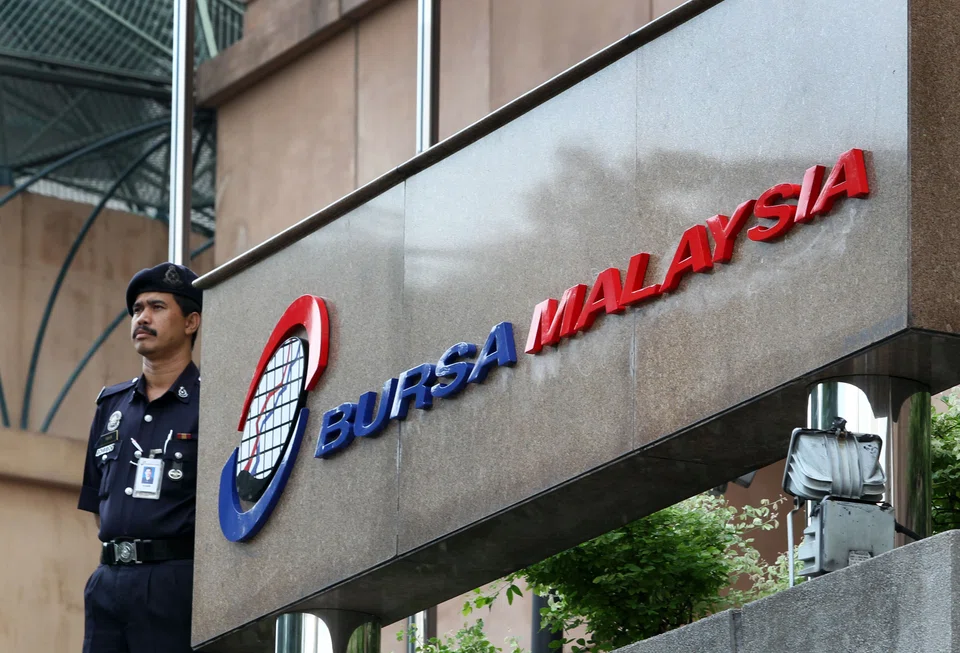
BURSA Malaysia’s planned voluntary carbon exchange may enjoy homefield advantage in its domestic market, but the regional prize is still up for grabs for peers like Singapore’s Climate Impact X (CIX), analysts told The Business Times.
Bursa, which operates Malaysia’s national stock exchange, said on Aug 15 that it will launch a voluntary carbon market (VCM) by the end of the year. The market operator said that it will carry out an auction by the end of this year to enable price discovery for these new products to be listed on the exchange. The clearing price from the auction is intended to help establish a baseline demand for carbon credits in Malaysia, providing a reference point for secondary trading for market participants.
Analysts said that the move primarily addresses a domestic need for carbon offsets. Malaysia has pledged to become carbon-neutral by 2050, and a national carbon exchange will not only help to achieve that goal, but also encourage companies to start their own decarbonisation journey and spur further investments in Malaysia’s carbon markets.
“Setting up a VCM will enable companies to buy such instruments and achieve their climate targets.,” said Amandeep Bedi, director of sustainability solutions at consulting firm ENGIE Impact. “Additionally, it provides an important opportunity for Malaysia to develop carbon projects that provide the supply of credits.”
A carbon exchange in Malaysia will enjoy a natural scale advantage from its proximity to the country’s vast natural resources that could potentially generate carbon credits, noted Vaibhav Dua, partner at management consulting firm McKinsey & Company. Malaysia, along with Indonesia, are the only South-east Asian countries among the global top 10 countries with the most potential to generate low-cost nature-based carbon credits, according to a January 2021 analysis by the World Economic Forum and McKinsey & Co.
In response to queries from BT, Bursa said it has “strong potential” to supply the required carbon credits with the country having over 54 per cent forest cover. The bourse operator also said that it is looking to support the implementation of a domestic emission trading scheme at a later phase.
Whether that domestic scale advantage can translate into a more significant role across borders remains to be seen, however. If it aims for the regional prize, Bursa would have to fend off other players, including Singapore-based CIX, which is backed by DBS Bank, Singapore Exchange, Standard Chartered Bank and Temasek.
But the launch of another VCM in South-east Asia does not seem to be crowding out the market yet, said analysts. Bedi said it is still too early to tell if there are currently too many exchanges or if the carbon market will become saturated, given the low level of maturity and immense potential of the carbon market.
To begin with, CIX has its own pool of domestic demand to serve. Sharad Somani, head of infrastructure at professional services firm KPMG Asia Pacific, said there is currently a demand and impetus for carbon markets in Singapore, with the government allowing large-emitters to buy international carbon credits to offset up to 5 per cent of their taxable emissions, in order to reduce the carbon tax they have to pay.
However, CIX has the potential to position itself as a regional hub rather than a country-specific one, said Brian Ho, climate and sustainability assurance leader at professional services firm Deloitte Southeast Asia. He noted that carbon exchanges are still limited in South-east Asia, and there is a need for more accessible high-quality carbon credits that allow efficient and transparent trading.
“CIX should continuously understand and meet the demands of the VCMs, and it should also leverage on technology to provide innovative solutions such as applying machine learning to satellite data and conducting a deep, methodological analysis when it evaluates its projects,” Ho said.
Somani said that at the end of the day, exchanges that can generate demand and source high-quality carbon credits are likely to dominate in the region.
Bursa has said that it will adopt the Verified Carbon Standard, maintained by Verra, to ensure the integrity of its carbon credits. The market operator told BT that it will also seek guidance from the multi-stakeholder Integrity Council for the Voluntary Carbon Market.
“Bursa Malaysia may consider collaboration with carbon credit rating companies to provide value-added services to participants who wish to subscribe to these for further quality checks, “ said a spokesperson.
For CIX chief executive Mikkel Larsen, VCMs are ultimately addressing a global need. CIX in June announced an auction for carbon credits from projects in Kenya, Pakistan and Sierra Leone. He told BT that VCMs need to be scaled up not just in South-east Asia, but also internationally.
“My hope is that with time, such valuable initiatives do not inadvertently constrain the liquidity in the market nor inhibit the flow of finance going towards the projects that need it the most,” he said.