

Camaraderie key to CBRE's success
Due to growth of regional services hubbed in Singapore, the group's revenue here has quintupled over the past decade.
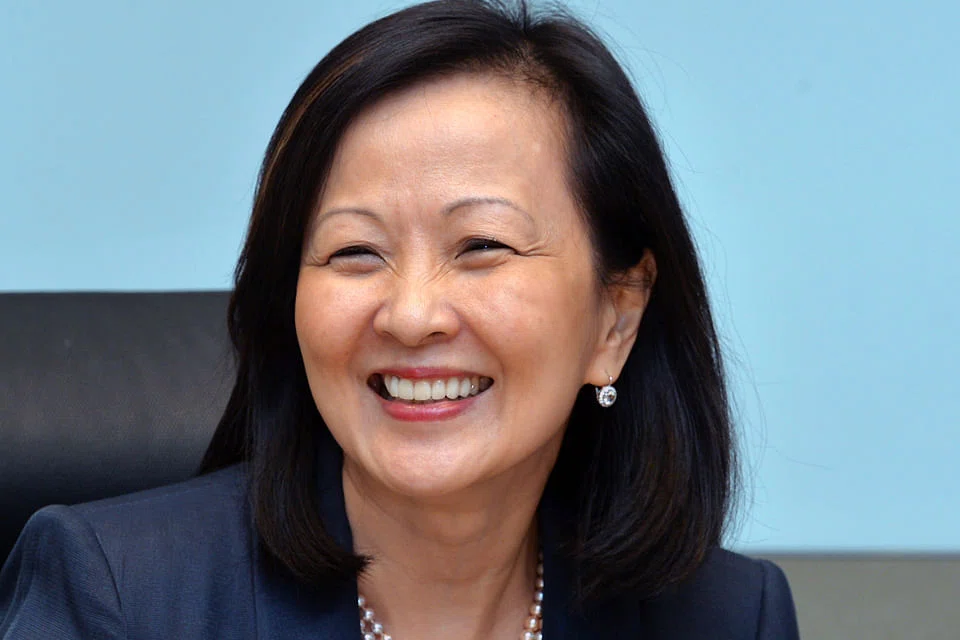
PAULINE Goh has seen CBRE handle many large property transactions since she became head of the Singapore office of the global property consultancy group in 2005.
Beyond the deals, what has given her great happiness is the "camaraderie and teamwork within the CBRE Singapore office", which she says has been "quite extraordinary".
This is reflected in the fact that the firm has many long-serving staff members. Ms Goh herself has been with the company for 32 years. Her boss, CBRE Asia chairman Willy Shee, has been with the firm for 38 years.
Ms Goh rattles off the names of some executive directors who have been with the firm for more than 25 years in a recent interview with The Business Times - including Jeremy Lake, who helms the investment properties department, Lim Lay See and Moray Armstrong (both in office services), Li Hiaw Ho and Sim Hwee Yan (both in valuation and advisory services), and Joseph Tan (residential).
Another thing that gives Ms Goh much satisfaction is the repeat business the firm generates from clients. This probably has something to do with CBRE's success with staff retention.
One would imagine that with the quiet Singapore property market, job freeze, if not job cuts, would be a worry at property consultancy groups.
CBRE, however, on a global basis as well as in Singapore, is aggressively on the hunt for more talent, particularly in the transactional side of the business, that is, in brokerage. "Whenever you bring people in (the brokerage business), you can more or less plan how much the additional, accretive revenue (will be)," said Ms Goh, who in 2010 became CEO of Singapore and South-east Asia.
Today, 19 business lines are run out of Singapore, comprising nine local and 10 regional lines hubbed in Singapore. Ms Goh said: "Before 1998, the bulk of our business was local, what we call the core Singapore business. Then from about 1998, we started to bring in regional business lines ... we ramped this up from around 2005."
Singapore serves as CBRE's South-east Asia hub for the following four global corporate services (these are outsourcing services where CBRE is retained by an occupier, typically an MNC): transactions, facility and property management and occupier consulting. The Republic is also the South-east Asia hub for the Japan desk and the Asia hub for international project marketing, capital markets, hotels and international valuations. Singapore is both the South-east Asia and Asia-Pacific hub for capital advisory.
Due to growth of regional services hubbed in Singapore, CBRE Singapore's revenue has quintupled over the past 10 years, from S$20 million in 2004 to around S$100 million last year, Ms Goh revealed.
She declined, however, to give figures on CBRE Singapore's earnings, citing regulatory reasons for New York Stock Exchange-listed CBRE.
But she does let on that while the business from the Singapore office remains profitable, "there is a need to balance between profit and investment in growth, and we have invested in new business lines (bringing in a lot of top talent)".
The total employee count in the Singapore office is around 560. On top of that, CBRE has 500 associates, who are paid commissions only, under CBRE Realty Associates.
Ms Goh highlights the strides CBRE has made for capital markets and capital advisory services in the past three years. The appointment in 2013 of Marc Giuffrida as executive director of global capital markets, Asia, has facilitated cross-border deals for Singapore property groups making direct real estate acquisitions abroad. He is based in Singapore.
Capital markets services
In January this year, the Monetary Authority of Singapore granted a capital markets services licence to CBRE Capital Advisors Asia Pacific with authorised representatives licensed to deal in securities. Nick Crockett is the Asia-Pacific head of this unit, while a key member of his team, senior director Chris Chiang, runs the Singapore business. Both are based here.
The team advises clients on sourcing capital and also works cross border to identify opportunities to place capital on behalf of clients into indirect vehicles such as joint ventures and funds.
"So now we can offer the full scope of direct and indirect real estate services," said Ms Goh.
On the local front, CBRE has been involved in several big-ticket deals exceeding S$1 billion - such as the 2007 sale of Temasek Tower (now known as AXA Tower); CBRE jointly brokered the sale of the same building again earlier this year. CBRE was the sole agent for the 2008 sale of Singapore Power Building.
The firm's office leasing team has also handled large transactions. The banner year was in 2010, when it arranged seven of the nine anchor tenant deals in excess of 100,000 sq ft, including Citibank's 300,000 sq ft lease, at Asia Square Tower 1.
CBRE Singapore grew from a merger with CH Williams (the latter was established in 1958). In 1983, Richard Ellis International Limited (REI), the holding company for all Richard Ellis business outside the UK, acquired Richard Ellis CH Williams. In 1998, US-based Coldwell Banker Commercial (CB Commercial) acquired REI - creating CB Richard Ellis. The merger opened the doors for CB Richard Ellis in Singapore to the markets in the rest of the world including the key markets in Europe and the Americas. Also in 1998, Richard Ellis UK was bought by US commercial property manager Insignia Financial Group. CB Richard Ellis' acquisition of Insignia in 2003 reunited the Richard Ellis name and brand into a single organisation.
In 2011, the group rebranded itself CBRE.
While highlighting the company's achievements, Ms Goh is also mindful of challenges. For one, the Singapore property consultancy landscape has become more crowded, with a proliferation of players in the residential project marketing arena, for instance.
Another issue facing CBRE as well as the industry in general is how to cope with the new regulatory climate - practice guidelines set by the Council for Estate Agencies; the Personal Data Protection Act; and anti-money laundering rules. "These new pieces of legislation are a welcome change but they do mean changes to the way we do business and we need to set in place very strong systems and procedures ... Our compliance and governance costs have gone up and we have much tighter control over the way we run the business. But we need to find the right balance between controls and the culture of entrepreneurship within the organisation," explained Ms Goh.
Property brokers who handle investment sales lament that due to the property cooling measures, many Singapore developers have been focusing on overseas acquisitions in the past couple of years - instead of picking up big-ticket properties at home. CBRE's capital markets team has managed to ride on this trend by helping to match Singapore players with overseas sellers of real estate in places such as Australia and the UK.
Work-life balance
In the competitive real estate consulting business, hiring and retaining talent remains a bugbear. "You need to make sure you take care of your people," said Ms Goh.
She describes her management style as "paternalistic and collaborative". "While I have to lead and make decisions on behalf of the company, I have to make sure that I get the buy-in from my colleagues ... it makes it a lot easier for me to move forward." Besides fostering a culture of collaboration and teamwork, Ms Goh motivates staff by being accessible to her colleagues at all levels.
The 56-year-old is the epitome of a woman who has managed a nice work-life balance. While scaling up the corporate ladder, she has raised four children, all of whom are in university. She unwinds for the day by watching old movies and TV shows based on the works of Jane Austen, Charlotte Bronte and Agatha Christie.
The former student of CHIJ St Joseph's Convent and Catholic Junior College credits her career success to two mentors at the company. One was David Lawrence, who was managing director at Richard Ellis during 1985 to 1990, "for his incisiveness, and great focus on getting deals done". He later became CEO of Wheelock Properties (Singapore) till he passed away three years ago. The other is Willy Shee, with whom she has worked closely for 25 years. "He is the ultimate people manager."
Another person who inspired her was the late Tat Lee Bank founder Goh Tjoei Kok, whom she met in the early 1980s during a stint with the bank before joining Richard Ellis. "He was the chairman, he was already 70-plus at the time and he offered me tea with both hands. This whole thing about humility and being accessible to people at all levels - stuck with me."
Koh Boon Hwee - now chairman of private equity firm Credence Partners and formerly chairman of DBS, Singapore Airlines and Singtel - has also left a lasting impression on Ms Goh. She met him on the job about 25 years ago, after she had joined Richard Ellis and when he was managing director of Hewlett-Packard in Singapore. "It might have been 1989 or 1990 ... We were doing work for HP back then. And I remember there was this big meeting after which he took me and a couple of colleagues on a short tour around their Depot Road premises to show us their operations.
"What I saw then still sticks with me today. As he walked around the office, I saw the easy camaraderie he enjoyed with his colleagues at all levels - from his senior management to the secretaries and admin staff to the canteen staff as they dished out the food. As we were walking along a corridor, I saw him pick up something from the floor - it was a paper clip. Without fuss and missing a beat, he picked it up and passed it over to the secretary and just carried on talking."
The camaraderie he fostered, the way he related to people, his management style, all resonated well with Ms Goh. "I followed a similar path but of course with much less brilliance."
TRENDING NOW

Indonesia’s coal tycoon Low Tuck Kwong replaced as Bayan Resources president-director

OCBC names Ang Eng Siong as global corporate banking head in rejig of wholesale banking business

Consider lowering homeownership barriers for some non-resident foreigners

DBS opens flagship investment strategy to retail investors with new fund

