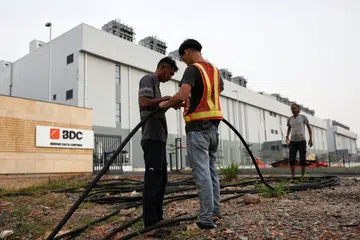
Can DBS turn around a failed India bank?

BIGGER scale for cheap, a drag on profitability or a culture clash?
Mixed views have emerged on what the proposed amalgamation of struggling Lakshmi Vilas Bank (LVB) into DBS's India unit might mean for both parties.
The proposed takeover will not have a material impact on DBS's dividend payment, said the Singapore banking group's chief executive officer (CEO) Piyush Gupta on Thursday. "If you look at the scale, (the deal) is very small in the big scheme of things. So it is not material to our dividend or balance sheet," Mr Gupta said.
DBS India will pump in 25 billion rupees (S$463 million) in fresh capital if the deal goes through. It is said to be the first time the authorities have turned to a foreign lender to bail out a struggling local rival.
Sanford C Bernstein analyst Kevin Kwek said: "We aren't particularly optimistic on the ability of any foreign players to do well in India, but this may be the 'bite-sized' approach for DBS to push the agenda harder."
"If we were to look for positives, this merger could facilitate a more meaningful push into both retail and SME (small and medium-sized enterprise) customers," Mr Kwek added.
Those that are upbeat on the deal include Moody's Investors Service, Maybank Kim Eng (MKE) and JPMorgan.
The LVB franchise will likely start regaining deposit market share once a credible controlling shareholder comes in, said JPMorgan's Harsh Wardhan Modi and Saurabh Kumar.
Moody's believes the rescue will be a positive for LVB's depositors and senior creditors as the Indian bank "will benefit from parental support from DBS, a very strong bank".
MKE's Thilan Wickramasinghe pointed to a commercial angle: "There are a lot of banks in India, and the fact that DBS India is brought in likely means that there are synergies to be had."
Willie Tanoto, an analyst at Fitch Ratings in Singapore, noted: "The (LVB) branches are the crown jewels and offer a ready-made network at a very affordable price."
However, scaling up might weigh on the Singapore lender's profitability and efficiency, said Jefferies' Krishna Guha.
Although the estimated impact on DBS's common equity tier-one (CET-1) capital will be negligible initially, an assessment of the book, risk management practices and subsequent growth may call for continued capital infusion, given LVB's high non-performing assets (NPA) and negative equity, Mr Guha said.
Aligning the two banks' business cultures could also prove tricky.
One fund manager said the deal was a strategic fit but he also pointed to a potential culture clash. Ng Xin-Yao, Asian equities investment manager at Aberdeen Standard Investments, which holds DBS shares, pointed out that LVB "appears to have been operating under a different risk appetite and intensity of internal controls".
The Indian bank "will need to be aligned with DBS's prudent and conservative culture", said Mr Ng.
Besides, DBS staff are trained in digital skills and strong underwriting processes at a multinational bank, while LVB has a more traditional client-focused approach, Reuters reported.
India's banking union has also expressed reservations about the potential deal with a foreign bank, and demanded a merger with a national public-sector lender instead.
Fitch wrote in a commentary that the proposed takeover "is not sufficiently large to immediately affect DBS's credit ratings".
However, what it signifies about the Singapore group's growth strategy could shape its earnings and capitalisation risks over the medium term and potentially alter its credit profile, the agency added.
The net loans of DBS India made up less than 1 per cent of the group's loan portfolio at end-June, but if this proportion increases materially in the next few years, it could weigh on the bank's blended operating environment factor score, on which Fitch already has a negative outlook.
Fitch added that it is "watchful if the proposed LVB acquisition is a harbinger of aggressive balance-sheet expansion - whether organically or inorganically".
As at 10am on Thursday in Mumbai, LVB's stock lost 19.7 per cent or 2.45 rupees to 10 rupees. The counter had fallen 20 per cent, the daily limit, at Wednesday's close.
DBS shares dropped 0.6 per cent or S$0.14 to S$24.49 as at the midday break in Singapore on Thursday.
READ MORE: