

Can Optus retool as an enterprise player?

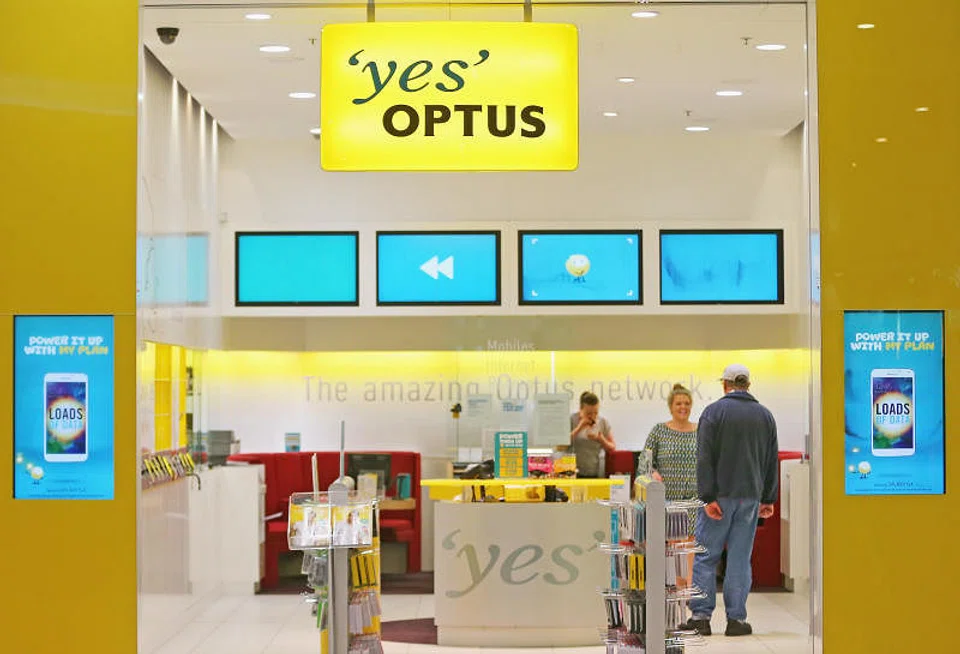
A RECENT ratings downgrade for Singtel's Australian unit Optus highlighted the challenges the company faces in the consumer space.
But there is room for it to grow its enterprise services - and momentum is in fact building on this front.
In lowering Optus's issuer rating to "A3" in January, Moody's Investors Service noted several "industry headwinds": lower retail fixed margins, lower broadband migration payments, and lower equipment sales.
These structural challenges were compounded by the impact of Covid-19 on customer growth, roaming and prepaid revenues, too.
To make matters worse, Optus signalled it intends to keep competing at the low-margin end of the market.
It picked up mobile virtual network operator (MVNO) Amaysim for A$250 million (S$256 million) last year, and launched the Australian edition of digital-only sub-brand Gomo. Parent Singtel dubbed these moves "strategic plays to disrupt the MVNO market" and capture "value-seeking customers".
With rival TPG Telecom and market leader Telstra now boasting budget brands as well, the Bloomberg Intelligence team warned in a flash note this week that "mobile average revenue per user... may have swung back to declines" at Optus.
What Optus does in the consumer space matters because consumer revenue dwarfs enterprise revenue: at A$3.43 billion to A$637 million for the half-year to September 2020.
That's quite the opposite from the Singapore market, where consumer revenue was S$871 million against enterprise revenue of S$2.25 billion.
Enterprise potential
But, while Optus's consumer operating revenue for H1 FY2021 was down 11.1 per cent year on year, enterprise turnover rose by 5.4 per cent.
The company attributed the growth to work-from-home demand, as well as its recontracting of the Australian tax authority as a client.
The enterprise business has not traditionally been as profitable. Optus's enterprise business had a margin of 8.5 per cent on its earnings before interest, taxes, depreciation and amortisation for the half-year, compared with 27 per cent for consumer.
But these enterprise margins could improve as Optus gains scale and raises its higher-value offerings.
It is already moving in the right direction. "Digital revenue" made up 38 per cent of its infocomm technology (ICT) revenue in H1 FY21, up from 31 per cent the year before.
That brought its share of ICT income from digital technologies - such as cybersecurity, cloud services, data analytics, artificial intelligence and the Internet of Things - closer to the 42 per cent level in the Singapore enterprise business for the same period.
Extension into 5G
Optus's enterprise business also stands to benefit from Singtel's testing of 5G use cases in Singapore.
The shift to 5G is already an area of focus for Optus, chief executive Kelly Bayer Rosmarin told The Sydney Morning Herald in January.
This transition would be "an opportunity to re-establish connectivity in a new way that resonates with consumers, small businesses and large enterprises", she said at the time.
If Optus is able to tap its enterprise growth potential, the impact would be especially positive for Singtel shareholders - given the growing weight of Optus in the group. Optus's contribution to Singtel's topline was 54.7 per cent in H1 FY21 - up from 53.9 per cent in the year-ago period.
Meanwhile, Singtel's new chief executive Yuen Kuan Moon is also overseeing a business revamp that promisingly doubles down on enterprise.
Singtel has carved out a 5G enterprise portfolio focusing on the region while ICT arm NCS will make deeper inroads into Australia and China.
With a redoubled push into the enterprise space in Singapore, Australia and across the Asia-Pacific, Singtel could reinvent itself as a stronger, more global telecom contender.
The longer-term structural disruption from the Covid-19 pandemic now presents the perfect opportunity to hit the reset button.






