

Can the Singapore market support growth stocks?
Despite the STI outperforming the S&P 500 in the last five years, investors continue to cast doubt on buying growth
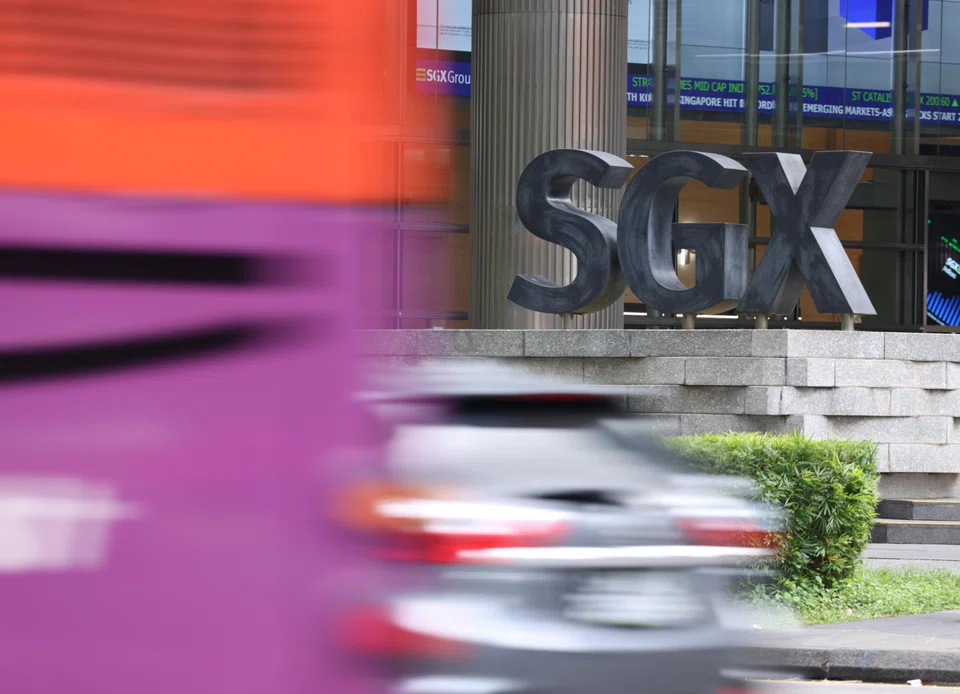
[SINGAPORE] “Can Asians think?” A collection of essays by Singapore diplomat Kishore Mahbubani published in 2002 posed a rhetorical question in its title.
There was hope for better understanding among Westerners to adjust their attitudes in a world where Asian economies and growth will surpass the West in half a century, and for us in Asia to self reflect how we should engage in order to avoid a clash of civilisations.
Sadly, sentiment has morphed into today’s Trumpian “might is right” geo-economic competition, each unwilling to cede its corner.
Global market capitalisation of equity indices that drive institutional portfolio capital flows remain firmly rooted with Western bias.
The US dominates more than two-thirds of MSCI World index, while its share of the global economy has shrunk to 13 to 15 per cent, purchasing power parity-adjusted. Asia is closer to half in similar terms for gross domestic product but severely underweight by this measure. Entrenched prejudice is embedded in benchmarks, some lament.
To be fair, US markets, hoovering up capital from the dotcom era to the current artificial intelligence (AI) bubble, have rewarded innovation with outsized returns time after time. The return on equity (ROE) for perceived undervalued Chinese stocks, however, has been underwhelming for decades.
It has become fashionable back in our little red dot to justify the flight of local champions like Sea or to a lesser extent Grab (which, post mega de-spac is still down more than 60 per cent after four years), to the “fact” that investors in our little pond buy only real estate investment trusts (Reits), dividend stocks and invest for yield.
Initial public offerings (IPOs) for growth stocks, so goes the refrain, have no support in Singapore. Our reputation of being stable, reliable and trustable – ie boring – had for a season become an apologist excuse for the tepid liquidity and sub-par valuations across a long tail of small stocks.
Our home market has outperformed the S&P 500 in the last five years for the Singapore dollar investor, with the Straits Times Index (STI) barometer soaring 16.9 per cent and 22.7 per cent in the last two years.


Yet, armchair commentators continue to cast doubt on our ability to buy growth versus the easy coupon offer of a Reit. Many fence-sitters will be shocked by this data, with some blaming the “anomaly” on US dollar depreciation.
As if validating their point, new issues in 2025 performed to the beat of the oft-played chorus.
Last year, the Singapore IPO market found a new spring, backstopped by the deliberately staged rollout of pro-market policies including two rounds of Equity Market Development Programme (EQDP) deployment thus far.
Yet, the best performing IPO outside Catalist was Centurion Accommodation Reit, up 9.1 per cent on day one and well over 25 per cent since.
The largest IPO by funds raised was NTT DC Reit. Its tepid performance, having fallen as much as 7 per cent in spite of post market stabilisation, was attributed to investors disliking the USD denomination. It has since recovered.
Then Ultragreen AI’s IPO, raising US$400 million, tanked from US$1.45 to US$1.31 despite positive signals from directors buying. It has since found new life in 2026 after having been written off prematurely by naysayers, reaching a US$1.81 high, overcoming both the growth stock and US dollar stigma.
Let’s grow up. There are investors in Singapore who enjoy the volatility of US tech stocks. They once made piles, then lost their shirts in Hong Kong post-Covid in an extended equities winter there. Those HSI index levels are still to be dreamt about.
The STI has been lifted by DBS, a bank valued well above global peers as it has both been growing and paying dividends. Perhaps we are entitled to have our cake and eat it.
Ifast, a mid-cap S$3 billion company, trades at a price-earnings ratio of 35x, having been supported at closer to 80x by investors betting on its projects in Hong Kong.
Smaller caps have sprung to life in the second half of 2025 – mostly from undervaluation deserving of better prices. If only they could tell their story better and actually engage investors and sell-side analysts.
Slowly but surely, our market is regaining some mojo. We don’t need a bridge to Nasdaq to support many deserving companies seeking capital for growth here. Most are too small in that western ocean even if linked by a regulatory bridge.
Several lured by promoters there have failed. Or, like Teledirect, been privatised by founders and delisted. Others, which are profitable but trade at valuations below the Singapore market, are trying to come home.
The gauntlet has been thrown with our age-old laments addressed by many proposals. We need to remember that the equity market is about taking risk and deploying risk capital. Not about guaranteed “quality stocks”. Our investors of all shapes and sizes already tolerate risky punts overseas and for many, crypto.
If only we can evaluate with a similar lens the local listings of fast-growing companies such as Toku or The Assembly Place, which will ring off 2026’s IPO bell.
Assess them on their merits and ability to deliver over time, not self-flagellate should their initial performance falter. Then 2026 will present a richer variety of larger IPO choices. The question “Can Asians think?” should then truly be a rhetorical one.
The Sharpe Edge is a new monthly column written by Chew Sutat, chairman of Shan De Advisors. He retired in 2021 from the Singapore Exchange, where he was a senior managing director.
Decoding Asia newsletter: your guide to navigating Asia in a new global order. Sign up here to get Decoding Asia newsletter. Delivered to your inbox. Free.
Share with us your feedback on BT's products and services






