

Alpha startups, SMEs on IPO radar of Asean bourses
But regional exchanges face uphill task in wooing them as some targets prefer larger overseas markets
Navene Elangovan
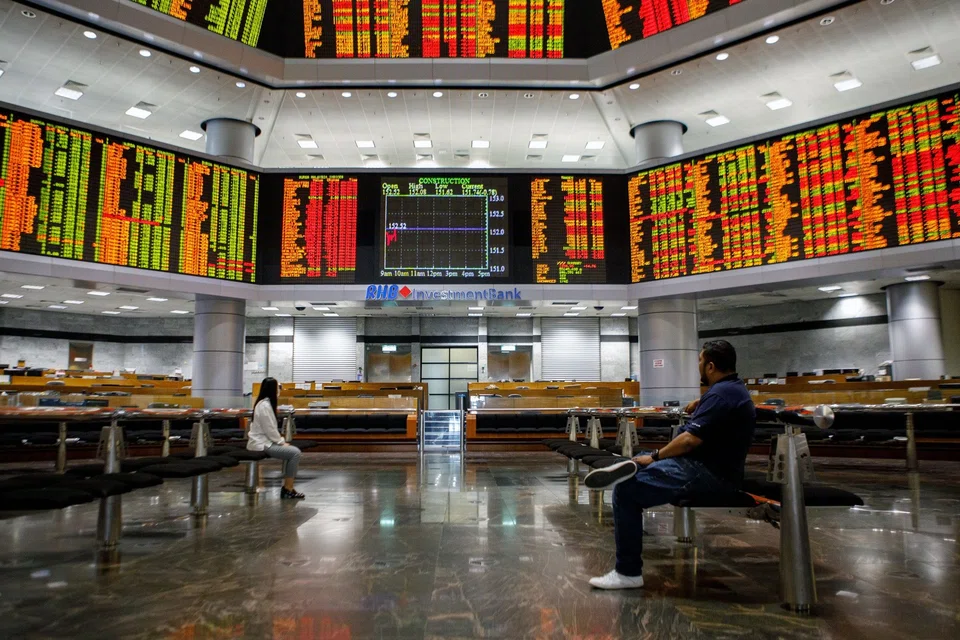
REGIONAL bourses are courting small and medium enterprises (SMEs) by easing listing requirements and producing educational resources.
Phillip Securities managing director Luke Lim sees the “upward interest” as natural given that SMEs are driving economic development in the region.
“The region’s relatively young and large population also represents a unique advantage for global investors,” he said.
For an SME, a successful listing offers the reward of “enhanced prestige and profile”, as well as a clear valuation of the business.
Tay Hwee Ling, who is the disruptive events advisory leader at Deloitte South-east Asia, said growth companies could see public equity as an attractive source of funding in a high interest rate environment.
Nevertheless, regional exchanges have an uphill task attracting new listings. Tay said many companies have preferred to list on larger overseas markets in the hope of securing better valuations.
Varying success rates
Within South-east Asia, market watchers flagged Bursa Malaysia as one of the more active exchanges in encouraging SMEs to list.
The exchange amended regulations this year to expand the pool of sponsors and advisers for companies transferring from the Leap market to the Ace market. Malaysia’s Leap market is limited to “sophisticated investors”, while Ace is a growth market that is open to all investors.
The Malaysian government also announced an extension of tax deductions of up to RM1.5 million (S$290,000) on listing expenses for listings on both boards this year, alongside other tax incentives to boost the stock market.
This has led to a “slight increase” in listings across the three boards in Malaysia in 2023, said an RHB analyst. There have been 39 initial public offerings (IPOs) completed or announced this year versus 35 last year, although the Leap market only had one completed IPO this year.
Lim of Phillip Securities said some companies could be rushing to avoid a new capital gains tax (CGT), which will take effect next year. The tax will be imposed on gains from the disposal of shares in unlisted companies.
“As companies in Malaysia seek to avoid the new CGT, public listings of high-growth startups and SMEs on Malaysia’s stock exchange are expected to double in 2023 compared with the previous year,” he said.
The Philippine Stock Exchange (PSE) has been slightly less successful, with only three IPOs this year.
In response to queries from The Business Times, PSE president Ramon Monzon said there has been a lack of SME listings since the revamp of the PSE in 2013 – when the number of boards was reduced from three to two.
He attributed the poor performance to more stringent listing requirements and a lack of awareness about the viability of the equities market as a fundraising platform.
PSE has been actively campaigning for listings in the last three years, especially among SMEs, said Monzon. He added that there was a “notable increase” in SME Board listings after listing rules were amended in 2021 to loosen criteria related to revenue and profitability.
There were four listings on PSE’s SME Board last year, none in 2021, two in 2020 and one in 2019. Over the last decade, two companies moved from the SME Board to the mainboard.
Monzon described the increased listings in 2022 as “a positive sign of progress”, even though challenging market conditions “adversely affected” the PSE’s IPO pipeline for 2023.
He nevertheless expects improvements as PSE continues to encourage SMEs to be IPO-ready by the time the economic environment picks up.
Challenges and suggestions
The lack of investor interest remains a challenge for SME listings.
RHB analyst Shekhar Jaiswal said SMEs will want to list on stock exchanges that give them the “best valuation, lowest cost and maximum fundraising”. This usually means the Hong Kong Stock Exchange, or Nasdaq in the United States.
In the current environment of high risk-free rates, companies may also struggle to get the valuations they want.
“As an SME, unless you have a strong track record and credible performance, it’s very difficult to believe that people will come and give you top dollar in terms of listing,” Jaiswal said.
In the case of the Singapore Exchange, Jaiswal also pointed out that the majority of its stocks do not attract enough investor interest.
Without sufficient excitement around existing listings, he said, attracting a new listing becomes even more difficult.
To raise investor interest, Jaiswal said regulators, financial institutions and companies need to work together. Listings must be of good quality, and companies must practise good governance.
Phillip’s Lim also suggested companies try to learn what potential investors are looking for, so their listings can attract these investors.
Exchanges also need policies that support corporate governance while taking into consideration the unique needs of SMEs, added Lim.
Boards can also have a clearer and more transparent framework for companies to transfer from junior boards to mainboards, suggested analysts.
TRENDING NOW

Genting Singapore trails MBS, but helps anchor Malaysian parent group’s finances

He built the Vingroup empire. Now South-east Asia’s richest man is handing some key roles to his sons

CDL to invest S$5 billion, target S$6 billion divestments under refreshed strategy

Stocks to watch: CDL, Centurion, Oiltek, Geo Energy Resources

