

Analysts still positive on Mapletree Logistics Trust despite forex, rental headwinds
OCBC upgrades MLT to ‘buy’ but cuts fair value estimate; CGSI trims target price but maintains ‘add’ call

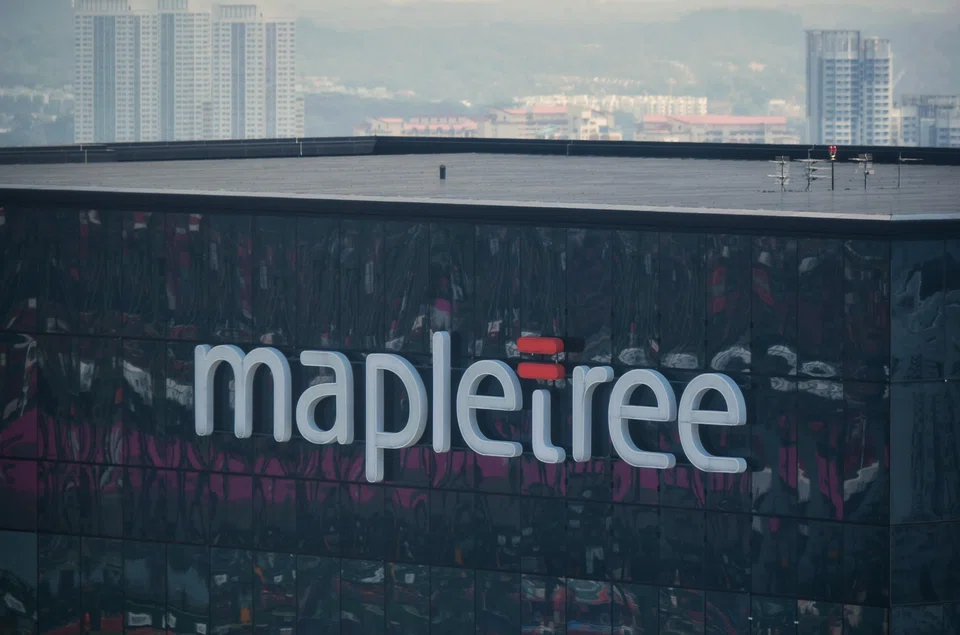
[SINGAPORE] Analysts were mixed on Mapletree Logistics Trust (MLT) , citing divergent forecasts after it posted a lower fourth-quarter distribution per unit (DPU) last week.
OCBC Group Research on Tuesday (May 5) upgraded MLT to a “buy” rating, but lowered its fair value estimate to S$1.36 from S$1.40.
On Monday, CGS International (CGSI) maintained its “add” call on the stock but lowered its target price to S$1.48 from S$1.68, while DBS reiterated its “buy” and maintained its S$1.55 target price.
OCBC Group Research analyst Andy Wong said that “value has re-emerged” for MLT, with the counter trading at an estimated FY2027 distribution yield of 5.9 per cent based on its closing price on May 4. This is 0.3 standard deviation above its 10-year average of 5.7 per cent, he added.
Despite the positive outlook, OCBC has trimmed its FY2027 DPU estimates for MLT by 4.5 per cent, partly due to updated foreign exchange assumptions.
“Persistent foreign exchange headwinds and absence of distribution from divestment gains have also weighed on DPU growth,” Wong said.
MLT on Apr 30 posted a 7 per cent decline in Q4 DPU to S$0.01819, with revenue and net property income down 1.7 per cent and 0.9 per cent, respectively, which the manager attributed to the absence of contributions from divested properties and weaker regional currencies.
Similarly, CGSI shaved its FY2027 to FY2028 DPU estimates by around 1.8 to 2.1 per cent due to “slower rental growth assumptions”.
Citing management’s guidance, CGSI analysts Lock Mun Yee and Li Jialin highlighted that rental reversions are expected to remain “relatively flattish” for FY2027 on an overall portfolio perspective.

Conversely, DBS Group Research predicts an “overall upside” for the real estate investment trust’s (Reit) DPU in the medium term, anchored by ongoing asset recycling activities and development strategies.
Its analyst, Derek Tan, noted that continued asset recycling will be a “key strategic lever” to drive higher returns for MLT, as the Reit eyes S$200 million to S$300 million in divestments for its upcoming financial year.
Moreover, he added that MLT’s DPU declines were largely due to the absence of divestment gains and the foreign exchange impact, with its overall underlying performance remaining stable.
With the Reit offering an “attractive yield” in excess of 6 per cent and trading at a price-to-book ratio of less than one time, Tan believes it is “well placed to deliver attractive total returns”.
“In the event of a turn in interest rates, we expect allocations in Singapore-listed Reits to accelerate going forward, with increased positioning into sectors resilient to economic downturns,” he said.
Delayed China recovery not a major setback
CGSI maintained its “add” call as it thinks that MLT’s China logistics warehouse portfolio could be “stabilising as deterioration in rental reversion is slowing”.
DBS Group Research’s Tan noted that the later-than-expected recovery of MLT’s China portfolio – which has been postponed to H2 2027 onwards – could disappoint investors. However, he does not view this as a major setback.
“Overall organic growth remains on an uptrend with other markets (such as) Singapore, Japan and Hong Kong (remaining) strong, and will pull overall performance higher,” said Tan.
Limited impact from US-China tariff war, Middle East conflict
MLT is not likely to be directly impacted by the recent US-China trade war, as a substantial portion of its portfolio’s revenue, around 85 per cent, is domestically focused, said DBS’ Tan.
Similarly, OCBC Group Research’s Wong noted that the Reit “has not seen significant impact from the Middle East conflict”.
Leasing demand remains stable and net electricity costs, which form less than 2 per cent of property expenses, are “manageable”, he said.
“However, a prolonged conflict could exert cost pressures on tenants and weigh on overall leasing sentiment,” Wong said.
Decoding Asia newsletter: your guide to navigating Asia in a new global order. Sign up here to get Decoding Asia newsletter. Delivered to your inbox. Free.
Copyright SPH Media. All rights reserved.
TRENDING NOW

DBS, OCBC, UOB rout lops billions off STI as inflation, rate concerns spook investors

Grab CEO’s wife Chloe Tong on life with Anthony Tan and finding her purpose

OCBC sheds S$8 billion in value as shares close nearly 6% down; analysts cautious on banks

Deal between tycoon friends sparks scrutiny of Philippine power sector

