

Apac stock markets respond better than Wall Street to Fed’s possible pause in rate hikes

Tay Peck Gek
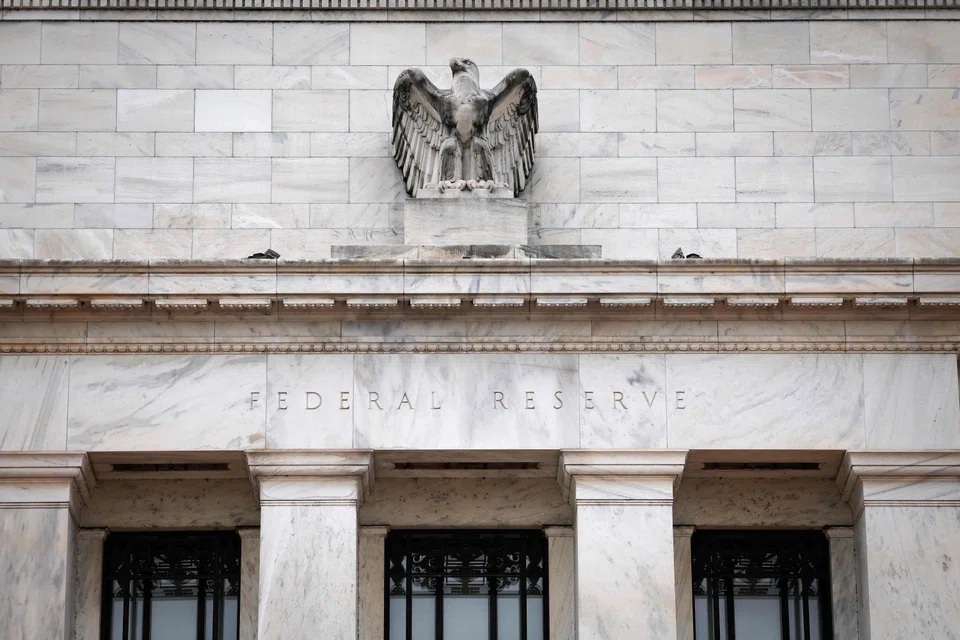
THE United States Federal Open Market Committee (FOMC) raised its funds rate overnight by 25 basis points (bps) as expected. Stock markets in Asia responded better than Wall Street to the suggestion that this might be the end of the rate hike cycle.
The US central bank’s move on Wednesday (May 3) took the Federal Reserve’s funds rate upper bound to 5.25 per cent – the highest level since June 2006. This marks the same peak of the 2004-2006 cycle, but the pace of tightening is much quicker: 500 bps in 15 months now versus 425 bps over two years in the 2004-2006 cycle.
The FOMC statement dropped the phrase “anticipates that some additional policy firming might be appropriate”, which DBS senior rates strategist Eugene Leow interprets as the Fed now views policy settings to be sufficiently restrictive.
While the decision to hike was unanimous, Leow said market participants including DBS have misgivings around tightening when banking system stress is elevated. “Notably, the US two-year and 10-year Treasury yields broke below their respective short-term supports of 3.9 per cent and 3.4 per cent respectively. On an intraday basis, yields took the first leg down post the FOMC decision and another big leg down as banking stocks resumed their sell-off late day.”
Taimur Baig, chief economist at DBS, noted that initial market response to the statement was largely constructive, but it turned negative after Fed chair Jerome Powell’s press conference.
Major Wall Street indices stocks declined after the latest interest rate hike on Wednesday, with the Dow Jones Industrial Average finishing down 0.8 per cent at 33,414.24 points, the broad-based S&P 500 slid 0.7 per cent to 4,090.75 points, while the Nasdaq Composite Index dropped 0.5 per cent at 12,025.33 points.
“Powell appeared to be still unsure about what constitutes ‘sufficiently restrictive’ monetary policy that is consistent with the 2 per cent inflation objective, which, in our view, is not an entirely quantifiable mix of forward-looking real rates, tightening lending standards, and the multitude of impacts from quantitative tightening. This uncertainty is what’s driving the negative sentiment in the market, in our view… But the Fed officials have not closed the door for one or two more hikes entirely, which is what is causing the downdraft in asset prices,” said Dr Baig.
In contrast, markets in Asia generally closed higher on Thursday, after analyst issued reports with several pointing to possible rate cuts as early as the second half of 2023.
Singapore’s blue-chip barometer Straits Times Index was up 0.2 per cent, Hong Kong’s Hang Seng Index rose 1.3 per cent, the Shanghai Composite Index climbed 0.8 per cent and the Jakarta Composite Index was 0.3 per cent higher. Meanwhile, Australia’s ASX 200 was down 0.06 per cent and South Korea’s Kospi Index was 0.02 per cent lower. Tokyo bourses closed for a holiday.
Nick Rees, FX market analyst at Monex Europe, pointed out that the Fed changed messaging when it said that it would take into account the cumulative tightening of monetary policy, the lags with which monetary policy affects economic activity and inflation, and economic and financial developments. Also, the Fed will adopt a data-dependent approach, making decisions “meeting to meeting” in assessing the further path of interest rates.
Rees views it as foreboding a pause at future meetings, especially since Powell explicitly drew attention to the “meaningful change” of language in the statement during the press conference.
Mansoor Mohi-uddin, chief economist at Bank of Singapore, agrees that the rate hike may be the last in the current Fed cycle. But he cautioned investors to stay wary of the Fed, because the Fed has said that it is prepared to lift interest rates again if inflation does not drop to its 2 per cent target. Also, the Fed has pushed back the potential for rate cuts.
“Lastly, the Fed said it would keep shrinking its balance sheet – quantitative tightening – to curb inflation. This will reduce liquidity in the banking sector and thus is likely to threaten more failures amongst smaller US banks struggling to retain deposits, while also leading to tighter credit,” said Mohi-uddin.
Ray Sharma-Ong, investment director for multi-asset investment solutions at Abrdn, expects the next move by the Fed to be a rate cut.
“We do not think the banking sector issues will be systemic, but the tightening of credit conditions will weigh heavily on economic activity, and we expect a recession in the US to occur in the second half of 2023. With the Fed’s forward guidance today indicating a strong shift towards data dependence, we expect the Fed to cut rates when a recession occurs,” said Sharma-Ong.
DBS’ Leow noted that the market has priced in Fed cuts by the end of the year. “Looking out to end-2024, the total amount of cuts priced now exceeds 200 bps. These levels look quite stretched as the market rushed to protect against further bank failures and elevated recession risks. Tactically, some wariness might be in order before the release of non-farm payrolls on Friday.”
Head of Phillip Securities Research Paul Chew said that with a peak in interest rates, investors will start seeking yield in longer-duration assets. This will bode well for bonds and dividend-yielding equities such as real estate investment trusts (Reits).
Tai Hui, chief market strategist for Asia-Pacific at JPMorgan Asset Management, prefers fixed income to equities, especially high quality fixed income, such as developed market government bonds and investment grade corporate debt.
The asset manager prefers China and Asian equities over developed market equities given the contrast in growth momentum and policy backdrop, despite a relative underperformance year-to-date from the former. He also noted that the US dollar has been depreciating in recent days in anticipation of the end of the hiking cycle, and that this should benefit emerging market and Asian financial assets.
Abrdn’s Sharma-Ong expects the greenback to depreciate, making Asian currencies such as the Thai baht attractive. “Beneficiaries of China’s reopening like the Thai baht will benefit. Once we get beyond Thai election risks on May 14, we expect the improvement in Thailand’s current account, driven by recovery in tourism and fall in freight costs, to drive the Thai baht.”
He also stated that US Treasuries will benefit from the peaking of the funds rate. But the US fixed income instrument valuations are “rich” at present, and Abrdn is looking for backup in yields as entry points to add to US Treasuries and duration.
Added Sharma-Ong: “With the economy slowing down, we expect yields to trend lower and the yield curve to steepen.”
TRENDING NOW

Malaysian king buys stake in Singapore-listed mining firm expanding into rare earths

Family offices ‘kept captive’ by relationship managers turn to independent advisers, direct deals

Once staunchly pro-China, Malaysian Chinese businesses are now distancing themselves from Beijing

Could stablecoins be the future of money?

