Asia: Markets fall on dimming rate cut hopes, China’s torpid growth
 Add BT as a preferred source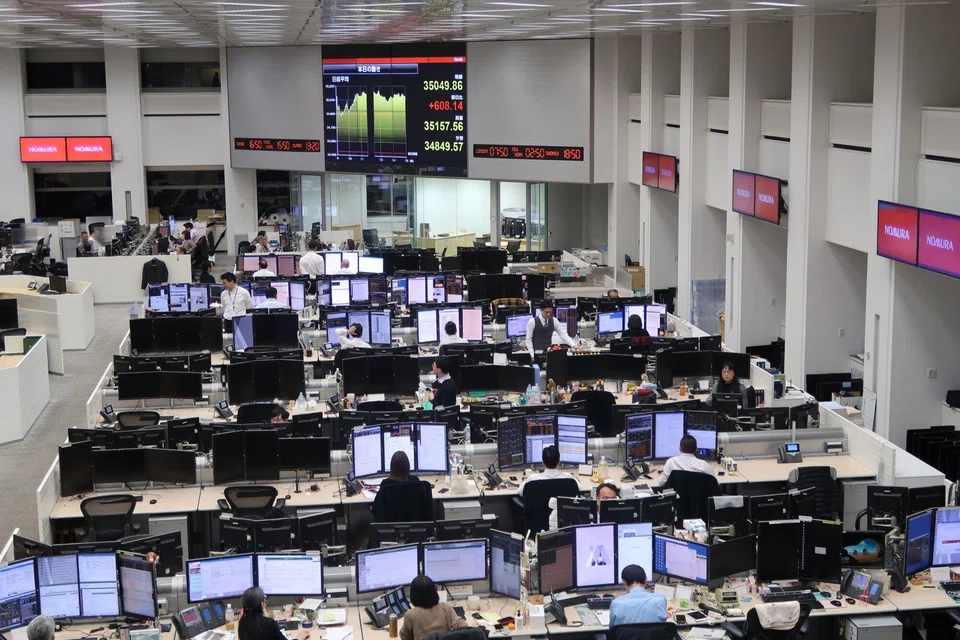
DeeperDive is a beta AI feature. Refer to full articles for the facts.
ASIAN markets fell further on Wednesday as hopes for an early interest rate cut by key central banks faded, while data confirmed China’s economy last year grew at its slowest pace in more than three decades.
The euphoria that saw out 2023 has been erased by a string of data and comments from the US Federal Reserve suggesting a first-quarter dovish pivot was unlikely as inflation stays stubbornly above target and labour markets remain resilient.
At the same time, rising tensions in the Middle East and eastern Europe, and the long-running US-China spat, continue to keep investors on their toes, fearing the fragile economic recovery could be turned on its head.
Fed governor Christopher Waller, a noted dove at the central bank, said on Tuesday that figures suggest decision-makers should be able to cut borrowing costs this year - with their inflation target in sight - but they must move steadily.
“I am becoming more confident that we are within striking distance of achieving a sustainable level of two percent (personal consumption expenditures) inflation,” he told a virtual event hosted by the Brookings Institution, referring to the Fed’s favoured gauge.
“As long as inflation doesn’t rebound and stay elevated, I believe the (policy board) will be able to lower the target range for the federal funds rate this year.
Navigate Asia in
a new global order
Get the insights delivered to your inbox.
“When the time is right to begin lowering rates, I believe it can and should be lowered methodically and carefully.”
The comments came after minutes released at the start of the month showed policymakers were keen to keep rates at two-decade highs as they look to cement their achievements in the battle against inflation.
That was followed by forecast-beating jobs figures and a surprisingly higher consumer price index reading.


“We view (Waller’s) comments emphasising no need to rush as indicating that he does not expect to push for a March cut,” Krishna Guha, at Evercore ISI, said.
Waller was “consistent with our baseline of a first cut in May or June”, Guha added.
Expectations for a March cut have fallen to about 65 per cent, having hovered around 80 per cent on Friday, according to Bloomberg News.
The prospect of rates staying restrictive weighed on equities, with all three main indexes on Wall Street ending in the red as dealers there returned from a long weekend.
European markets were also down after hopes for a eurozone cut were dealt a blow by central bankers this week.
The selling continued in Asian trade, with Hong Kong once again the worst performer as tech giants were heavily sold, while there were also deep losses in Shanghai, Sydney, Seoul, Singapore, Taipei, Wellington, Jakarta and Manila.
However, Tokyo resumed its rally, having dropped on Tuesday after six days of gains that pushed the Nikkei to a 34-year high.
That has come on the back of a pick-up in Japanese inflation and a softer yen, which is at its weakest in more than a year against the dollar -- helping exporters.
The negative mood was worsened by data showing China’s gross domestic product expanded 5.2 per cent last year, its worst performance since 1990, excluding the years that were hit by the pandemic.
The reading highlighted the impact of a crippling property crisis, sluggish consumption and global turmoil on the world’s number-two economy, which has struggled to capitalise on the reopening from long-running zero-Covid measures that were lifted in late 2022.
While in line with forecasts and slightly above the government’s target, the data will do little to silence calls for Beijing to unveil a stimulus “bazooka” to kickstart growth and do more to address a debt crisis in the vast property sector.
However, in a speech to the World Economic Forum in Davos on Tuesday, Premier Li Qiang predicted the reading and flagged that it was achieved without “massive stimulus”.
“We did not seek short-term growth while accumulating long term risk,” he told the gathering. AFP
Decoding Asia newsletter: your guide to navigating Asia in a new global order. Sign up here to get Decoding Asia newsletter. Delivered to your inbox. Free.
Share with us your feedback on BT's products and services