Asia: Markets up, sterling holds gains after UK budget U-turn
 Add BT as a preferred source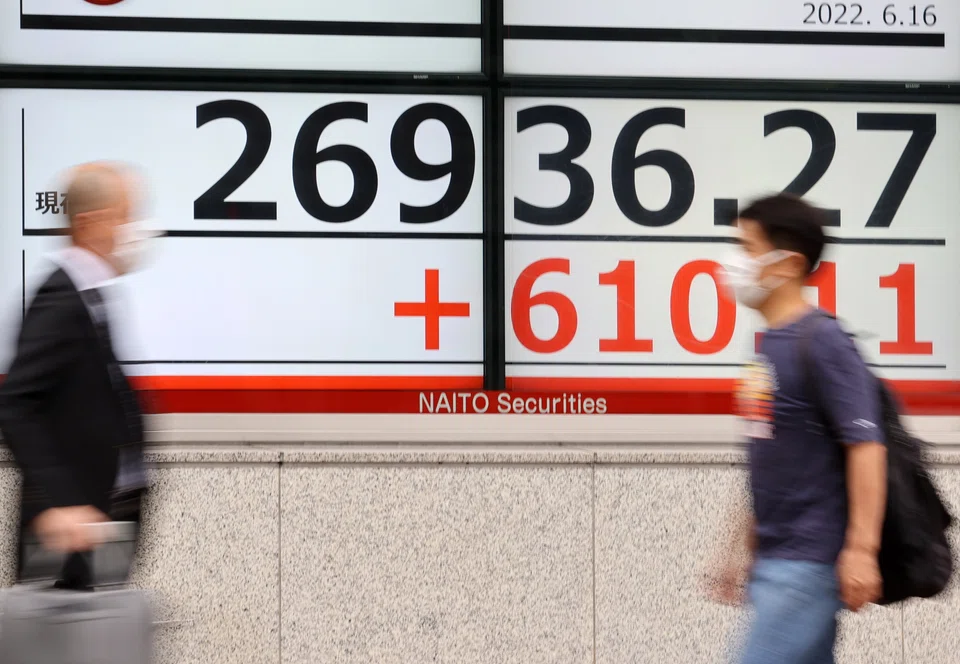
DeeperDive is a beta AI feature. Refer to full articles for the facts.
EQUITIES mostly rose and sterling held on to its gains on Tuesday after the UK government scrapped a controversial debt-funded mini-budget that had roiled markets, while traders were also cheered by a broadly positive start to earnings season.
After a volatile few weeks during which the pound hit a record low, new finance minister Jeremy Hunt sought Monday to reassure investors as he unveiled a new spending package, doing away with tax cuts and warning of much lower spending.
The move – which deals a blow to Prime Minister Liz Truss’s authority – sent sterling up as much as 2 per cent at one point and the cost of government borrowing tumbled, while the FTSE 100 jumped.
The positive mood filtered through to other markets, with Wall Street enjoying a much-needed surge, including a more than 3 per cent jump in the Nasdaq.
And most of Asia followed suit, with Tokyo, Hong Kong, Sydney, Seoul, Wellington, Taipei, Manila and Jakarta all enjoying a pick-up, though Shanghai and Singapore dipped.
The gains built on Monday’s rise, though analysts warned that the advances were unlikely to be sustained owing to broader worries about inflation and rising interest rates.
Navigate Asia in
a new global order
Get the insights delivered to your inbox.
“Investors are still searching for the elusive fundamental support behind these rallies,” said SPI Asset Management’s Stephen Innes. “Not finding that absolute macro needle in a haystack suggests these rallies still fall into the technical squeeze category rather than one where investors are boarding the rally wagon en masse.”
The latest inflation reading out of New Zealand showing it remained at a three-decade high underscored the tough job central banks have in bringing prices down, even after several rate hikes.
Commentators said traders have come to the conclusion that a recession is on the way in major economies, with the main question being how bad it will be.
“I think we can stop saying inflation is ‘hotter than expected’ and shift to ‘hotter than hoped’ – because it really does feel like we’re all just crossing our fingers and hoping prices come down,” said Matt Simpson at City Index.
“And in the few cases that they are, it is clearly not fast enough for anyone’s liking. Conversely to the adage about stock market prices, inflation seems to get the elevator up and the escalator down – but not before lingering around the top floor for an extended period of time.”
Markets in China softened after a positive start, a day after authorities delayed the release of third-quarter economic figures, which analysts said were likely to show the weakest growth since the pandemic owing to Covid-19 lockdowns.
The decision comes as the Communist Party holds a key gathering at which President Xi Jinping is expected to be handed a third term.
“Whenever the release occurs, we should all be prepared for some global financial market reaction if the world’s two largest economies are both in recession this year. Especially, as the global economic slowdown remains ongoing,” said Clifford Bennett at ACY Securities.
“While in China, we have a slightly artificially generated risk of recession due to a zero-Covid policy. “This policy has been confirmed to remain in place indefinitely. This means China will see further economic disruption over the coming year.” AFP
Decoding Asia newsletter: your guide to navigating Asia in a new global order. Sign up here to get Decoding Asia newsletter. Delivered to your inbox. Free.
Share with us your feedback on BT's products and services